We live in an age of perpetual illumination. As the natural sun sets, a new, artificial day dawns from the glowing screens of smartphones, tablets, computers, and energy-efficient LED lighting that dominates our homes and cities. This modern luminous environment has fundamentally altered humanity’s age-old relationship with light and dark, a relationship meticulously calibrated by evolution over millions of years. At the center of this transformation is a specific segment of the visible light spectrum: high-energy, short-wavelength blue light. While naturally abundant in the midday sun and crucial for regulating our circadian rhythms, mood, and cognitive alertness, the unprecedented and timed exposure to artificial blue light—particularly during evening and nighttime hours—is now understood to have profound and often deleterious consequences for brain function and emotional health. The issue is not blue light itself, but the context and timing of our exposure. Our biological systems, honed by the predictable cycles of a sun-based world, are being bombarded with contradictory photic signals, leading to a state of chronic dysregulation. This essay will explore the multifaceted impact of artificial blue light exposure, arguing that its intrusion into our nocturnal lives disrupts fundamental neurobiological processes, leading to impaired sleep architecture, disrupted circadian rhythms, direct neural effects on cognition and mood, and a consequent cascade of risks to long-term emotional and mental well-being. By examining the mechanisms through which blue light influences the brain—from the specialized photoreceptors in our eyes to the pineal gland’s melatonin secretion and direct cortical stimulation—we can delineate how a seemingly innocuous environmental factor has become a significant public health concern. Understanding this impact is essential for developing personal habits, technological solutions, and public policies that realign our luminous environment with the needs of our ancient biology.
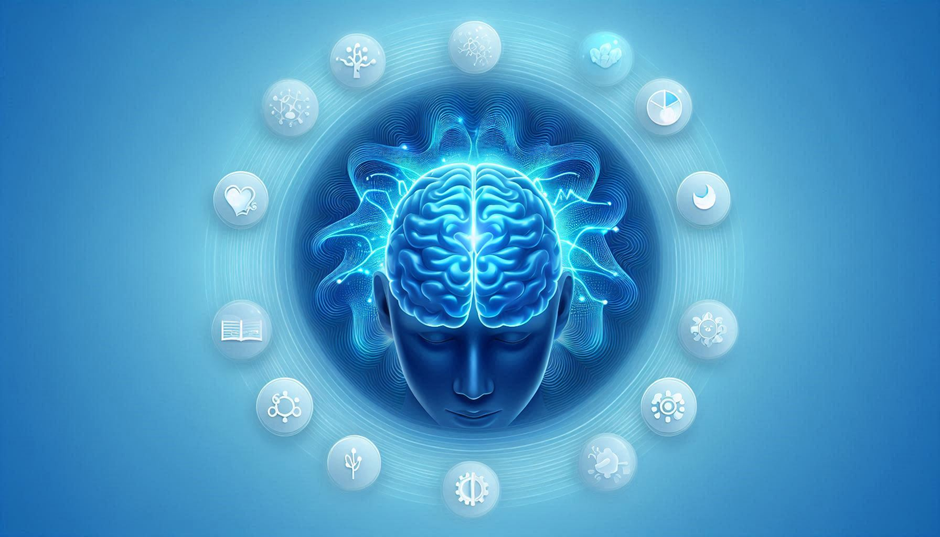
1. The Circadian Disruption: Hijacking the Body’s Master Clock
The most well-established and consequential impact of evening blue light exposure is its potent disruptive effect on the human circadian system, the roughly 24-hour internal biological clock that governs the timing of virtually every physiological process. This master clock, located in the suprachiasmatic nucleus (SCN) of the hypothalamus, relies on light—specifically its intensity, spectrum, and timing—as its primary zeitgeber, or time-giving cue. For millennia, the setting sun, with its rapid diminishment of blue wavelengths, signaled the SCN to initiate a cascade of events preparing the body for rest: a drop in core body temperature, a release of the sleep-promoting hormone melatonin from the pineal gland, and a shift in neural activity toward restorative states. The invention of artificial light, particularly the recent widespread adoption of blue-rich LED light sources, has severed this critical link between environmental light cycles and internal timekeeping.
The mechanism for this disruption is exquisitely specific. In addition to the rods and cones responsible for vision, the human retina contains a third class of photoreceptor cells called intrinsically photosensitive retinal ganglion cells (ipRGCs). These ipRGCs are uniquely sensitive to short-wavelength blue light, peaking around 480 nanometers. When activated, they send a direct, non-visual signal via the retinohypothalamic tract to the SCN, effectively shouting “Daytime!” to the brain. Exposure to bright blue light in the morning and early afternoon is beneficial, helping to synchronize the circadian clock, boost alertness, and improve mood. However, when this same powerful signal is received in the evening—from a smartphone, laptop, or television—it triggers a catastrophic misinterpretation. The SCN reacts as if the day has been artificially extended, suppressing the secretion of melatonin, sometimes by over 50% and delaying its onset by several hours. This melatonin suppression is not a minor adjustment; it represents a direct pharmacological blockade of a key neurochemical signal for sleep.
The consequences of this circadian hijacking are profound and systemic. A delayed and diminished melatonin profile directly translates to difficulty falling asleep, a phenomenon experienced by millions who engage in pre-sleep screen time. But the damage extends far beyond sleep onset. The entire sleep architecture—the cyclical progression through light, deep, and REM sleep stages—becomes fragmented and shallow. Crucially, the body is deprived of the robust, sustained periods of deep (slow-wave) sleep and REM sleep, which are respectively essential for physical restoration, memory consolidation, and emotional processing. Over time, this chronic circadian misalignment, akin to a state of perpetual, low-grade jet lag, dysregulates not only sleep but also core body temperature rhythms, hormone release patterns (like cortisol and growth hormone), and metabolic processes. The brain’s internal coordination breaks down, leading to impaired cognitive function, heightened stress reactivity, and a vulnerable foundation for emotional disorders. This foundational disruption of the circadian axis is the primary pathway through which nocturnal blue light exposure undermines both neurological efficiency and emotional stability, setting the stage for the more specific cognitive and mood-related effects that follow.
2. Cognitive Consequences: Impaired Performance, Attention, and Memory
Beyond its role in circadian sabotage, blue light exerts direct and indirect effects on higher-order brain functions, including alertness, attention, executive control, and memory. In the short term and under controlled daytime conditions, blue light can be a cognitive enhancer. Acute exposure boosts subjective feelings of alertness, reduces sleepiness, and can improve performance on tasks requiring sustained attention and reaction time. This is mediated through the same ipRGC pathway that communicates with the SCN, which has widespread projections to brainstem areas regulating arousal, such as the locus coeruleus, the primary source of the neurotransmitter norepinephrine. However, this acute alerting effect is a double-edged sword. When deployed in the evening, it becomes a direct antagonist to the cognitive state required for winding down and preparing for restorative sleep. The brain is pushed into a stimulated, vigilant mode precisely when it needs to transition toward quiescence.
The more significant cognitive toll, however, is paid not during the evening exposure itself, but in the aftermath, as a consequence of the sleep disruption it induces. The brain’s cognitive functions are exquisitely sleep-dependent. The prefrontal cortex, which governs executive functions like planning, decision-making, impulse control, and focused attention, is particularly vulnerable to sleep loss. Chronic exposure to evening blue light, by degrading sleep quality and quantity, leads to a state of prefrontal cortex impairment. This manifests as “brain fog”: reduced ability to concentrate, increased distractibility, poor working memory (the mental notepad for holding and manipulating information), and diminished cognitive flexibility—the ability to switch between tasks or think creatively. Studies consistently show that individuals with disrupted sleep from screen use perform worse on tests of attention, logical reasoning, and complex learning the following day.
Furthermore, the process of memory consolidation is critically disrupted. Both slow-wave sleep and REM sleep play sequential, vital roles in transferring information from the short-term storage depot of the hippocampus to the long-term neural networks of the cortex, a process called synaptic consolidation. Blue light-induced sleep fragmentation severely interrupts this nocturnal “filing” process. Facts learned, skills practiced, and experiences logged during the day are not properly integrated or strengthened. This leads to poorer recall, less efficient learning, and a weakened ability to synthesize new information. The cognitive impact is therefore cyclical: evening blue light impairs the sleep necessary to clear metabolic waste from the brain (like beta-amyloid, implicated in Alzheimer’s disease), consolidate memories, and reset attentional circuits. The following day, the sleep-deprived, foggy brain is less efficient, often leading to increased reliance on stimulants and more difficulty disengaging from stimulating activities at night, perpetuating the harmful cycle. In adolescents and young adults, whose brains are still developing and who are also the heaviest users of evening screens, this chronic cognitive impairment can have lasting effects on academic achievement and neurological development, solidifying the link between nocturnal blue light and compromised intellectual capacity.
3. Direct and Indirect Pathways to Emotional Dysregulation and Mood Disorders
The impact of blue light on emotional health is perhaps the most alarming consequence, operating through both direct neural pathways and the indirect, corrosive effects of chronic sleep and circadian disruption. Emotionally, the brain is a finely tuned system where the amygdala (the center for threat detection and fear), the prefrontal cortex (the regulator of emotional responses), and the hippocampal complex (involved in contextual memory) must work in harmony. Blue light exposure, particularly at the wrong biological time, can throw this system into disarray. Directly, the same ipRGC-to-SCN pathway that regulates circadian rhythms also has connections to the limbic system, the brain’s emotional core. Some research suggests that inappropriate light exposure can directly influence mood-regulating centers. More concretely, the acute alerting effect of evening blue light can amplify emotional reactivity. A brain kept in a stimulated, vigilant state is more prone to interpret neutral stimuli as threatening and has a lower threshold for stress and anxiety.
The primary route to emotional dysregulation, however, is indirect, mediated by the destruction of sleep and circadian integrity. Sleep, particularly REM sleep, is now understood to be essential for emotional homeostasis. During REM sleep, the brain processes the emotional memories of the day, stripping away the intense affective “charge” while preserving the factual content. This nocturnal therapy allows us to wake up with a clearer, less reactive emotional perspective. When blue light fragments sleep and reduces REM duration and quality, this emotional processing is short-circuited. Negative emotional experiences are not properly resolved, leading to a cumulative buildup of emotional sensitivity, negativity bias, and impaired ability to cope with stress. The sleep-deprived brain shows amplified reactivity in the amygdala in response to negative stimuli and a weakened response from the prefrontal cortex, which would normally dampen this reaction. This neural profile is a hallmark of anxiety and mood disorders.
Consequently, extensive epidemiological and clinical research has drawn strong correlations between evening blue light exposure, circadian disruption, and the prevalence of mood disorders. Shift workers, who experience extreme and chronic circadian misalignment from working under bright light at night, have markedly higher rates of major depressive disorder, anxiety, and burnout. In the general population, the habit of nighttime screen use is a significant predictor of depressive symptoms, particularly in adolescents and young adults. The mechanism is multifaceted: the suppression of melatonin (which itself has antioxidant and antidepressant properties), the dysregulation of cortisol rhythms leading to a flattened or inverted diurnal pattern, the reduction of sleep’s neuroprotective and restorative functions, and the direct impact on neurotransmitter systems like serotonin and dopamine. Furthermore, the content consumed on blue-light-emitting devices—often stressful news, social media comparisons, or work emails—can synergistically compound the biological stress of the light itself, creating a perfect storm for emotional distress. Over long periods, this state of chronic dysregulation can contribute not just to transient low mood or irritability, but to the development of more severe, clinical conditions like major depression, bipolar disorder (where circadian instability is a known trigger for manic episodes), and generalized anxiety disorder, positioning nighttime blue light exposure as a major modifiable risk factor for mental ill-health in the digital age.
4. Neurobiological Mechanisms and Long-Term Neural Implications
To fully appreciate the gravity of blue light’s impact, one must delve deeper into the specific neurobiological mechanisms at play and consider the potential for long-term neural consequences that extend beyond next-day sleepiness or irritability. The pathways are intricate, linking the retina to the deepest regulatory centers of the brain. As established, the ipRGCs are the primary sentinels. Their photopigment, melanopsin, is reset by light, and its sensitivity can be altered by prolonged or intense exposure, potentially leading to a desensitization or altered signaling that further confuses the circadian system. The signal from these cells does not stop at the SCN. The SCN, in turn, synchronizes peripheral clocks in virtually every organ and brain region through neural and hormonal signals, meaning blue light’s disruption is truly systemic, affecting liver metabolism, immune function, and local neural plasticity in tandem.
At a neurochemical level, the cascade is profound. Melatonin suppression is the most direct effect, but it triggers a domino fall. The normal nocturnal rise in melatonin is coupled with a drop in cortisol and a supportive environment for the release of growth hormone and neural repair factors. By blocking melatonin, blue light indirectly maintains a higher cortisol level at night, a pattern associated with chronic stress, visceral fat accumulation, and hippocampal atrophy. Simultaneously, the brain is deprived of the nightly surge of glymphatic clearance, a process where cerebrospinal fluid flushes through neural tissue to remove metabolic debris like tau proteins and beta-amyloid plaques. This “brainwashing” function, most active during deep sleep, is critical for long-term neurological health. Its chronic impairment by poor, blue light-disrupted sleep is a hypothesized contributor to the development of neurodegenerative diseases, including Alzheimer’s and Parkinson’s.
Moreover, the impact on neural plasticity—the brain’s ability to rewire and adapt—is significant. Both sleep and a well-regulated circadian system are fundamental for synaptic plasticity, the strengthening and pruning of neural connections that underlie learning and memory. Key plasticity-related molecules, such as brain-derived neurotrophic factor (BDNF), follow a circadian rhythm and are upregulated during specific sleep stages. Chronic circadian misalignment from blue light flattens these rhythms and reduces BDNF availability, particularly in the hippocampus and prefrontal cortex. This erosion of the brain’s plastic infrastructure can lead to accelerated cognitive aging and a reduced resilience to psychological stress. In developing brains, this is especially critical, as the orchestrated processes of neural maturation and pruning are tightly linked to stable sleep-wake cycles. The long-term implications are therefore not merely about feeling tired; they point to a scenario where chronic, inappropriate blue light exposure contributes to a faster decline in cognitive reserve, increased vulnerability to mood disorders, and a heightened risk for age-related neurological deterioration. The brain, dependent on rhythm and darkness for its maintenance and repair, is being starved of these essential conditions by the constant glow of our devices, suggesting that the public health ramifications of blue light pollution may unfold over decades, affecting the trajectory of brain aging for entire generations.
Conclusion
The evidence is clear and converging from the fields of circadian neuroscience, sleep medicine, and psychology: the pervasive artificial blue light that illuminates our modern nights is a potent disruptor of fundamental brain function and a significant threat to emotional health. Its influence is not benign or trivial; it hacks into the most ancient and conserved timekeeping systems of our biology, sending false signals that throw the intricate symphony of our neurophysiology into disarray. From the initial suppression of melatonin and the delay of the circadian clock to the consequent fragmentation of sleep architecture, the cognitive impairments in attention and memory, and the direct and indirect pathways leading to emotional dysregulation and mood disorders, blue light’s impact is both profound and systemic. It moves beyond affecting how we feel the next day to influence how we learn, how we manage emotions, how we consolidate memories, and potentially, how our brains age over a lifetime. The problem is one of context and timing—blue light is essential and beneficial during the day but becomes a neurological pollutant at night. Addressing this issue requires a paradigm shift in how we design our environments and habits. On a personal level, it demands conscious “light hygiene”: using blue-light filters on devices after dusk, adopting dim, warm lighting in the evening, and establishing screen-free periods well before bedtime. Technologically, it calls for a move toward lights and displays that automatically adapt their spectral output to the time of day. On a societal level, it necessitates awareness of light pollution and the implementation of lighting in public spaces that minimizes circadian disruption. Ultimately, reclaiming our nights from artificial blue light is not a retreat from progress but an act of biological wisdom. It is an essential step in preserving the natural rhythms of the brain, safeguarding our cognitive potential, and protecting the fragile balance of our emotional well-being in an ever-brighter world.
Sources
Blume, C., Garbazza, C., & Spitschan, M. (2019). Effects of light on human circadian rhythms, sleep and mood. Somnologie, 23(3), 147–156.
Chellappa, S. L., Steiner, R., Oelhafen, P., Lang, D., Götz, T., Krebs, J., & Cajochen, C. (2013). Acute exposure to evening blue-enriched light impacts on human sleep. Journal of Sleep Research, 22(5), 573–580.
Figueiro, M. G., & Overington, D. (2016). Self-luminous devices and melatonin suppression in adolescents. Lighting Research & Technology, 48(8), 966–975.
Gooley, J. J., Chamberlain, K., Smith, K. A., Khalsa, S. B. S., Rajaratnam, S. M. W., Van Reen, E., … & Lockley, S. W. (2011). Exposure to room light before bedtime suppresses melatonin onset and shortens melatonin duration in humans. The Journal of Clinical Endocrinology & Metabolism, 96(3), E463–E472.
Green, A., Cohen-Zion, M., Haim, A., & Dagan, Y. (2017). Evening light exposure to computer screens disrupts human sleep, biological rhythms, and attention abilities. Chronobiology International, 34(7), 855–865.
Hatori, M., Gronfier, C., Van Gelder, R. N., Bernstein, P. S., Carreras, J., Panda, S., … & Furukawa, T. (2017). Global rise of potential health hazards caused by blue light-induced circadian disruption in modern aging societies. NPJ Aging and Mechanisms of Disease, 3(1), 9.
Tähkämö, L., Partonen, T., & Pesonen, A. K. (2019). Systematic review of light exposure impact on human circadian rhythm. Chronobiology International, 36(2), 151–170.
Walker, W. H., Walton, J. C., DeVries, A. C., & Nelson, R. J. (2020). Circadian rhythm disruption and mental health. Translational Psychiatry, 10(1), 28.
History
Current Version
Dec 15, 2025
Written By
BARIRA MEHMOOD

0 Comments