Introduction
The human mind is not a passive recorder of reality but an active constructor of it. While we perceive the world as objective and external, our internal landscape—our thoughts, beliefs, and expectations—exerts a profound and often underestimated influence on our physiological and psychological states. This is the domain of the power of suggestion, a fundamental psychological principle where what we believe to be true shapes our experience of truth. Nowhere is this dynamic more consequential than in the realms of stress and overall well-being. Stress, long understood as a biological response to tangible threats, is increasingly recognized as being significantly modulated by perception. The thought of a looming deadline, the anticipation of social judgment, or the memory of a past trauma can trigger the same cascade of hormones—cortisol and adrenaline—as an actual physical danger. Conversely, suggestions of safety, competence, and optimism can dampen this stress response and promote states of calm and healing. This interplay between thought and biology forms the core of mind-body medicine and modern psychoneuroimmunology. From the dramatic cures witnessed in the placebo effect to the debilitating symptoms of the nocebo effect, from the calming phrases of a meditation guide to the catastrophic inner monologue of an anxiety disorder, suggestion operates as a constant undercurrent in our lives. This exploration delves into the mechanisms through which our thoughts, both conscious and subconscious, influence our stress levels and overall well-being. It will examine the neuroscientific pathways, the role of expectation and belief, the impact of language and external influences, and the practical applications of harnessing this power for resilience and health. Ultimately, understanding the power of suggestion is not about promoting naive positive thinking but about recognizing a fundamental truth: our minds are powerful participants in our health, and by shaping our suggestions, we can learn to shape our stress and cultivate a greater sense of well-being.
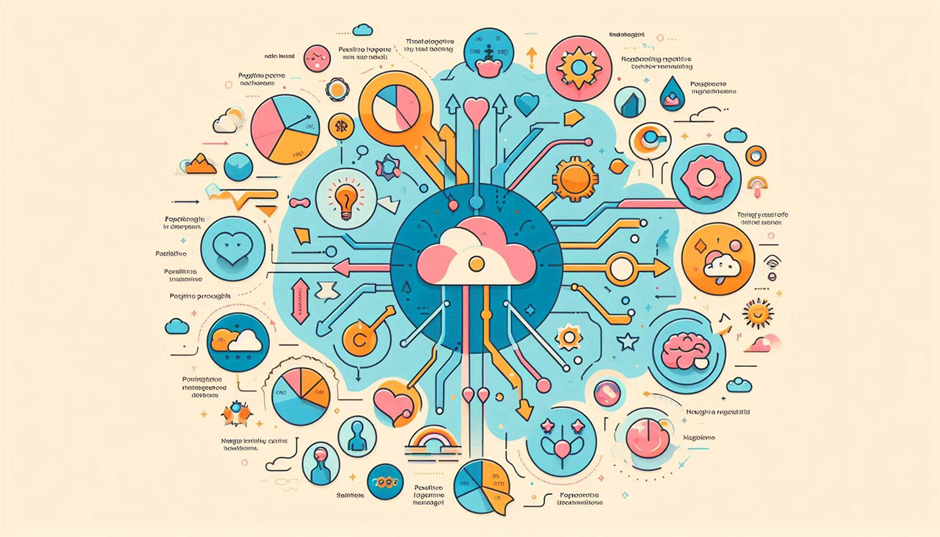
The Neuroscience of Suggestion: From Thought to Physiology
The power of suggestion is not merely a metaphysical concept; it is a physical process etched into the very architecture of the human brain. When a thought, belief, or expectation is formed, it activates specific neural networks that seamlessly communicate with the body’s stress and regulatory systems. This brain-body dialogue is the mechanism through which subjective mental events translate into objective physiological changes. The journey begins in the cerebral cortex, the seat of conscious thought and interpretation. When we perceive a potential stressor—be it an email from a boss or a subtle social slight—the sensory information is relayed to the amygdala, the brain’s alarm center. The amygdala performs a rapid, pre-conscious appraisal of the threat. Crucially, this appraisal is heavily influenced by prior learning and expectation, which are stored in cortical areas like the prefrontal cortex and hippocampus. If past experience or conscious thought suggests danger, the amygdala sounds the alarm, activating the hypothalamic-pituitary-adrenal (HPA) axis. This cascade results in the release of cortisol and adrenaline, priming the body for fight-or-flight: heart rate accelerates, blood pressure rises, muscles tense, and non-essential functions like digestion are suppressed. This is the classic stress response, and it can be triggered as potently by an anticipated threat (a suggestion of danger) as by a present one.
Conversely, suggestions of safety and calm can inhibit this pathway. The prefrontal cortex, particularly the ventromedial region, can exert top-down control over the amygdala, dampening its activity. When we engage in a guided meditation that suggests feelings of heaviness and warmth, or when a trusted doctor assures us that a treatment will work, this prefrontal inhibition is strengthened. Neurochemicals play a key role in this positive feedback loop. The placebo effect, a prime example of salutary suggestion, is associated with the release of endogenous opioids and dopamine. Benedetti et al. (2005) demonstrated that administering a placebo analgesic after secretly giving an opioid blocker (naloxone) removes the pain-relieving effect, proving that the body’s own opioid system is activated by the belief in treatment. Similarly, dopamine release in the nucleus accumbens, a region linked to reward and motivation, is observed when individuals expect a benefit. This neurochemical shift not only improves mood but also modulates pain perception and immune function. The immune system itself is directly accessible to suggestion through these neural pathways. The brain communicates with immune cells via autonomic nerves and hormonal signals. Chronic stress, sustained by negative suggestions and rumination, leads to glucocorticoid receptor resistance and systemic inflammation, a root of many modern diseases. Positive expectations, however, can enhance immune responsiveness, as seen in studies where conditioned cues boost immune cell activity. Thus, the neural circuitry of suggestion forms a two-way street: thoughts can activate stress physiology, and the deliberate cultivation of calming, positive suggestions can recruit the brain’s own pharmacy to promote homeostasis and well-being, physically altering the very systems we once believed were solely automatic.
The Placebo and Nocebo Effects: The Extreme Poles of Expectation
The most rigorous and illustrative demonstrations of the power of suggestion are found in the placebo and nocebo effects. These phenomena represent the extreme poles of how expectation can directly forge reality, for better or worse, and they provide an invaluable framework for understanding everyday stress and health. The placebo effect occurs when an inert substance or sham procedure leads to a real, measurable improvement in a patient’s condition solely because of the belief in its efficacy. This is not “just imagination”; it involves the tangible neurobiological processes described earlier. In the context of stress, a placebo presented as a powerful anxiolytic can reduce self-reported anxiety, lower cortisol levels, and calm autonomic arousal. The ritual of treatment—the white coat, the authoritative explanation, the act of taking a pill—creates a powerful suggestion of healing that the brain and body obey. This effect is so robust that new medications must outperform not just no treatment, but the potent effect of a placebo. The nocebo effect is its sinister twin: the experience of negative side effects or the worsening of a condition due to the expectation of harm. If a doctor lists possible side effects in a foreboding manner, a significant percentage of patients receiving a sugar pill will report experiencing those very symptoms. In stress disorders, nocebo effects are pervasive. Catastrophic thinking—the suggestion that a rapid heartbeat is a heart attack, or that mild confusion is the onset of dementia—can amplify panic and trigger full-blown anxiety attacks. The nocebo effect illustrates how the suggestion of threat can become a self-fulfilling prophecy, activating the very stress pathways it fears.
The mechanisms of these effects hinge on expectation and conditioning. Expectation is a forward-looking belief about what will happen. It is shaped by verbal instruction, social observation, and prior experience. When a trusted authority figure provides a positive suggestion, it sets a powerful expectation that directly modulates sensory and emotional processing in the brain. Conditioning, a form of subconscious learning, also plays a critical role. Just as Pavlov’s dogs learned to salivate at a bell, our bodies learn to associate specific cues (like pill-taking or a clinical environment) with physiological responses (like pain relief or nausea). Over time, the cue alone can trigger the response. The implications for stress management are profound. They suggest that our “set”—our mindset and expectations—going into any potentially stressful situation heavily predetermines our response. Viewing a public speech as a “threat” will likely invoke a nocebo-like stress response. Reframing it as a “challenge” or an “opportunity to share,” a form of positive suggestion, can engage more adaptive physiological pathways. Furthermore, the placebo research underscores the critical importance of the therapeutic context—the “care effect.” Empathy, good communication, and a trusting relationship between a caregiver and a patient are not mere comforts; they are active therapeutic agents that generate hope and positive expectation, thereby reducing the stress associated with illness and treatment. Understanding these effects moves them from being curiosities or confounding variables in research to central concepts in a holistic view of health, where managing suggestions is as important as managing medication.
Language, Internal Monologue, and the Architecture of Stress
Beyond formal medical contexts, the power of suggestion operates continuously in the intimate theater of our own minds through language and internal monologue. The words we use, both in conversation with others and in the private dialogue we hold with ourselves, are not neutral descriptors; they are potent suggestions that construct our emotional and physiological reality. Cognitive-behavioral therapy (CBT) is founded on this very principle: that distorted or catastrophic “automatic thoughts” are not just symptoms of stress but primary drivers of it. The internal monologue of a stressed individual is often characterized by a cascade of negative suggestions: “I can’t handle this,” “This is a disaster,” “They all think I’m incompetent.” These statements are not passive observations; they are active commands to the nervous system. They reinforce a perception of helplessness and threat, perpetuating the activation of the amygdala and HPA axis. This creates a feedback loop where stress generates negative self-talk, which in turn amplifies stress, leading to rumination—a compulsive focus on distress and its causes—which entrenches the pattern further.
The language of stress is often absolutist and catastrophic, and it shapes our attention. A person who consistently tells themselves “I’m terrible at networking” will enter a social event with a hyper-vigilant focus on signs of rejection or awkwardness, filtering out neutral or positive interactions, thus confirming the original suggestion. This is known as confirmation bias, fueled by suggestive language. Conversely, the deliberate use of more nuanced, factual, and empowering language can serve as a counter-suggestion. This is not about empty affirmations but about cognitive restructuring. Changing “I’m going to fail” to “This is difficult, and I’m going to do my best” shifts the suggestion from certain doom to manageable challenge. It reduces the perceived threat load. Similarly, the language used by leaders, teachers, doctors, and partners carries immense suggestive weight. A manager who frames a difficult project as an “impossible nightmare” will induce a collective stress response in the team. One who frames it as a “tough but surmountable challenge” can foster resilience and collaborative problem-solving. In healthcare, Kaptchuk (2002) has shown that the phrasing of information matters immensely. Telling a patient “the procedure is painless” is a more powerful analgesic suggestion than saying “you might feel a small pinch.” The former sets an expectation of no pain, while the latter primes the brain to look for and amplify a painful sensation. Therefore, cultivating awareness of our internal and external language is a critical skill for modulating stress. By editing the narrative—challenging catastrophic suggestions and intentionally employing language that suggests competence, resilience, and perspective—we can literally change the signal being sent from the cortex to the amygdala, thereby rewriting the body’s stress response in real time.
Harnessing Suggestion for Resilience and Well-Being
Understanding the power of suggestion is academically fascinating, but its true value lies in practical application. We can move from being passive recipients of often haphazard and negative suggestions to becoming active architects of suggestions that foster resilience and well-being. This requires intentional practice across several domains. First and foremost is the cultivation of mindfulness and metacognition—the ability to observe one’s own thoughts without immediate identification. This creates a critical pause between a triggering event and the stress response, allowing one to see a thought like “This is unbearable” not as a fact, but as a passing, and often unhelpful, suggestion. From this space of awareness, cognitive techniques can be employed. Cognitive restructuring, as used in CBT, involves identifying cognitive distortions (like catastrophizing or black-and-white thinking) and challenging them with more evidence-based, balanced suggestions. This is deliberate mental editing for well-being.
Guided imagery and hypnosis are direct applications of therapeutic suggestion. In guided imagery, a person is led through a vivid, sensory-rich mental scenario—such as relaxing on a beach or successfully navigating a challenge—that the brain and nervous system respond to as if it were real. This can directly reduce cortisol, lower heart rate, and promote a sense of control. Clinical hypnosis uses a state of focused attention to allow therapeutic suggestions to bypass critical analytical faculties and be accepted more readily by the subconscious, proving highly effective for anxiety, pain management, and habit change. Another powerful tool is the use of implementation intentions and reframing. An implementation intention is a pre-planned “if-then” statement (e.g., “If I feel my heart start to race before the meeting, then I will take three deep breaths and remind myself I am prepared”). This serves as a pre-loaded positive suggestion that automatically executes in a stressful moment, disrupting the default stress cascade. Reframing involves consciously shifting the narrative around a stressor. Viewing a stress response not as a debilitating “anxiety attack” but as the body’s energizing “arousal for peak performance” (a concept supported by the work of Jamieson et al., 2012) can transform fear into fuel. This is known as stress reappraisal.
Finally, optimizing one’s environment for positive suggestion is crucial. This includes curating social media feeds and news consumption to reduce inputs that suggest threat and inadequacy. It involves seeking out supportive relationships where language is empowering. It also encompasses rituals and routines: a morning routine that includes suggestions of gratitude and intention sets a different tone for the day than one that begins with scrolling through a stressful news feed. The consistent practice of meditation or prayer can be seen as a daily training in redirecting suggestive focus from chaotic external or internal stimuli to a chosen anchor of calm. By systematically integrating these practices, we build what can be called “suggestive hygiene.” We learn to disinfect negative, automatic suggestions and cultivate those that are life-affirming and stress-buffering. This does not mean denying reality but rather choosing the most empowering and accurate interpretation of it, thereby harnessing one of the mind’s most fundamental powers to serve our health and happiness.
Conclusion
The intricate dance between thought and biology reveals that stress and well-being are not dictated solely by external circumstances but are profoundly mediated by the internal lens of suggestion. From the detailed neuroscience of the brain’s alarm centers responding to perceived threats, to the dramatic demonstrations of the placebo and nocebo effects, to the subtle yet powerful influence of everyday language and self-talk, the evidence is compelling: what we believe and expect shapes our physiological and emotional reality. This understanding liberates us from a purely reactive stance toward stress. It positions the mind not as a helpless victim of external pressures, but as an active, influential participant in the stress response system. By recognizing that our thoughts are potent suggestions continuously sculpting our neural pathways and hormonal balance, we gain agency. The practical applications—from mindfulness and cognitive restructuring to guided imagery and environmental curation—provide a toolkit for harnessing this power. This is not an invitation to unrealistic positivity, but a call to mindful awareness and intentional curation of the narratives we consume and create. Ultimately, mastering the power of suggestion is a foundational skill for resilience. It allows us to meet life’s inevitable challenges with a nervous system that can be soothed by signals of safety and competence, transforming stress from a debilitating foe into a manageable, and at times, energizing force. In doing so, we take a significant step toward not just managing well-being, but actively constructing it.
Sources
Benedetti, F., Mayberg, H. S., Wager, T. D., Stohler, C. S., & Zubieta, J. K. (2005). Neurobiological mechanisms of the placebo effect. The Journal of Neuroscience, 25(45), 10390–10402.
Crum, A. J., Salovey, P., & Achor, S. (2013). Rethinking stress: The role of mindsets in determining the stress response. Journal of Personality and Social Psychology, 104(4), 716–733.
Jamieson, J. P., Nock, M. K., & Mendes, W. B. (2012). Mind over matter: Reappraising arousal improves cardiovascular and cognitive responses to stress. Journal of Experimental Psychology: General, 141(3), 417–422.
Kaptchuk, T. J. (2002). The placebo effect in alternative medicine: Can the performance of a healing ritual have clinical significance? Annals of Internal Medicine, 136(11), 817–825.
Lazarus, R. S., & Folkman, S. (1984). Stress, appraisal, and coping. Springer Publishing Company.
Moseley, J. B., O’Malley, K., Petersen, N. J., Menke, T. J., Brody, B. A., Kuykendall, D. H., … & Wray, N. P. (2002). A controlled trial of arthroscopic surgery for osteoarthritis of the knee. New England Journal of Medicine, 347(2), 81-88.
Sapolsky, R. M. (2004). Why zebras don’t get ulcers (3rd ed.). Henry Holt and Company.
Wager, T. D., & Atlas, L. Y. (2015). The neuroscience of placebo effects: Connecting context, learning and health. Nature Reviews Neuroscience, 16(7), 403–418.
History
Current Version
Dec 10, 2025
Written By
BARIRA MEHMOOD



0 Comments