Introduction
In the intricate landscape of human health, inflammation serves as a double-edged sword. In its acute, localized form, it is a vital defense mechanism—a coordinated biological response to injury or infection, characterized by redness, heat, swelling, and pain, designed to eliminate harmful stimuli and initiate healing. However, when this fiery process becomes systemic, low-grade, and chronic, it transforms from a protective ally into a silent, destructive force implicated in a vast array of modern diseases. Chronic inflammation is now understood as a common soil from which numerous pathologies grow, including metabolic syndrome, neurodegenerative diseases, cancer, and, most pertinently, autoimmune conditions. Autoimmunity represents a profound dysfunction of the immune system, wherein the body’s defensive arsenal mistakenly turns against its own tissues, launching inflammatory attacks on joints, skin, nerves, the thyroid, the gut, and virtually any other organ system. Conditions like rheumatoid arthritis, lupus, inflammatory bowel disease, multiple sclerosis, and psoriasis are fueled by this erroneous, self-perpetuating inflammatory cascade. Conventional management typically involves potent immunosuppressive drugs, which, while often life-saving, can carry significant side effects and do not address the underlying psycho-physiological dysregulation that frequently exacerbates disease activity. Emerging from the intersection of neuroscience, immunology, and contemplative practice is a compelling adjunctive therapy: meditation. Far from being merely a relaxation technique, meditation is now recognized as a powerful modulator of the immune system, capable of “calming the flames” of chronic inflammation and altering the subjective experience of autoimmune illness. This essay will explore the robust scientific evidence and proposed mechanisms for the role of meditation in managing chronic inflammation and autoimmune conditions, examining its impact on stress-inflammatory pathways, neuroimmune communication, pain perception, and the cultivation of a empowered psychological stance in the face of chronic disease.
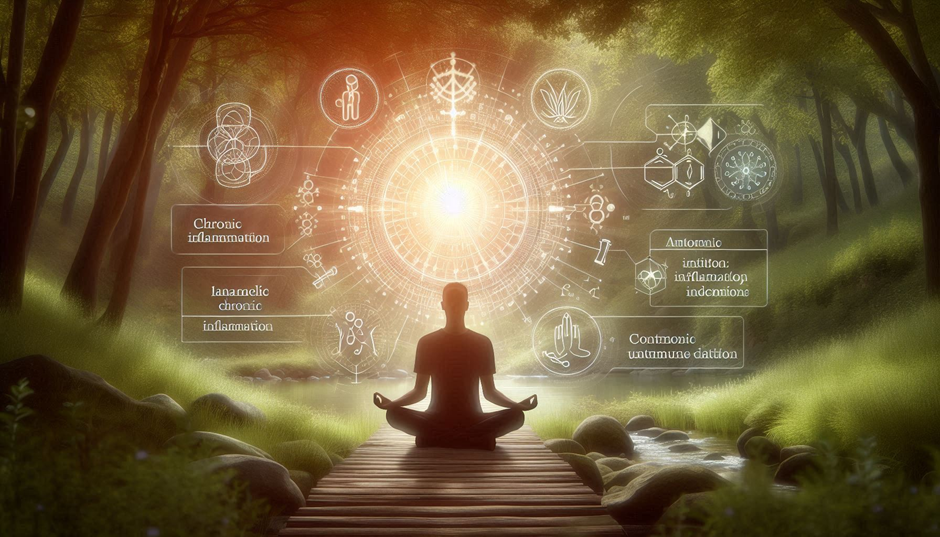
1. The Stress-Inflammation Nexus: How Meditation Interrupts a Vicious Cycle
The link between psychological stress and physical inflammation is not metaphorical but mechanistic, providing the foundational rationale for meditation’s therapeutic role. The body’s stress response system, the hypothalamic-pituitary-adrenal (HPA) axis and the sympathetic nervous system (SNS), is in constant dialogue with the immune system. When the brain perceives a threat—be it physical, emotional, or psychological—it triggers the release of cortisol via the HPA axis and catecholamines (like adrenaline and noradrenaline) via the SNS. In the short term, these hormones actually have complex, biphasic effects on immunity, sometimes suppressing certain functions while priming others for action. However, under conditions of chronic, unrelenting stress, this system becomes dysregulated. Cortisol resistance can develop, akin to insulin resistance, where immune cells become less responsive to cortisol’s normal anti-inflammatory signals. Simultaneously, the persistent SNS outflow directly stimulates immune cells to produce pro-inflammatory cytokines—signaling molecules like tumor necrosis factor-alpha (TNF-α), interleukin-1 beta (IL-1β), and interleukin-6 (IL-6). These cytokines are the molecular “flames” that sustain chronic inflammation and drive autoimmune pathology. Furthermore, stress can increase intestinal permeability (“leaky gut”), allowing bacterial fragments to enter the bloodstream and further activate immune responses. This creates a vicious, self-perpetuating cycle: stress fuels inflammation, and the resulting sickness behavior (fatigue, pain, malaise) and life disruption from autoimmune disease then become profound new sources of stress, feeding the cycle anew.
Meditation acts as a systematic intervention to break this cycle at multiple points. First, it reduces the perception of psychological stress. By cultivating mindfulness—a non-judgmental awareness of the present moment—individuals learn to relate differently to stressful thoughts and emotions. They develop the metacognitive ability to see worries, fears, and catastrophizing narratives as transient mental events rather than absolute truths requiring a full physiological alarm response. This decoupling of stimulus from reactive appraisal is neurologically reflected in reduced amygdala reactivity and strengthened prefrontal cortex regulation. With the brain’s threat detection center calmed, the downstream activation of the HPA axis and SNS is significantly blunted. Second, meditation directly induces a physiological state opposite to stress, often termed the “relaxation response.” This state is characterized by decreased heart rate, blood pressure, and respiratory rate, and a shift from sympathetic to parasympathetic nervous system dominance. The parasympathetic nervous system, particularly through the vagus nerve, exerts potent anti-inflammatory effects. Vagal nerve fibers release acetylcholine that binds to immune cells, inhibiting the release of pro-inflammatory cytokines. Meditation practices, especially those emphasizing breath awareness and slow, deep breathing, are known to enhance vagal tone, effectively turning on the body’s natural “inflammatory brake.”
Empirical evidence strongly supports this mechanism. Numerous randomized controlled trials have demonstrated that meditation programs, such as Mindfulness-Based Stress Reduction (MBSR), lead to measurable reductions in circulating biomarkers of inflammation. For example, studies have shown decreased levels of C-reactive protein (CRP), a key systemic inflammatory marker, and reduced production of IL-6 by immune cells following meditation training. In populations with inflammatory conditions like rheumatoid arthritis, meditation practice has been associated with not only reduced psychological distress but also lower levels of disease activity. By chronically dampening the stress response and enhancing parasympathetic regulation, meditation reduces the primary fuel source for inflammatory fires, creating an internal physiological environment less conducive to autoimmune flare-ups and systemic inflammation. It addresses not just the symptom of stress but its deep immunological consequences, offering a way to recalibrate the body’s fundamental stress-inflammation dialogue.
2. Rewiring Neuroimmune Communication: The Brain’s Top-Down Regulation of Immunity
The immune system was long considered autonomous, operating independently in the periphery. A groundbreaking paradigm shift in psychoneuroimmunology has revealed that it is, in fact, under extensive and dynamic communication with the central nervous system—a bidirectional network often called the “neuroimmune axis.” The brain constantly receives inflammatory signals from the body (via neural pathways and cytokine messengers in the bloodstream), which can alter mood, cognition, and behavior (manifesting as “sickness behavior”). Crucially, the brain also sends powerful regulatory signals back down to the immune system. Meditation’s profound impact on chronic inflammation and autoimmunity is mediated in part by its ability to strengthen this top-down, brain-to-immune regulatory capacity. The practice literally rewires the neural circuits that govern immune function, fostering a state of homeostasis rather than inflammatory reactivity.
Key brain structures involved in this regulatory loop include the prefrontal cortex (PFC), the anterior cingulate cortex (ACC), the insula, and the amygdala. The PFC and ACC are central to executive function, attention regulation, and cognitive control—all functions sharpened by focused attention meditation. The insula is critical for interoception, the sense of the internal state of the body, which is refined by open monitoring mindfulness practices. The amygdala, as the hub for threat and fear processing, is a primary driver of stress-induced inflammation. Neuroimaging studies consistently show that long-term meditators exhibit structural and functional changes in these regions: increased gray matter density and connectivity in the PFC and insula, and decreased amygdala volume and reactivity. This neurological profile signifies a brain better equipped for emotional regulation, body awareness, and calm appraisal. How does this translate to immune function? The strengthened, high-integrity PFC exerts greater inhibitory control over the amygdala and the downstream stress pathways. Furthermore, the insula’s enhanced interoceptive acuity allows for earlier, more precise detection of bodily sensations, including subtle prodromal signs of inflammation or flare-ups, enabling earlier behavioral or self-care interventions before a full-blown inflammatory cascade ensues.
Perhaps most fascinating is the direct evidence of meditation altering gene expression related to inflammation. Research led by scientists such as Steve Cole and Richard Davidson has delved into the field of functional genomics. In landmark studies, participants who completed an intensive meditation retreat showed rapid and significant changes in the expression of genes involved in inflammation and stress-related pathways. Specifically, there was a downregulation of pro-inflammatory gene modules, including those controlled by the master regulator NF-κB (nuclear factor kappa-light-chain-enhancer of activated B cells), a primary switch for turning on inflammatory cytokine production. These changes were not observed in control groups. This suggests that the mental training of meditation can send signals that reach deep into the nucleus of immune cells, effectively “turning down” the genetic programs that propagate inflammation. This top-down regulation represents a form of “self-directed neuroplasticity” with direct immunological consequences. By cultivating specific states of mind (calm, focused awareness, non-reactivity), meditators are not just feeling subjectively better; they are actively engaging in a form of “psycho-biological editing,” shaping the very molecular activity that underlies their disease process. This positions meditation as a powerful tool for modulating the fundamental biological mechanisms of autoimmunity, complementing pharmaceutical interventions that target the immune system from the outside in.
3. Modulating the Pain Experience and Cultivating Symptom Acceptance
Chronic inflammation and autoimmune conditions are almost invariably accompanied by pain—a complex, multifaceted experience that extends far beyond simple nociception (nerve signaling). Pain is a biopsychosocial phenomenon, heavily influenced by attention, emotion, memory, and meaning. The persistent pain of arthritis, neuropathic pain in multiple sclerosis, or the visceral pain of inflammatory bowel disease can become a central focus of a patient’s life, leading to suffering, fear, avoidance, and further stress, which in turn amplifies the pain signal in a maladaptive feedback loop. Meditation offers a revolutionary approach to pain management by fundamentally changing one’s relationship to the sensory and emotional components of the pain experience. It does not necessarily erase the nociceptive signal but dramatically alters its impact, reducing suffering and improving quality of life.
Mindfulness meditation teaches a process of “decentering” or “defusion” from pain. Instead of the instinctive, fused reaction (“This is terrible! I can’t stand this! It’s going to ruin my day”), one learns to observe the raw sensations with curiosity and non-judgment: “There is a sensation of throbbing in the knee. It has a certain intensity, a temperature. Thoughts of fear are arising.” This shift from “I am in pain” to “I am experiencing a sensation labeled ‘pain’” creates critical psychological space. Neurologically, this practice is associated with reduced activity in the brain’s default mode network (DMN), which is involved in self-referential narrative and catastrophizing, and increased activity in regions involved in sensory processing and attention regulation, like the anterior cingulate cortex and the insula. Essentially, mindfulness trains the brain to process the sensory-discriminative aspects of pain (location, intensity, quality) while disengaging from the affective-evaluative components (the fear, resistance, and story about the pain). Studies using quantitative sensory testing and neuroimaging have shown that mindfulness meditation can increase pain tolerance and reduce pain unpleasantness ratings, even when the objective intensity of the stimulus remains unchanged.
Furthermore, meditation cultivates an attitude of acceptance, which is distinct from passive resignation. Acceptance in this context is a willing, open allowing of present-moment experience, including pain and discomfort, without futile struggle. This cessation of the “secondary suffering”—the mental anguish and resistance piled on top of the “primary sensation” of pain—is profoundly liberating. For an autoimmune patient, this might mean acknowledging fatigue without berating oneself for being unproductive, or noticing joint stiffness without spiraling into despair about the future. Practices like loving-kindness (metta) meditation can also directly address the emotional toll of chronic illness, fostering self-compassion to counter the self-blame, frustration, and isolation that often accompany these conditions. By reducing the stress and emotional reactivity associated with pain flares, meditation indirectly helps modulate the inflammatory process itself, as psychological distress is a known trigger for cytokine release. Therefore, the symptom modulation provided by meditation is dual: it directly alters the central nervous system’s processing of pain and other symptoms, leading to reduced suffering, and it indirectly contributes to a less inflammatory internal milieu by mitigating the stress response that symptoms can provoke. This empowers individuals to live with greater vitality and engagement despite the presence of ongoing symptoms, breaking the cycle where pain and inflammation feed each other through the conduit of psychological distress.
4. Fostering Empowerment and Holistic Self-Management in Chronic Illness
The diagnosis and ongoing management of a chronic autoimmune disease can be an experience of profound disempowerment. Patients often feel at the mercy of an unpredictable body, complex medical regimens, and a healthcare system that can be fragmented and impersonal. This external locus of control contributes to helplessness, anxiety, and depression, all of which are pro-inflammatory states. Meditation, as a practice of inner exploration and self-regulation, serves as a powerful antidote to this disempowerment, fostering a shift towards an internal locus of control and active self-management. It transforms the patient from a passive recipient of care into an active participant in their own healing process, a shift that has measurable benefits for both psychological well-being and physical health outcomes.
At its core, meditation is a training in agency. It is the deliberate act of directing and sustaining attention, of returning to an anchor (the breath, body, or sound) despite the pull of distraction, pain, or worry. This repeated practice is a micro-lesson in self-efficacy: “I can choose where to place my attention. I can navigate my inner experience.” This sense of mastery over one’s own mind begins to generalize to the management of illness. Individuals become better equipped to notice early warning signs of a flare, to adhere consistently to medication and lifestyle plans, and to make conscious choices about pacing and activity. The non-reactive awareness cultivated in meditation allows for more thoughtful, values-based decisions about healthcare, rather than fear-driven reactions. Furthermore, mindfulness-based interventions specifically designed for chronic illness, such as Mindfulness-Based Cognitive Therapy (MBCT) or tailored MBSR programs, provide a supportive framework and community where individuals can share experiences and learn from others facing similar challenges, reducing the isolation of disease.
This empowered stance directly influences health through behavioral pathways. Reduced stress and improved mood lead to better sleep hygiene, as sleep is often severely disrupted in inflammatory conditions and is itself essential for immune regulation. Enhanced interoceptive awareness can improve dietary choices, as individuals become more attuned to how different foods affect their symptoms. The practice of mindful movement, such as gentle yoga or tai chi often integrated with meditation, reduces physical deconditioning and promotes mobility without exacerbating inflammation. Perhaps most importantly, meditation helps individuals differentiate between the immutable reality of having a chronic condition and the mutable experience of living with it. It cultivates a “being” mode focused on present acceptance, as opposed to a relentless “doing” mode focused on fixing and fighting, which is often exhausting and counterproductive in the context of an incurable illness. This does not imply giving up on medical treatment but rather approaching it from a place of centered collaboration rather than desperate struggle. Research shows that patients who engage in mindfulness practices report greater quality of life, reduced illness intrusiveness, and better coping skills. While meditation is not a cure for autoimmunity, it is a profound tool for healing the relationship between the patient and their disease. By calming the mind, it helps calm the inflammatory flames; by fostering empowerment, it builds resilience; and by cultivating present-moment awareness, it opens the possibility for a life of meaning and vitality, even within the container of chronic illness.
Conclusion
The integration of meditation into the management of chronic inflammation and autoimmune conditions represents a vital convergence of ancient wisdom and modern science. Moving beyond the outdated Cartesian duality that separates mind from body, the evidence reveals meditation as a potent, accessible modality for modulating the very biological pathways that drive disease. By systematically deactivating the stress response that fuels inflammatory fires, meditation interrupts a core pathological cycle. Through the rewiring of neural circuits and the top-down regulation of gene expression, it directly influences immune function, promoting homeostasis over aberrant attack. Its power to alter the perception of pain and cultivate symptom acceptance liberates individuals from a significant portion of their suffering, improving daily functioning and quality of life. Finally, by fostering a stance of empowered self-management, meditation addresses the psychological helplessness that so often accompanies chronic illness, enabling patients to become active agents in their own care. In a clinical landscape where pharmaceutical interventions, while crucial, can be blunt instruments with significant side effects, meditation offers a finely tuned, endogenous regulatory system. It does not promise a miracle cure but provides a sustainable practice for calming the systemic flames of inflammation, building resilience, and nurturing a life of greater balance and well-being amidst the challenges of autoimmune disease. As research continues to elucidate its mechanisms, meditation stands as an essential, evidence-based component of a holistic, integrative approach to health, reminding us that the journey toward healing begins with the disciplined, compassionate awareness of our own inner landscape.
SOURCES
Creswell, J. D., Taren, A. A., Lindsay, E. K., Greco, C. M., Gianaros, P. J., Fairgrieve, A., Marsland, A. L., Brown, K. W., Way, B. M., Rosen, R. K., & Ferris, J. L. (2016). Alterations in resting-state functional connectivity link mindfulness meditation with reduced interleukin-6: A randomized controlled trial. Biological Psychiatry, 80(1), 53–61.
Black, D. S., & Slavich, G. M. (2016). Mindfulness meditation and the immune system: A systematic review of randomized controlled trials. Annals of the New York Academy of Sciences, 1373(1), 13–24.
Rosenkranz, M. A., Davidson, R. J., Maccoon, D. G., Sheridan, J. F., Kalin, N. H., & Lutz, A. (2013). A comparison of mindfulness-based stress reduction and an active control in modulation of neurogenic inflammation. Brain, Behavior, and Immunity, 27, 174–184.
Davidson, R. J., & McEwen, B. S. (2012). Social influences on neuroplasticity: Stress and interventions to promote well-being. Nature Neuroscience, 15(5), 689–695.
Zeidan, F., Emerson, N. M., Farris, S. R., Ray, J. N., Jung, Y., McHaffie, J. G., & Coghill, R. C. (2015). Mindfulness meditation-based pain relief employs different neural mechanisms than placebo and sham mindfulness meditation. Journal of Neuroscience, 35(46), 15307–15325.
Goyal, M., Singh, S., Sibinga, E. M. S., Gould, N. F., Rowland-Seymour, A., Sharma, R., Berger, Z., Sleicher, D., Maron, D. D., Shihab, H. M., Ranasinghe, P. D., Linn, S., Saha, S., Bass, E. B., & Haythornthwaite, J. A. (2014). Meditation programs for psychological stress and well-being: A systematic review and meta-analysis. JAMA Internal Medicine, 174(3), 357–368.
Pitharouli, M. C., Hagenaars, S. P., Glanville, K. P., Coleman, J. R. I., Hotopf, M., Lewis, C. M., & Pariante, C. M. (2021). Elevated C-reactive protein in patients with depression, independent of genetic, health, and psychosocial factors: Results from the UK Biobank. American Journal of Psychiatry, 178(6), 522–529.
HISTORY
Current Version
Dec 19, 2025
Written By
BARIRA MEHMOOD


0 Comments