Introduction
Emotional labor, a term first coined by sociologist Arlie Hochschild in 1983, refers to the process of managing one’s own emotions and the emotions of others as a core requirement of a job. This involves inducing or suppressing feeling to sustain the outward countenance that produces the proper state of mind in others. While initially applied to service-sector roles, contemporary understanding recognizes that emotional labor permeates far beyond the workplace, especially in the domestic and social spheres, and is performed disproportionately by women. From the nurse who must project calm compassion amidst chaos, to the mother who mediates family conflicts, to the friend who provides unwavering support, women are overwhelmingly expected to be the architects and custodians of emotional well-being in their communities. This persistent, often invisible, demand to perform emotional regulation and care carries profound implications for women’s health. When this labor is chronic, unreciprocated, and undervalued, it becomes a significant psychosocial stressor, depleting mental and physical resources and serving as a potent pathway to burnout—a state of emotional, physical, and mental exhaustion caused by excessive and prolonged stress. This essay will argue that the gendered expectation and performance of emotional labor, both in professional and private life, constitutes a critical yet under-addressed determinant of women’s health, directly fueling epidemic levels of burnout. Through an exploration of its theoretical foundations, its manifestations in the workplace and the home, its physiological and psychological health consequences, and the structural and societal factors that perpetuate it, we will delineate why a gendered analysis is essential for developing effective interventions to mitigate this pervasive threat to women’s wellbeing.
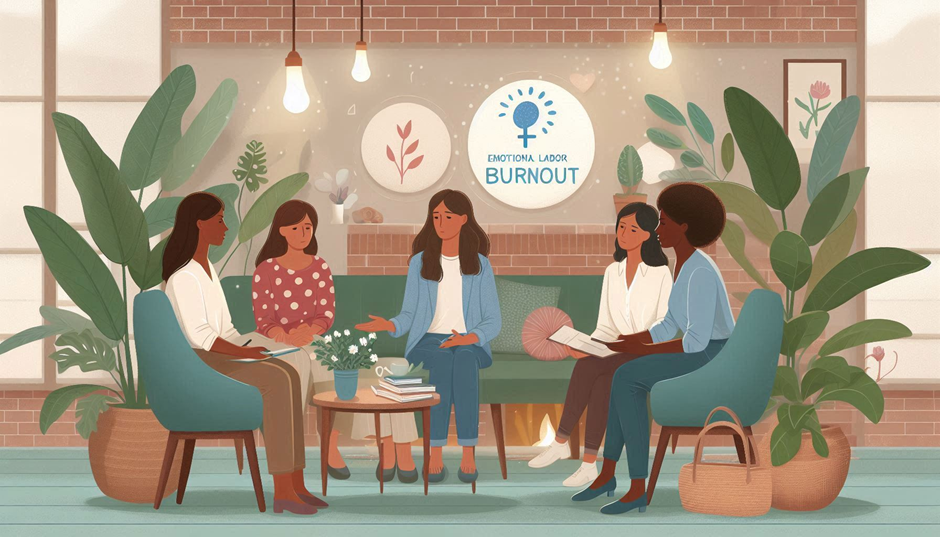
1. The Theoretical Foundations and Gendered Nature of Emotional Labor
The concept of emotional labor finds its roots in the seminal work of Arlie Russell Hochschild, who, in her 1983 book The Managed Heart: Commercialization of Human Feeling, identified it as a distinct form of labor exploited in the growing service economy. Hochschild distinguished between emotional labor—performed for a wage where feelings are commodified—and emotion work—the same acts of management performed in private life. She identified two primary strategies for this labor: surface acting, where one feigns an emotion they do not feel by modifying outward expressions, and deep acting, where one attempts to internally induce the required emotion through imagination or memory. Crucially, Hochschild posited that a persistent dissonance between felt and displayed emotion could lead to emotional estrangement or alienation from one’s authentic self, a foundational concept for understanding its link to burnout.
The performance of emotional labor is deeply gendered, constructed upon centuries-old social norms and expectations. From girlhood, women are socialized into the role of caregivers and emotional stewards. They are taught to be empathetic, nurturing, accommodating, and attuned to the emotional cues of others—skills that are simultaneously valorized as “natural” feminine traits and systematically devalued as non-labor. This socialization creates what psychologists call a norm of feminine self-sacrifice, wherein prioritizing others’ emotional needs over one’s own is seen as virtuous and expected. Consequently, women often internalize the responsibility for emotional harmony in relationships, families, and workplaces.
This gendered expectation translates directly into occupational segregation. Professions that are female-dominated—such as nursing, teaching, social work, childcare, and hospitality—are precisely those where emotional labor is a core, explicit, yet often under-compensated, job requirement. The “caring professions” are built on an ethic that demands emotional investment and empathy, frequently without providing adequate resources, autonomy, or pay that reflects the skill and energy this labor entails. Furthermore, even in male-dominated fields, women often find themselves unofficially tasked with the “office housework” and emotional glue-work: planning celebrations, mentoring junior colleagues, diffusing tensions, and managing interpersonal dynamics. This unpaid, invisible workload adds a significant layer of labor that their male counterparts are rarely expected to perform.
The intersectionality of gender with other identities, such as race and class, further compounds the demand. Women of color, for instance, often face stereotypical expectations that prescribe specific emotional roles. Historical tropes like the “strong Black woman” or the “docile Asian woman” create prescriptive scripts that dictate how emotions should be managed, often demanding extraordinary resilience or passivity while receiving even less recognition or support. The emotional labor of navigating microaggressions, code-switching, and representing one’s entire race or culture adds an additional, exhausting layer of cognitive and emotional management. Thus, emotional labor is not a uniform experience but is stratified by social position, intensifying the burden for those at the intersections of multiple marginalized identities. This theoretical and social backdrop establishes why women are disproportionately positioned as the primary performers of emotional labor, setting the stage for its detrimental health impacts when the demands of this labor chronically exceed their capacity to replenish their emotional resources.
2. Manifestations: Emotional Labor in the Workplace and the Home
The burden of emotional labor is not confined to a single domain; it is a totalizing force that spans the public and private spheres, creating a double or even triple shift for many women. In the workplace, emotional labor is often formally embedded in job descriptions. A nurse must console a grieving family member while managing her own shock or sadness. A flight attendant must maintain a cheerful and reassuring demeanor despite fatigue, rude passengers, or fear. A customer service representative must absorb client frustration without retaliation. For these workers, the display of specific emotions is part of the exchange value of their labor. The strain is particularly acute when organizational policies (“the customer is always right”) deny workers the autonomy to set boundaries, leading to a sense of powerlessness and intensifying the dissonance of surface acting.
However, the more insidious form of workplace emotional labor is the informal, expectation-based kind. In corporate settings, women are frequently tapped for roles that require soft skills: mediating conflicts, boosting team morale, or providing a sympathetic ear to colleagues. This “office mom” phenomenon places women in supportive, often maternal, roles that advance organizational cohesion but rarely lead to promotions or pay raises, which are more closely tied to perceived assertiveness and direct results—traits often coded as masculine. The cognitive load of constantly monitoring group dynamics and anticipating emotional needs is a significant, unseen tax on women’s professional energy. Furthermore, women, especially women of color, report performing substantial “diversity labor,” educating their peers and superiors on issues of bias and inclusion—a emotionally draining task that falls outside their formal responsibilities.
The second, and arguably more relentless, shift occurs in the domestic sphere. At home, emotional labor manifests as the invisible work of managing a household’s emotional and logistical ecosystem. It is the cognitive and affective labor of remembering birthdays, scheduling appointments, noticing when a child seems withdrawn, anticipating a partner’s stressful day and acting to mitigate it, maintaining kinship networks through calls and cards, and planning social engagements. This labor, often called the “mental load” or “worry work,” is characterized by its anticipatory and perpetual nature. It is the project management of family life and emotional well-being. Even in relationships that strive for equality in physical chores, the mental and emotional orchestration frequently remains default female responsibility. This creates a scenario where a woman may be physically “off the clock” from paid work but remains perpetually on call as the emotional and managerial CEO of the home.
The convergence of these spheres creates a perfect storm. A teacher spends her day managing the emotions of two dozen children (workplace emotional labor), comes home to listen to her partner vent about his day while noticing the refrigerator is empty and planning the week’s meals to accommodate everyone’s preferences and dietary needs (domestic emotional labor), and then stays up late consoling a distressed friend over the phone (social emotional labor). There is seldom a true respite where the responsibility for emotional regulation and care is fully relinquished. The boundaries are porous; the skills demanded in one arena are the same exploited in another. This constant expenditure, without commensurate replenishment or recognition, systematically drains emotional reserves. The performative aspect—the need to present as calm, capable, and caring even when feeling overwhelmed, resentful, or empty—exacerbates the strain, creating a profound internal split between the authentic self and the performing self. This chronic state of depletion is the fertile ground in which burnout takes root.
3. The Health Consequences: From Psychological Distress to Physiological Burnout
The sustained performance of high-demand, low-control emotional labor, particularly when it involves surface acting, exacts a severe toll on women’s health, culminating in the syndrome of burnout. Psychologically, the most direct impact is the erosion of emotional and mental resources. Burnout, as defined by Christina Maslach, is characterized by three core dimensions: emotional exhaustion (the feeling of being emotionally overextended and drained), depersonalization or cynicism (a detached, callous response to one’s responsibilities), and reduced personal accomplishment (a sense of ineffectiveness and lack of achievement). The emotional laborer is uniquely vulnerable to all three. Chronic emotional expenditure leads directly to exhaustion. The constant suppression of genuine irritation, sadness, or frustration in favor of a prescribed emotion can foster cynicism and depersonalization—the nurse who begins to see patients as “cases” or the mother who feels numb to her child’s needs as a protective mechanism. Finally, because emotional labor is so frequently invisible and unmeasured, women can feel a profound sense of inefficacy; despite pouring energy into maintaining harmony, there is no clear metric of success, leading to diminished personal accomplishment.
Beyond burnout, this relentless labor is strongly correlated with higher rates of anxiety and depression. The internal conflict generated by surface acting can lead to emotional dissonance, a state of psychological distress where one’s displayed emotions conflict with true feelings. Over time, this dissonance can contribute to symptoms of depression, including anhedonia (loss of pleasure), as the energy for authentic emotional experience is depleted. Similarly, the anticipatory anxiety of managing potential emotional crises—Will my child have a meltdown? Is my friend going to need me tonight? Is my boss going to be in a bad mood?—creates a state of hypervigilance and chronic low-grade stress. The lack of boundaries and the guilt associated with setting them (“If I don’t do it, no one will”) further trap women in a cycle of obligation and resentment, fertile ground for depressive and anxious thought patterns.
The impacts are not merely psychological; they are somatized, manifesting in tangible physical health deterioration. The chronic stress response activated by unrelenting emotional labor floods the body with cortisol and adrenaline. Prolonged exposure to these stress hormones is linked to a staggering array of health problems: cardiovascular issues (hypertension, increased risk of heart attack), weakened immune function (leading to greater susceptibility to infections and slower healing), gastrointestinal disorders (like irritable bowel syndrome), musculoskeletal problems (chronic tension, headaches, back pain), and sleep disturbances. The exhaustion is not just a feeling; it is a cellular fatigue. Women performing high levels of unpaid caregiving and emotional labor, for instance, show biomarkers of accelerated biological aging, including shortened telomeres.
Furthermore, the time and energy consumed by emotional labor often come at the direct expense of health-promoting behaviors. The woman managing everyone else’s schedules may skip her own medical appointments. The one providing constant emotional support may have no time for exercise, proper nutrition, or adequate sleep. The need for momentary respite can lead to maladaptive coping mechanisms, such as increased alcohol consumption or emotional eating. Thus, emotional labor creates a direct pathway to burnout and a cascade of comorbid health conditions, undermining women’s health holistically. It represents a critical public health issue, as it contributes to the gender disparities observed in conditions like anxiety disorders, autoimmune diseases, and chronic fatigue syndromes.
4. Structural and Societal Reinforcements and Pathways to Mitigation
The systemic nature of the emotional labor-burnout pipeline means individual coping strategies, while necessary, are insufficient. The phenomenon is reinforced by deep-seated structural and societal forces that must be addressed to create meaningful change. Economically, the devaluation of emotional labor is stark. Professions requiring high levels of it are consistently underpaid compared to those requiring similar levels of education but less affective work. This “care penalty” sends a clear message that this labor is not truly work, or is of lesser value, despite being essential to societal function. Workplace structures often maximize the extraction of this labor without providing supports like adequate staffing, emotional decompression time, or training in boundary-setting. The rise of remote and knowledge work has further blurred lines, increasing expectations for constant affective availability.
Culturally, the ideology of intensive motherhood and the myth of the “natural caregiver” place an unbearable moral weight on women. The societal narrative suggests that a “good” mother or partner instinctively knows and happily tends to the emotional needs of her family, framing the labor as an expression of love rather than work. This makes it difficult for women to articulate their burden or seek redress without fear of being seen as cold or incompetent. Media representations continually reinforce these gendered scripts, celebrating female characters whose primary role is to heal and support others emotionally.
Therefore, effective mitigation requires multi-level intervention. At the individual and interpersonal level, consciousness-raising is the first step. Naming emotional labor and the mental load—making the invisible visible—is a powerful act of resistance. Women and their partners can undertake audits of domestic and emotional labor to redistribute it more equitably, focusing not just on tasks but on the cognitive responsibility of anticipation and management. Developing skills in assertive communication, boundary-setting, and selective disengagement are crucial for self-preservation. Practices like mindfulness can help bridge the gap between surface and deep acting, reducing dissonance, while cultivating self-compassion can counter the internalized pressure of perfection.
At the organizational level, employers must recognize emotional labor as a core competency, compensate it fairly, and design jobs to minimize its toxic aspects. This involves granting employees greater autonomy in customer or client interactions, providing regular, paid respite time, offering access to mental health resources, and creating cultures where expressing authentic emotion within professional bounds is not penalized. Training managers to recognize and value emotional labor, and to not disproportionately assign “office housework” to women, is essential. Implementing family-friendly policies like flexible schedules and generous parental leave also alleviates the cross-domain spillover that exacerbates burnout.
At the broadest societal level, change requires challenging the gendered division of emotional labor itself. This involves re-socializing boys and men into emotional competence and the expectation that they are equally responsible for the affective and managerial work of home and community. Policy interventions are vital: public investment in care infrastructure (childcare, elder care), which would reduce the private burden falling on women; universal healthcare that includes robust mental health services; and economic policies that redress the care penalty, such as raising wages in caring professions. Ultimately, dismantling the structure requires a fundamental revaluation of care and emotion in our culture, recognizing them not as feminine luxuries but as collective, human necessities that demand shared responsibility.
Conclusion
Emotional labor, performed disproportionately by women across the professional, domestic, and social spheres, is far more than a series of taxing interactions; it is a pervasive, systemic determinant of health. The gendered expectation that women will serve as the primary managers of emotional ecosystems—from the hospital ward to the living room—creates a chronic stressor that depletes psychological resilience and manifests in physical deterioration. The pathway from unrelenting, often invisible, emotional labor to burnout is clear and well-documented, contributing significantly to the high prevalence of anxiety, depression, cardiovascular risk, and immune dysfunction among women. While individual strategies for boundary-setting and self-care are important, they are palliative measures against a structural issue. The devaluation of emotional labor, rooted in historical norms of femininity and care, is reinforced by economic policies that underpay for it, workplace structures that exploit it, and cultural narratives that romanticize it. A meaningful response, therefore, must be equally systemic. It requires a collective reimagining of gender roles, a fair economic valuation of care work, and the implementation of policies that support rather than extract from those who perform this essential labor. Addressing emotional labor as a women’s health issue is not merely about reducing individual burnout; it is about fundamentally realigning societal values to promote equity, well-being, and sustainable health for all.
SOURCES
American Psychological Association. (2022). Stress in America 2022: Concerned for the future, beset by inflation.
Bianchi, S. M., Sayer, L. C., Milkie, M. A., & Robinson, J. P. (2012). Housework: Who did, does or will do it, and how much does it matter? Social Forces, 91(1), 55–63.
Cottingham, M. D. (2015). The missing and needed male nurse: Discursive analysis in the nursing literature. Nursing Inquiry, 22(1), 18–28.
Guy, M. E., Newman, M. A., & Mastracci, S. H. (2008). Emotional labor: Putting the service in public service. M.E. Sharpe.
Hochschild, A. R. (1983). The managed heart: Commercialization of human feeling. University of California Press.
Huppertz, A. V., Bartels, M., de Geus, E. J., & Oldehinkel, A. J. (2022). The association between emotional labor and burnout: A meta-analysis. Journal of Occupational Health Psychology, 27(1), 58–75.
Lively, K. J. (2013). Social and cultural influencers: Gender effects on emotional labor at work and at home. In A. A. Grandey, J. M. Diefendorff, & D. E. Rupp (Eds.), Emotional labor in the 21st century: Diverse perspectives on emotion regulation at work (pp. 251–273). Routledge.
Maslach, C., & Leiter, M. P. (2016). Understanding the burnout experience: Recent research and its implications for psychiatry. World Psychiatry, 15(2), 103–111.
Metz, I., & Tharenou, P. (2001). Women’s career advancement: The relative contribution of human and social capital. Group & Organization Management, 26(3), 312–342.
Nicolson, P. (2022). Domestic violence and psychology: A critical perspective. Routledge.
Pavot, W., & Diener, E. (2008). The Satisfaction With Life Scale and the emerging construct of life satisfaction. The Journal of Positive Psychology, 3(2), 137–152.
Putnam, L. L., & Mumby, D. K. (1993). Organizations, emotion and the myth of rationality. In S. Fineman (Ed.), Emotion in organizations (pp. 36–57). Sage.
Rafaeli, A., & Sutton, R. I. (1987). Expression of emotion as part of the work role. Academy of Management Review, 12(1), 23–37.
Scheff, T. J. (2000). Shame and the social bond: A sociological theory. Sociological Theory, 18(1), 84–99.
Shields, S. A. (2002). Speaking from the heart: Gender and the social meaning of emotion. Cambridge University Press.
Strazdins, L., & Broom, D. H. (2004). Acts of love (and work): Gender imbalance in emotional work and women’s psychological distress. Journal of Family Issues, 25(3), 356–378.
Wharton, A. S. (2009). The sociology of emotional labor. Annual Review of Sociology, 35, 147–165.
HISTORY
Current Version
Dec 26, 2025
Written By
BARIRA MEHMOOD
0 Comments