Introduction
Economic stress is not merely a situational inconvenience or temporary discomfort—it represents a chronic, multidimensional stressor with profound implications for metabolism, eating behavior, and long-term health outcomes. Unlike acute stress, which can be adaptive and transient, chronic financial pressure exerts a sustained physiological burden on the body. Repeated activation of the hypothalamic–pituitary–adrenal (HPA) axis elevates circulating cortical levels, disrupts normal appetite and satiety signaling, and heightens sensitivity to food-related rewards. This neuroendocrine cascade contributes to central adiposity, insulin resistance, and dysregulated eating patterns, particularly an increased preference for high-calorie, hyper-palatable foods. Emotional eating, driven by the temporary relief provided by rewarding foods, often becomes habitual, further reinforcing weight gain and metabolic dysfunction.
In contemporary societies, the prevalence of financial instability—manifested as rising debt, unstable employment, fluctuating income, and unexpected expenses—has amplified the impact of economic stress on public health. Many individuals face food insecurity, limited access to nutrient-dense options, unaffordable housing, and irregular work schedules, all of which intersect with chronic stress to exacerbate metabolic disruption. The cumulative effect is a vicious cycle: stress drives poor dietary choices and weight gain, which in turn perpetuates stress through both psychological and physiological mechanisms.
Understanding economic stress as a biologically and behaviorally active force is critical. By integrating insights from neuroendocrinology, behavioral science, nutrition, psychology, and public health, researchers and practitioners can identify the mechanisms through which financial strain influences weight and develop targeted interventions. Recognizing these dynamics enables healthcare professionals, policymakers, and individuals to implement strategies that address both the underlying biological vulnerabilities and the environmental and social constraints that perpetuate obesity risk, ultimately fostering resilience and healthier metabolic outcomes.
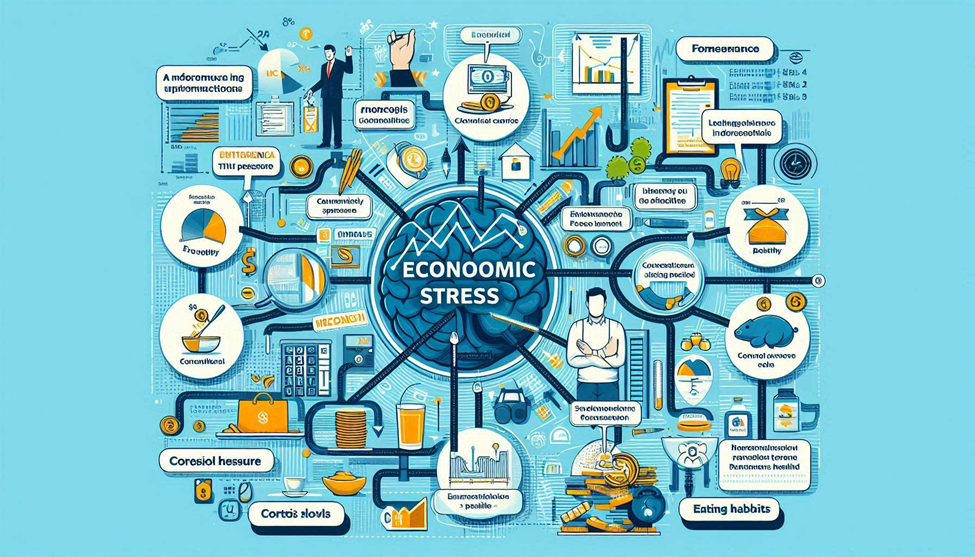
1. Economic Stress: Definition, Scope, and Socioeconomic Context
Economic stress encompasses objective financial hardship (low income, debt, unstable employment) and subjective financial strain (perceived scarcity, fear of economic insecurity). Research shows that perceived financial stress often predicts weight gain more strongly than objective income, highlighting the importance of psychological interpretation.
1.1 Chronic vs. Acute Stress
- Acute stress triggers temporary cortical spikes, mobilizing energy for “fight-or-flight” responses.
- Chronic economic stress results in sustained cortical elevation, promoting visceral fat storage, impaired glucose metabolism, and deregulation of appetite hormones.
1.2 Environmental and Social Factors
Economic stress interacts with broader environmental pressures:
- Food deserts and limited access to fresh produce
- Neighborhood safety and reduced opportunities for outdoor activity
- Job schedules and irregular work hours
- Cultural norms around food and coping
These factors compound metabolic and behavioral responses, creating a synergistic risk for obesity.
2. Cortical and the Physiology of Stress-Induced Weight Gain
Cortical, the primary stress hormone, plays a pivotal role in energy regulation, fat storage, and appetite. Chronic financial stress alters the normal diurnal rhythm of cortical, flattening peaks and prolonging exposure.
2.1 Cortical and Fat Distribution
- Preferentially increases visceral fat around the abdomen and internal organs
- Associated with higher cardio metabolic risk
- Promotes insulin resistance by interfering with glucose uptake
2.2 Appetite Hormones and Reward Pathways
Cortical deregulation influences:
- Lepton resistance → diminished satiety
- Increased gherkin → heightened hunger and cravings
- Neuropeptide Y stimulation → preference for carbohydrate-rich, energy-dense foods
Case Example: Individuals facing monthly debt cycles often report increased late-night snacking, high intake of sugary foods, and difficulty controlling portion sizes, consistent with neuroendocrine patterns driven by cortical and reward sensitivity.
3. Psychological and Behavioral Mechanisms
Financial stress influences decision-making, reward sensitivity, and emotional regulation, which drive eating behaviors beyond mere energy intake.
3.1 Emotional Eating
High-calorie, palatable foods temporarily reduce stress by stimulating dopamine in reward pathways. Over time, these behaviors become habitual, reinforcing weight gain and psychological distress.
3.2 Scarcity Mindset
- People under financial strain often maximize perceived value per calorie.
- Choices prioritize cheap, processed foods over nutrient-dense options.
- Irregular access fosters feast-famine cycles, increasing insulin and fat storage.
3.3 Sleep Disruption
Financial worries often reduce sleep duration and quality, which:
- Increases gherkin and reduces lepton
- Impairs impulse control
- Amplifies cravings for high-sugar, high-fat foods
4. Socioeconomic and Environmental Contributors
Economic stress interacts with the environment to reinforce obesity risk.
4.1 Food Insecurity and the Obesity Paradox
- Limited access to affordable, nutrient-rich foods promotes reliance on calorie-dense options
- Intermittent scarcity encourages overconsumption when food is available
- Psychological stress of scarcity compounds physiological stress responses
4.2 Work Schedules
Irregular or long work hours reduce time for meal planning, grocery shopping, and structured physical activity, creating a behavioral feedback loop that promotes weight gain.
5. Neurobiology of Stress-Induced Eating
Chronic economic stress does more than influence hormone levels—it fundamentally modulates brain circuits that govern reward, habit formation, and impulse control, creating a neurobiological environment that favors overeating and weight gain. Central to this process is the mesolimbic dopamine system, which includes the ventral segmental area, nucleus acumens, and prefrontal cortex. Under conditions of sustained stress, this pathway becomes hypersensitive to hyper-palatable foods, such as those high in sugar, fat, and salt. These foods trigger dopamine release, producing intense feelings of reward and temporarily alleviating stress or anxiety. Over time, repeated engagement of this system reinforces habitual patterns of stress-induced eating, making the behavior increasingly automatic and resistant to conscious control.
Neuroimaging studies provide compelling evidence for this phenomenon. Functional MRI scans reveal heightened activation of the nucleus acumens and orbit frontal cortex in individuals experiencing financial strain, regions associated with craving, reward anticipation, and decision-making. This neural activity correlates strongly with observed behavioral patterns: increased consumption of calorie-dense foods, snacking outside of hunger cues, and difficulty adhering to dietary goals. Importantly, these changes are not merely psychological—they represent structural and functional adaptations in the brain, which may persist even after the acute stressor is removed, contributing to long-term vulnerability to obesity.
Additionally, chronic stress influences the prefrontal cortex, which is responsible for executive function, self-regulation, and inhibitory control. Stress-induced impairment in this region reduces an individual’s capacity to resist immediate food rewards, further reinforcing the cycle of emotional and reward-driven eating. Habit formation under chronic economic stress thus emerges from a complex interplay between heightened reward sensitivity, diminished self-control, and repeated behavioral reinforcement. Understanding these mechanisms underscores why conventional advice—such as “just eat less” or “exercise more”—often fails in contexts of chronic financial strain. Effective interventions must target both the neurobiological underpinnings of reward-driven eating and the environmental and psychological factors that perpetuate these behaviors.
6. Gender, Age, and Individual Variability
Stress-related weight gain does not affect all individuals equally; it varies considerably by sex, age, and genetic predisposition, reflecting the complex interplay between hormonal regulation, neurobiology, and environmental exposures. In women, chronic stress often promotes greater abdominal or visceral fat accumulation due to interactions between cortical and estrogen. Elevated cortical under stress can shift fat storage toward the abdominal region, a pattern linked to increased cardio metabolic risk. Women’s hormonal fluctuations across the menstrual cycle, pregnancy, and menopause further influence the sensitivity of adipose tissue to cortical, amplifying the risk of stress-related weight gain.
Adolescents represent another particularly vulnerable population. During this period of rapid neurodevelopment, the reward circuits of the brain—including the mesolimbic dopamine system—are especially active, making teens more susceptible to emotional and stress-driven eating. Heightened reward sensitivity, combined with ongoing hormonal changes (e.g., testosterone and estrogen surges), irregular sleep, and evolving social pressures, creates a perfect storm for maladaptive eating behaviors and early-life weight gain that may persist into adulthood.
Individual variability also reflects genetic and epigenetic influences. Polymorphisms in genes regulating HPA axis reactivity, appetite hormones, or dopamine signaling can amplify or mitigate the physiological and behavioral consequences of chronic stress. Similarly, early-life exposures—such as prenatal nutrition, maternal stress, or childhood adversity—can program HPA axis function and metabolic responses through epigenetic modifications, influencing lifelong susceptibility to obesity. Recognizing these factors highlights the need for personalized, developmentally appropriate interventions to prevent stress-induced weight gain across diverse populations.
7. Evidence-Based Interventions (Expanded)
- Stress Management
- Mindfulness, CBT, and relaxation techniques reduce cortical and emotional eating
- Nutritional Strategies
- Budget-friendly meal planning with whole foods
- Consistent meal timing stabilizes glucose and reduces impulsive snacking
- Sleep Optimization
- 7–9 hours per night improves appetite regulation and stress resilience
- Physical Activity
- Moderate-intensity aerobic and strength training reduce visceral fat and improve insulin sensitivity
- Policy-Level Interventions
- Food subsidies, community nutrition programs, and workplace flexibility alleviate chronic economic stress
8. Long-Term Implications
Chronic economic stress-induced weight gain increases risk for metabolic syndrome, type 2 diabetes, cardiovascular disease, and mental health disorders. Early recognition and intervention are essential to prevent long-term morbidity and mitigate intergenerational cycles of obesity.
Conclusion
Economic stress is a powerful, multifaceted factor influencing weight regulation, metabolic health, and long-term disease risk. Chronic financial pressure triggers sustained activation of the hypothalamic–pituitary–adrenal (HPA) axis, elevating cortical and altering appetite-regulating hormones such as lepton, gherkin, and neuropeptide Y. These neuroendocrine changes promote visceral fat accumulation, heightened cravings for energy-dense foods, and disrupted satiety cues, creating a physiological environment that favors weight gain.
Beyond biology, economic stress affects psychological and behavioral domains, including emotional eating, reward sensitivity, impaired impulse control, and sleep disruption. Individuals under financial strain often exhibit habitual reliance on cheap, highly processed foods, which exacerbates metabolic deregulation and perpetuates the cycle of stress and weight gain. Environmental and socioeconomic constraints—such as limited access to nutritious foods, unsafe neighborhoods, and irregular work schedules—further compound these effects.
Effective intervention requires a multilevel, integrated approach. Stress-reduction techniques like mindfulness and cognitive-behavioral therapy, combined with sleep optimization, structured meal planning, budget-friendly nutrition strategies, and regular physical activity, can attenuate the biological and behavioral consequences of chronic economic stress. Policy-level actions, including food subsidies, workplace flexibility, and community nutrition programs, are essential for addressing systemic contributors to stress-related obesity.
Recognizing financial strain as a legitimate metabolic stressor reframes weight management as a complex interplay of biology, behavior, and environment, rather than a matter of willpower alone. By addressing physiologicalmechanisms and structural determinants, healthcare providers, policymakers, and individuals can implement strategies that support sustainable weight management, improved metabolic health, and resilience against the long-term consequences of chronic economic stress.
SOURCES
Adam, T. C., & Peel, E. S. (2007). Stress, eating behavior, and the reward system. Physiology & Behavior, 91(4), 449–458.
Dolman, M. F., Pecorino, N. C., & la Fleur, S. E. (2003). Chronic stress and comfort food: Self-medication and abdominal obesity. Brain, Behavior, and Immunity, 17(4), 235–241.
McEwen, B. S. (2008). Central effects of stress hormones in health and disease: Understanding the protective and damaging effects of stress and stress mediators. European Journal of Pharmacology, 583(2–3), 174–185.
Tryon, M. S., Decant R., & Laugher, K. D. (2013). Having your cake and eating it too: A habit‐based perspective on stress and food choice. Frontiers in Psychology, 4, 484.
Tomiyama, A. J., Dolman, M. F., & Peel, E. S. (2013). Comfort food is comforting to those most stressed: Evidence of the chronic stress response network. Psychoneuroendocrinology, 38(2), 2531–2540.
Peel, E., Lepidus, R., McEwen, B., & Brownell, K. (2001). Stress may add bite to appetite in women: A laboratory study of stress-induced cortical and eating behavior. Psychoneuroendocrinology, 26(1), 37–49.
Torres, S. J., & Now son, C. A. (2007). Relationship between stress, eating behavior, and obesity. Nutrition, 23(11–12), 887–894.
Block, J. P., Scribner, R. A., & Disavow, K. B. (2004). Fast food, race/ethnicity, and income: A geographic analysis. American Journal of Preventive Medicine, 27(3), 211–217.
Gibson, E. L. (2012). Emotional influences on food choice: Sensory, physiological, and psychological pathways. Physiology & Behavior, 107(4), 502–513.
O’Connor, D. B., Jones, F., Conner, M., McMillan, B., & Ferguson, E. (2008). Effects of daily hassles and cortical on food intake. Psychoneuroendocrinology, 33(3), 430–439.
Ratters, F., Nieuwenhuizen, A., Lemans, S. G., Born, J. M., & Westerterp-Plantenga, M. S. (2010). Acute stress-related changes in eating in the absence of hunger. Psychoneuroendocrinology, 35(8), 1229–1237.
Björntorp, P. (2001). Do stress reactions cause abdominal obesity and co morbidities? Obesity Reviews, 2(2), 73–86.
Choruses, G. P. (2009). Stress and disorders of the stress system. Nature Reviews Endocrinology, 5(7), 374–381.
Torres, S. J., Now son, C. A., & Waller, J. (2013). Stress, nutrition, and obesity: The role of diet-induced reward. Nutrition & Dietetics, 70(2), 80–90.
Lupine, S. J., McEwen, B. S., Gunnar, M. R., & Heim, C. (2009). Effects of stress throughout the lifespan on the brain, behavior, and cognition. Nature Reviews Neuroscience, 10(6), 434–445.
Sapolsky, R. M. (2004). Why zebras don’t get ulcers: The acclaimed guide to stress, stress-related diseases, and coping. Henry Holt and Company.
Gunderson, C., & Iliac, J. P. (2015). Food insecurity and health outcomes. Health Affairs, 34(11), 1830–1839.
Sinhala, R. (2018). Chronic stress, drug use, and addiction vulnerability. Annals of the New York Academy of Sciences, 1428(1), 127–142.
Miller, G. E., Chen, E., & Parker, K. J. (2007). Psychological stress in childhood and susceptibility to chronic diseases of aging. Psychosomatic Medicine, 69(1), 1–17.
Cohen, S., Janicki-Deverts, D., & Miller, G. E. (2007). Psychological stress and disease. JAMA, 298(14), 1685–1687.
Roberts, C. K., Vasari, N. D., & Barnard, R. J. (2014). Effects of chronic stress and obesity on metabolic and cardiovascular risk. Nutrition, 30(11–12), 1201–1206.
You, Y. H., & Potenza, M. N. (2013). Stress and eating behaviors. Minerva Endocrinologist, 38(3), 255–267.
Standard, A. J., Faith, M. S., & Allison, K. C. (2003). Depression and obesity. Biological Psychiatry, 54(3), 330–337.
Block, J. P., He, Y., Zaslavsky, A. M., Ding, L., & Iranian, J. Z. (2011). Psychosocial stress and weight change among women in the United States. Obesity, 19(1), 191–196.
Kivimäki, M., Nyberg, S. T., Batty, G. D., Branson, E. I., Heikkilä, K., Alfred son, L., … & Theorell, T. (2006). Job strain as a risk factor for coronary heart disease: A collaborative meta-analysis of individual participant data. The Lancet, 380(9852), 1491–1497.
HISTORY
Current Version
Nov 29, 2025
Written By
ASIFA
0 Comments