Introduction
For decades, conventional wisdom and mainstream culture have framed weight management as a straightforward test of willpower. Popular diet books, commercial weight-loss programs, and media narratives frequently portray success as a matter of discipline, restraint, and personal virtue. This message, repeated over years, conditions many people to believe that difficulty losing weight—or maintaining it—is a sign of moral shortcoming. Individuals who struggle internalize blame, assuming they “aren’t trying hard enough,” which fosters cycles of guilt, shame, and harsh self-judgment. This harmful framing not only undermines mental health but also sets people up for inevitable disappointment, as it ignores the biological forces that shape appetite, cravings, energy regulation, and metabolic efficiency.
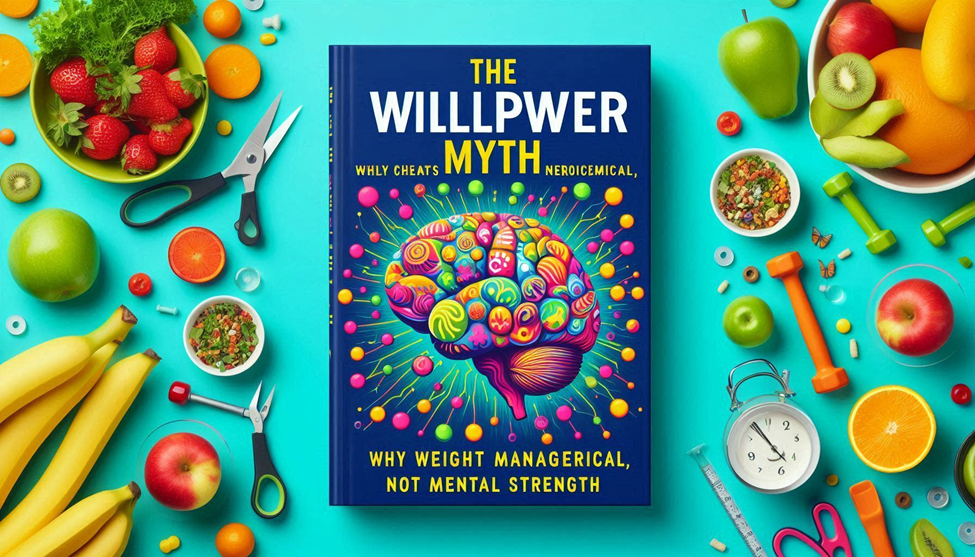
In reality, contemporary research across neuroscience, endocrinology, nutrition science, and behavioral psychology paints a far more complex picture. Studies reveal that weight regulation is orchestrated by an intricate network of petrochemical circuits, hormonal feedback loops, gut-brain communication pathways, inflammatory signals, sleep rhythms, and environmental cues. Most of these mechanisms operate automatically—below conscious awareness—and exert enormous influence over eating behavior, impulsivity, and metabolic outcomes. While personal choices do matter, they are constantly modulated, guided, or overridden by deeper physiological drives. When the brain is primed for hunger, when dopamine circuits are hyper sensitized, when lepton or insulin signaling is impaired, or when chronic stress elevates cortical, expecting “willpower” to overcome these forces is both unrealistic and biologically uninformed.
Reframing weight management through this scientific lens is not about removing responsibility—it is about redefining responsibility in a way that is accurate, humane, and effective. Understanding the biological foundations of appetite, reward, and energy balance allows individuals to shift from self-blame to self-strategizing. Instead of forcing discipline, people can learn how to work with their biology: stabilizing hormones through regular meals and sleep, reducing cue-driven eating by shaping their environment, supporting dopamine balance with nutrient-dense foods, and managing stress to prevent cortical-driven cravings. This evidence-based perspective replaces moral judgment with compassion and empowers individuals to adopt strategies that align with how the brain and body actually function, not how diet culture imagines they should.
Evolutionary and Neurobiological Foundations of Appetite
Human physiology and behavior are shaped by evolutionary pressures that favored survival in environments where food scarcity was a daily challenge. The ability to locate, consume, and store energy efficiently conferred a survival advantage, leaving enduring imprints on brain circuits and hormonal systems that regulate hunger, satiety, and energy storage.
The hypothalamus acts as the central hub for energy regulation. It integrates signals from the gastrointestinal tract, adipose tissue, and central nervous system to maintain energy homeostasis. Within the hypothalamus, the actuate nucleus, par ventricular nucleus, and lateral hypothalamic area coordinate hunger and satiety signals, orchestrating complex feeding behaviors. These signals are further modulated by the limbic system, particularly the amygdale and nucleus acumens, which govern reward processing, motivation, and emotional responses to food. The prefrontal cortex mediates executive control, influencing decision-making and inhibitory behavior. Together, these systems create a sophisticated network in which appetite, reward, and cognition interacts dynamically, often explaining why conscious restraint alone fails.
Key Neurotransmitters and Hormones in Weight Regulation
Dopamine: Reward and Motivation
Dopamine is central to signaling pleasure, reward, and reinforcement. The consumption of palatable foods—especially those high in sugar, fat, or salt—activates dopaminergic pathways in the mesolimbic system, producing a sense of satisfaction and reinforcing eating behavior. Chronic exposure to hyper palatable foods can reduce dopamine receptor sensitivity, fostering compulsive eating patterns similar to substance addiction. This mechanism illustrates why some individuals experience intense cravings that are difficult to suppress, despite conscious attempts at restraint.
Lepton and Gherkin: Hormonal Balance of Hunger
Lepton, produced by adipose tissue, signals energy sufficiency to the hypothalamus, promoting satiety and increasing energy expenditure. Gherkin, secreted primarily by the stomach, signals energy deficit and stimulates appetite. Deregulation of these hormones—through sleep deprivation, chronic stress, or obesity-induced lepton resistance—can undermine appetite control, independent of willpower. The result is often a physiological drive to eat that overwhelms conscious intentions.
Serotonin, Neuropeptide Y, and Cortical
Serotonin plays a dual role in mood regulation and satiety, influencing emotional eating and impulse control. Neuropeptide Y, synthesized in the hypothalamus, is a potent stimulator of appetite, particularly under stress. Elevated cortical levels, a hallmark of chronic stress, increase visceral fat deposition and amplify hunger signals, creating a biological environment that promotes weight gain. These interconnected systems highlight the complex interplay between neurochemistry, stress, and eating behavior.
Environmental and Lifestyle Influences
Biological mechanisms do not operate in isolation; environmental and lifestyle factors profoundly influence petrochemical signaling, often exacerbating deregulation.
Sleep Deprivation
Insufficient sleep disrupts lepton and gherkin signaling, increasing hunger and cravings for calorie-dense foods. Even partial sleep restriction can elevate evening caloric intake, particularly for carbohydrate-rich and high-fat foods. Optimizing sleep duration and quality is therefore critical for maintaining appetite balance.
Chronic Stress and Emotional Eating
Persistent stress elevates cortical and interacts with dopaminergic pathways, intensifying the rewarding experience of calorie-dense foods. Emotional eating is not a failure of character; it is a natural petrochemical response to stress, mediated by changes in hormones, neurotransmitters, and reward sensitivity.
Hyper palatable Foods and Environmental Cues
Modern diets are rich in hyper palatable foods engineered to maximize hedonic appeal. Combinations of sugar, fat, and salt exploit reward circuits, promoting repeated consumption and overriding natural satiety signals. Environmental cues, such as food advertising, social dining, and constant accessibility of snacks, trigger conditioned neural responses that drive eating independent of physiological hunger.
Psychological Factors vs. Petrochemical Drivers
While cognitive control and psychological strategies can certainly influence eating behavior, their power is inherently limited by petrochemical realities. Executive control—the mental capacity to plan, inhibit impulses, and make long-term decisions—is governed by the prefrontal cortex. This region is highly sensitive to stress, sleep deprivation, emotional arousal, and metabolic instability. When cortical raises, glucose drops, or emotional load increases, the prefrontal cortex temporarily loses dominance. In these moments, deeper brain structures such as the amygdale and the dopamine-driven reward circuits take over, intensifying cravings and diminishing the effectiveness of willpower. This explains why individuals may intellectually “know” what to eat yet still feel pulled toward hyper-palatable foods during moments of fatigue, anxiety, or overwhelm.
Traditional dieting strategies often fail because they rely heavily on restraint, assuming that conscious control can override deeply wired physiological drives. However, neurobiological systems governing hunger, reward, and energy balance were designed for survival—not modern food environments saturated with calorically dense, highly stimulating options. When these instinctive systems are activated, cognitive control becomes a weak competitor.
A more effective and sustainable approach involves aligning daily habits with the body’s intrinsic regulatory architecture. Regular meal timing stabilizes blood glucose and reduces reward-driven impulsivity. Nutrient-dense foods rich in fiber, protein, and healthy fats enhance satiety hormones like GLP-1, peptide YY, and cholecystokinin, which naturally reduce appetite without requiring mental effort. Lifestyle factors such as adequate sleep, stress reduction, and physical activity further optimize dopamine and insulin signaling, creating a metabolic environment where cravings are quieter and decision-making becomes easier.
Psychological interventions—such as mindful eating, emotional regulation skills, or cognitive restructuring—are most powerful when they complement these biological foundations. When behavioral strategies work in harmony with petrochemical and hormonal dynamics, individuals no longer have to fight their biology. Instead, they leverage it, creating a weight-management approach that is biologically realistic, psychologically sustainable, and fundamentally compassionate.
Implications for Dieting and Interventions
Understanding weight management as a petrochemical process transforms the approach to dieting and intervention. Key principles include:
- Optimizing Nutrient Composition: Diets high in protein, fiber, and complex carbohydrates enhance satiety, stabilize blood glucose, and reduce cravings.
- Strategic Meal Timing: Aligning eating patterns with circadian rhythms improves metabolic efficiency and hormonal regulation.
- Behavioral Support: Cognitive-behavioral techniques aid habit formation and reduce emotional reactivity but are most effective when paired with biologically informed strategies.
- Sleep and Stress Management: Adequate sleep and stress reduction modulate lepton, gherkin, and cortical levels, directly influencing appetite and fat storage.
- Environmental Design: Controlling exposure to hyper palatable foods and managing food cues can minimize unconscious triggers for overeating.
These approaches shift the focus from punitive willpower strategies to scientifically grounded methods that work with biology, rather than against it.
Practical, Evidence-Based Strategies
Individuals can implement actionable strategies to align lifestyle choices with petrochemical mechanisms:
- Prioritize Sleep: Aim for 7–9 hours nightly to optimize hunger-regulating hormones.
- Incorporate Protein and Fiber at Each Meal: Enhances satiety and stabilizes blood sugar.
- Practice Mindful Eating: Engaging with the eating process allows satiety cues to register more effectively.
- Manage Stress: Meditation, physical activity, and social support reduce cortical and dampen reward-driven overeating.
- Limit Hyper palatable Food Exposure: Reducing cues for highly processed foods minimizes dopamine overstimulation and compulsive intake.
These strategies support sustainable weight management by leveraging natural regulatory systems, reducing reliance on willpower alone.
Conclusion
Weight management is not, and has never been, a test of personal character, discipline, or moral strength. Modern scientific evidence makes it clear that body weight is regulated by intricate petrochemical networks, hormonal feedback loops, metabolic adaptations, reward pathways, and environmental cues that operate mostly outside conscious awareness. These systems evolved to protect humans from starvation—not to help them navigate today’s food-abundant, stress-driven world. When these biological mechanisms collide with modern lifestyles, the result is often weight gain or difficulty losing weight, regardless of an individual’s determination or intentions.
Understanding the biological basis of appetite, cravings, and energy balance reframes dieting from an act of sheer willpower to an act of alignment—an effort to work with the body’s physiology rather than against it. This perspective alleviates self-blame and replaces it with clarity: overeating is not a personal failure but a natural response to petrochemical signals shaped by stress, sleep patterns, emotional states, and the powerful reward properties of modern hyper palatable foods.
By adopting strategies that support these underlying regulatory systems—prioritizing consistent, high-quality sleep; consuming nutrient-dense, protein- and fiber-rich meals; managing chronic stress through mindfulness, physical activity, and structured routines; and shaping food environments to limit exposure to cues that trigger automatic eating—individuals can create internal conditions that naturally reduce cravings and enhance satiety. These biologically informed strategies lighten the cognitive load and minimize reliance on conscious restraint.
Ultimately, this paradigm shift replaces guilt with compassion, frustration with understanding, and short-term willpower battles with sustainable lifestyle support. When individuals learn to cooperate with their neurobiology—rather than constantly fight it—weight management becomes more achievable, more stable, and significantly less emotionally draining. This scientifically grounded approach empowers people to build health from the inside out, guided by physiology, not pressure or punishment.
SOURCES
Adam & Peel, 2007 – Research connecting stress-induced eating with neuroendocrine mechanisms.
Baumeister & Tierney, 2011 – Foundational work on ego depletion, self-control fatigue, and willpower myths.
Berthoud, 2012 – Comprehensive analysis of the neurobiology of food reward and overeating.
Berthoud & Morrison, 2008 – Neural circuits that control appetite and motivation.
Blundell et al., 2010 – Appetite regulation and macronutrient-driven satiety pathways.
Cummings et al., 2004 – Discovery of gherkin’s central role in hunger signaling.
Cummings & Overdoing, 2007 – Hormonal control of appetite through peripheral signals.
Davis et al., 2011 – Petrochemical basis of food addiction and reward-centered eating.
Farooqi & O’Rahilly, 2005 – Genetic influences on lepton signaling and obesity.
Ferriday & Brainstorm, 2011 – Sensory cues and environmental triggers affecting overeating.
Friedman, 2014 – Lepton biology and the petrochemical determinants of weight regulation.
Goldstone et al., 2009 – Brain imaging studies showing altered reward sensitivity in obesity.
Volker et al., 2012 – Brain reward pathways and compulsive eating behavior.
Woods & D’Alessio, 2008 – Peripheral metabolic signals and neural integration of appetite.
Ziauddeen & Fletcher, 2013 – Hyperpalatability, cue-driven eating, and loss of control.
HISTORY
Current Version
Nov 25, 2025
Written By
ASIFA

0 Comments