Introduction
Hypertrophy, broadly defined, is the enlargement of skeletal muscle fibers, representing one of the most sought-after adaptations in resistance training. For athletes, bodybuilders, and fitness enthusiasts, hypertrophy is not merely about visual appeal—it underpins strength, power, endurance, metabolic health, and overall functional performance. Yet, not all muscle growth is identical. The two primary forms—sarcoplasmic and myofibrillar hypertrophy—reflect fundamentally different physiological processes, each with unique implications for force generation, energy metabolism, aesthetic appearance, and long-term adaptation. Understanding these mechanisms, the interplay of hormonal and cellular pathways and the optimal strategies to elicit each type is essential for designing personalized, evidence-based resistance training programs that maximize results while minimizing injury risk.
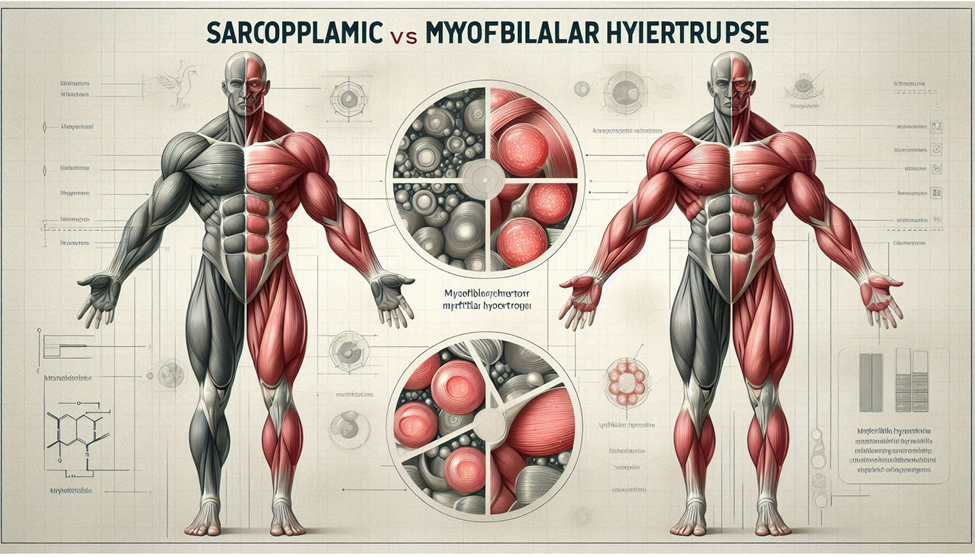
While casual gym-goers often equate hypertrophy with “size,” the reality is more nuanced. Myofibrillar hypertrophy involves an increase in contractile proteins—acting and myosin—within the muscle fiber, directly enhancing strength, neuromuscular efficiency, and maximal force output. In contrast, sarcoplasmic hypertrophy expands the non-contractile components of the muscle, including cytosolic fluid, glycogen, mitochondria, and enzymes, producing a visually fuller, more voluminous muscle without a proportional increase in strength. The ratio of these adaptations influences performance outcomes, training capacity, and even joint health, as well as metabolic efficiency, glycogen storage, and fatigue resistance.
This guide integrates insights from exercise physiology, biomechanics, molecular biology, sports nutrition, and strength conditioning, offering a comprehensive guide to hypertrophic training. Topics explored include:
- Cellular and molecular mechanisms driving fiber growth and remodeling
- Key hormonal and signaling pathways, including motor, AMPK, IGF-1, and satellite cell activity
- Training variables: load, repetition ranges, volume, tempo, and rest intervals
- Functional implications for strength, power, endurance, and metabolic rate
- Nutritional strategies to support targeted adaptations
- Recovery protocols, per iodization models, and long-term progression considerations
By understanding the distinctions and interactions between sarcoplasmic and myofibrillar hypertrophy, trainees and coaches can tailor programs to specific goals, whether prioritizing maximal strength, muscle size, endurance, or a hybrid outcome. This evidence-based framework empowers individuals to train smarter, achieve balanced muscular development, and optimize both functional performance and aesthetic results over the long term.
1. Understanding Muscle Fiber Architecture
Muscle fibers are complex, multinucleated cells composed of myofibrils (contractile proteins) and a surrounding matrix of sarcoplasm (cytoplasm, glycogen, mitochondria, and fluid). The ratio of these components, and the stimulus applied through training, determines the type of hypertrophy achieved.
1.1 Myofibrils: The Contractile Machinery
- Composed primarily of acting and myosin, organized into sarcomeres
- Responsible for force generation and strength development
- Growth involves protein accretion, satellite cell activation, and fiber remodeling
- Typically results from high-load, low-rep strength training (≥70–85% 1RM, 4–6 reps)
1.2 Sarcoplasm: The Fluid and Energy Reservoir
- Contains glycogen, enzymes, mitochondria, cytosol, and water
- Increases do not directly improve contractile force, but enhance muscle size, endurance, and energy storage capacity
- Typically stimulated by moderate-load, higher-rep hypertrophy training (8–20 reps, moderate intensity, shorter rest)
1.3 Implications of Fiber Architecture
The relative expansion of sarcoplasm vs. myofibrils affects:
- Muscle aesthetics: Sarcoplasmic growth contributes to “fuller” appearance
- Strength output: Myofibrillar growth is the primary driver of maximal force
- Metabolic adaptation: Sarcoplasmic hypertrophy improves glycogen storage, energy metabolism, and muscular endurance
2. Molecular Mechanisms of Hypertrophy
Muscle growth is orchestrated by complex intracellular signaling networks triggered by mechanical load, metabolic stress, and hormonal milieu.
2.1 Myofibrillar Hypertrophy Pathways
- motor activation: Central regulator of protein synthesis
- Satellite cells: Fuse with existing fibers to add my nuclei, expanding contractile potential
- High-tension stimulus: Heavy loads induce mechanical stress on sarcomeres, stimulating acting–myosin proliferation
2.2 Sarcoplasmic Hypertrophy Pathways
- Metabolic stress: Accumulation of lactate, hydrogen ions, and inorganic phosphate triggers hypertrophy signaling
- Cell swelling: Increased osmotic pressure promotes anabolic signaling
- Hormonal response: Moderate-load high-rep training enhances IGF-1 and growth hormone release, supporting sarcoplasmic expansion
2.3 Hybrid Growth
Most resistance training induces both adaptations simultaneously, but relative emphasis depends on load, volume, rest intervals, and exercise selection.
3. Training Modalities and Rep Ranges
Training strategies can be tailored to emphasize one type of hypertrophy.
| Adaptation Type | Load | Reps | Rest | Tempo | Example Exercises |
| Myofibrillar | 70–90% 1RM | 3–6 | 2–5 min | Controlled | Squat, Deadlight, Bench Press |
| Sarcoplasmic | 50–70% 1RM | 8–20 | 30–90 sec | Slower eccentric | Leg Press, Cable Fly, Machine Rows |
| Mixed | 60–80% 1RM | 6–12 | 1–2 min | Moderate | Supersets, Compound + Isolation |
Key observations:
- Load intensity and mechanical tension are stronger drivers of myofibrillar growth
- Metabolic stress and moderate-volume fatigue promote sarcoplasmic expansion
- Combining approaches can maximize both size and strength
4. Hormonal and Nutritional Considerations
Hypertrophy is not solely a function of mechanical tension; it is profoundly influenced by endocrine signaling, hormonal milieu, and nutrient availability, which together orchestrate muscle protein synthesis, cellular adaptation, and energy storage. Hormones act as critical mediators of hypertrophic response, dictating how effectively mechanical and metabolic stress translate into functional muscle growth.
4.1 Hormones
Testosterone and IGF-1 (insulin-like growth factor 1) are central to hypertrophy. Both promote satellite cell activation, which provides additional nuclei to muscle fibers, enhancing the capacity for myofibrillar protein synthesis. Elevated IGF-1 levels also stimulate anabolic signaling via the motor pathway, amplifying contractile protein accretion. Growth hormone (GH), often elevated in response to high-volume, moderate-load sarcoplasmic training, supports glycogen storage, amino acid uptake, and connective tissue remodeling, facilitating both sarcoplasmic expansion and recovery. Conversely, chronic cortical elevation, whether due to overtraining, psychological stress, or sleep deprivation, can blunt anabolic signaling, promote protein breakdown, and inhibit hypertrophy, highlighting the critical role of stress management, sleep hygiene, and per iodized programming.
4.2 Nutrition
Adequate nutrient intake is equally essential. Protein consumption of 1.6–2.2 g/kg/day maximizes muscle protein synthesis and supports satellite cell-mediated growth. Carbohydrates provide glycogen to fuel sarcoplasmic hypertrophy, maintain training intensity, and improve recovery, while also contributing to cell swelling that signals anabolic pathways. Timing of nutrients further amplifies these effects: pre- and post-workout protein and carbohydrate intake enhances motor activation, replenishes glycogen, and mitigates catabolic stress. Strategic nutrient planning, paired with hormonally optimized training, ensures that both sarcoplasmic and myofibrillar adaptations occur efficiently, supporting maximal strength, size, endurance, and metabolic resilience over the long term.
5. Recovery and per iodization
Recovery dictates the efficiency of hypertrophic adaptations:
- Myofibrillar hypertrophy requires longer rest between sessions due to high mechanical stress
- Sarcoplasmic hypertrophy benefits from shorter rest and more frequent volume to sustain metabolic stress
- Per iodization strategies can rotate phases: strength-focused blocks for myofibrillar growth, higher-volume blocks for sarcoplasmic fullness
6. Practical Implications for Athletes and Lifters
- Power lifters & Strength Athletes: Prioritize myofibrillar hypertrophy for maximal force
- Bodybuilders & Aesthetic Goals: Combine sarcoplasmic and myofibrillar strategies for size and symmetry
- Endurance Athletes: Sarcoplasmic adaptations support glycogen storage and muscular endurance
- Hybrid Athletes: Strategic blending achieves functional strength, size, and metabolic efficiency
7. Common Myths and Misconceptions
In the fitness community, several myths persist regarding hypertrophy, often causing confusion about the most effective training strategies. One common misconception is that “high reps only create a pump, not real growth.” While it is true that very high-repetition training primarily induces sarcoplasmic hypertrophy, this adaptation still contributes significantly to overall muscle size. Moreover, sarcoplasmic expansion indirectly supports myofibrillar growth by increasing glycogen storage, enhancing cell swelling, and creating metabolic stress that amplifies anabolic signaling. Consequently, high-rep work is not wasted effort—it plays a crucial role in aesthetic fullness, muscular endurance, and preparation for heavier lifts.
Another pervasive myth is that “heavy lifting stunts flexibility or negatively affects aesthetics.” Evidence shows that when properly programmed, heavy resistance training improves connective tissue strength, tendon resilience, and muscle density without compromising mobility. Balanced programming that includes full range-of-motion exercises, dynamic stretching, and joint-specific mobility work ensures that strength gains are functional and muscles remain proportional and symmetrical.
Finally, the idea that you can completely target sarcoplasmic versus myofibrillar hypertrophy is only partially true. While training variables like load, reps, and rest can bias adaptations toward one type, most hypertrophy is a hybrid response, involving both contractile protein growth and non-contractile expansion. Understanding these nuances allows trainees to combine rep ranges and intensities strategically, optimizing both size and strength in a safe, efficient, and scientifically grounded manner.
8. Assessing Progress
Assessing hypertrophy progress requires a multifaceted approach, as different measurement tools capture distinct aspects of muscle adaptation. Strength metrics, such as one-repetition maximum (1RM) or multi-repetition performance, provide the most direct insight into myofibrillar hypertrophy, since increased contractile protein content translates to greater force production. Tracking improvements in compound lifts, explosive movements, or isometric strength tests can reveal whether training is effectively enhancing neuromuscular efficiency and maximal strength capacity.
In addition to strength, muscle circumference measurements and advanced imaging techniques such as DEXA (dual-energy X-ray absorptiometry) or ultrasound offer valuable information on overall muscle size, including both sarcoplasmic and myofibrillar components. Regularly monitoring limb girth, cross-sectional area, or lean tissue mass enables practitioners to evaluate changes in muscle volume, symmetry, and proportional development, ensuring hypertrophy is occurring in target regions.
Finally, assessing functional performance—including explosive power, muscular endurance, and fatigue resistance—helps identify the type of adaptation predominating. For example, improvements in endurance and sustained contractions may indicate sarcoplasmic expansion, whereas increases in maximal lift output reflect myofibrillar growth. By combining these methods, athletes, coaches, and trainees gain a comprehensive understanding of hypertrophy progress, allowing for informed adjustments to training volume, intensity, and recovery strategies to optimize both size and strength over the long term.
9. Integrating Both Hypertrophy Types
Optimal hypertrophy programming is rarely achieved through a single training approach. Instead, per iodized cycles—structured phases alternating between different training emphases—maximize both strength and muscle size while minimizing overtraining and plateaus. A well-designed program typically begins with a Strength Phase, characterized by heavy loads (3–6 repetitions at 70–90% 1RM), long rest intervals (2–5 minutes), and high mechanical tension. This phase prioritizes myofibrillar hypertrophy, increasing contractile protein content, improving maximal force output, and enhancing neuromuscular efficiency. It establishes a foundation of strength that supports subsequent higher-volume work.
Following the strength block, a Volume Phase emphasizes moderate loads (8–20 reps at 50–70% 1RM) with shorter rest intervals (30–90 seconds). This approach generates metabolic stress, stimulates sarcoplasmic hypertrophy, increases glycogen storage, and enhances muscle fullness and endurance. By focusing on higher-rep volume and time under tension, trainees improve cellular energy capacity, mitochondrial density, and muscular resilience.
Finally, a Hybrid Phase integrates elements of both previous blocks, combining moderate loads, varied repetition ranges, supersets, and strategic metabolic stress. This phase produces balanced muscular development, reinforcing both contractile capacity and sarcoplasmic expansion. Per iodized programming ensures not only maximal strength and aesthetic muscle size, but also improved endurance, energy metabolism, joint health, and long-term adaptation, making it ideal for both athletes and physique-focused trainees.
Conclusion
Sarcoplasmic and myofibrillar hypertrophy represent two distinct, yet interrelated pathways of muscle growth, each with unique implications for strength, aesthetics, performance, and metabolic efficiency. Myofibrillar hypertrophy, driven primarily by high-load, low-rep training, increases contractile protein content, enhancing maximal strength, explosive power, and functional performance. Sarcoplasmic hypertrophy, conversely, relies on moderate-load, higher-volume training to expand cellular fluid, glycogen, and metabolic machinery, improving muscular endurance, size, and energy storage capacity. Both adaptations are influenced by mechanical tension, metabolic stress, hormonal signaling, nutrition, recovery, and training frequency.
A strategic approach recognizes that no single method is universally superior. Athletes seeking maximal strength—powerlifters, Olympic lifters—benefit most from myofibrillar-focused programming. Bodybuilders and hybrid athletes require a nuanced combination, integrating high-volume sarcoplasmic work to optimize appearance and energy metabolism, while maintaining high-load training for contractile strength. Understanding the underlying cellular mechanisms also informs recovery planning, nutrient timing, and per iodization, enhancing long-term adaptation and reducing injury risk.
Ultimately, hypertrophy is both a science and an art. Leveraging knowledge of sarcoplasmic and myofibrillar pathways allows coaches and trainees to tailor programs to specific goals, body types, and performance objectives, ensuring that gains are functional, aesthetically balanced, and sustainable. By combining heavy-load strength work with strategically applied volume training, one can achieve a hybrid model of growth that maximizes size, strength, endurance, and metabolic efficiency, unlocking the full potential of human musculature.
SOURCES
Schoenfeld (2010) – Mechanisms of muscle hypertrophy: cellular and molecular perspectives
Schoenfeld (2013) – Evidence-based hypertrophy training recommendations
Fry (2004) – Myofibrillar vs. sarcoplasmic hypertrophy differentiation
Wernbom et al. (2007) – Influence of training volume on hypertrophic adaptations
Osborn & Schoenfeld (2014) – Role of mechanical tension and metabolic stress
Seines et al. (2007) – Muscle architectural adaptations to resistance training
Hackney et al. (1985) – Neural contributions to strength and hypertrophy
Campos et al. (2002) – Hypertrophic response to different rep ranges
Krieger (2010) – Meta-analysis of rep ranges for hypertrophy
Ahtiainen et al. (2003) – Muscle protein synthesis response to load
Bard et al. (2010) – Satellite cell contribution to myofibrillar growth
West et al. (2010) – Protein ingestion and hypertrophic signaling
MacDougall et al. (1982) – Muscle fiber type response to load
Morton et al. (2016) – Resistance training for maximal hypertrophy
Peterson et al. (2011) – Volume and intensity effects on strength and size
Wernbom et al. (2006) – Training frequency and hypertrophic outcomes
Ogasawara et al. (2013) – Cluster sets and sarcoplasmic adaptations
Schoenfeld et al. (2016) – Mechanistic basis of hypertrophy: tension, fatigue, and damage
Haun et al. (2019) – Muscle fiber hypertrophy mapping using imaging
Wernbom et al. (2009) – Metabolic stress and growth signaling
Gentile et al. (2015) – Comparative hypertrophy responses in compound vs. isolation exercises
Schoenfeld et al. (2019) – Per iodization strategies for combined hypertrophy
Bard et al. (2012) – Myofibrillar protein synthesis after resistance exercise
Daniel et al. (2017) – Muscle adaptation to different rep ranges
Ahtiainen et al. (2005) – Long-term hypertrophic adaptations in strength-trained athletes
HISTORY
Current Version
Dec 01, 2025
Written By
ASIFA

0 Comments