Introduction
Headache disorders represent one of the most prevalent and disabling neurological conditions worldwide, with migraine and tension-type headache (TTH) standing as the two primary forms. For women, these are not merely common ailments but profound health burdens that disproportionately shape their quality of life, economic productivity, and social functioning. The epidemiology is stark: migraine is two to three times more common in women than in men, with a lifetime prevalence affecting approximately one in five women. Tension-type headache, while more equally distributed between the sexes, still exhibits a female preponderance, particularly in its chronic form. This gendered disparity points unequivocally to a complex interplay between biological sex and the multifactorial etiology of headache disorders. Among the myriad of potential triggers—dietary, environmental, sensory, and sleep-related—psychological stress emerges as the most universally reported and potent precipitant for both migraine and TTH attacks. The relationship, however, is far from simple. Stress does not merely act as an external switch; it is integrated into the very pathophysiology of headache through neurovascular, neuroinflammatory, and central sensitization mechanisms that are themselves modulated by the female hormonal milieu. The cyclical fluctuations of estrogen and progesterone across the menstrual cycle, the profound shifts of pregnancy and postpartum, and the transition through perimenopause create a dynamic biological landscape that alters neuronal excitability, pain processing, and stress reactivity. Furthermore, women often navigate unique psychosocial stressors, including gendered societal roles, caregiving burdens, and a higher prevalence of comorbid anxiety and depression, which can amplify the stress-headache cycle. Understanding stress-induced migraines and tension headaches in women requires a biopsychosocial lens, one that synthesizes neurobiology, endocrinology, and psychology. This exploration delves into the distinct pathophysiology of these headaches, the critical modulating role of female hormones, the intricate cycle linking stress and headache, and the comprehensive management strategies required for effective care, aiming to illuminate a path toward better treatment and relief for the millions of women affected.
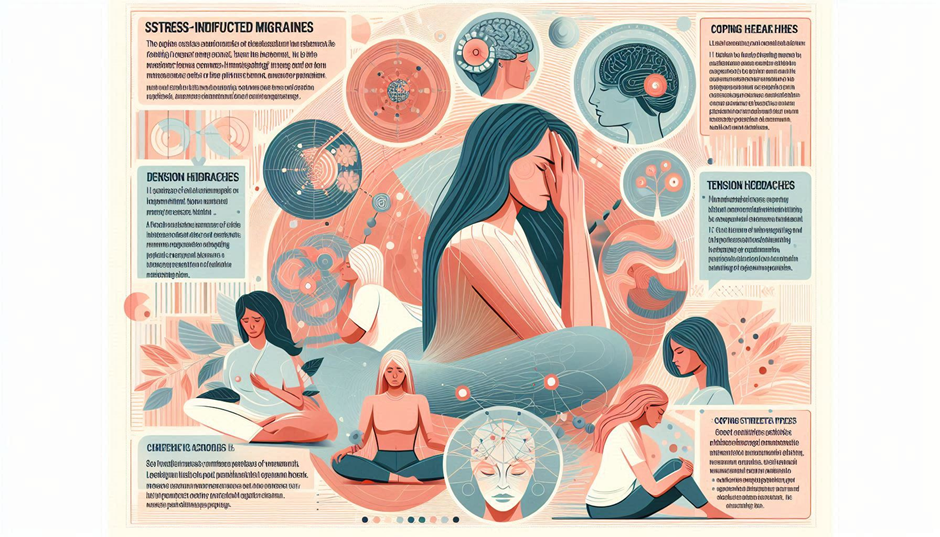
1. Pathophysiology: The Distinct Neural Pathways of Migraine and Tension-Type Headache
While both migraine and tension-type headache are primary headache disorders often triggered by stress, their underlying pathophysiological mechanisms are distinct, though they may overlap in chronic presentations. Understanding these separate pathways is essential to appreciate how stress interfaces with each condition. Migraine is now understood as a hereditary disorder of sensory processing, characterized by a hyperexcitable brain. The traditional vascular theory has been largely supplanted by a neurovascular model centering on the trigeminovascular system. The process is believed to begin with cortical spreading depression (CSD), a wave of neuronal and glial depolarization that moves slowly across the cerebral cortex. This electrophysiological event is thought to underlie the migraine aura experienced by roughly one-third of sufferers. CSD activates trigeminal nerve afferents that innervate the meninges and cerebral blood vessels. This activation leads to the release of vasoactive neuropeptides, notably calcitonin gene-related peptide (CGRP), substance P, and neurokinin A, from trigeminal nerve endings. These peptides cause neurogenic inflammation: vasodilation of meningeal vessels, plasma protein extravasation, and mast cell degranulation. This inflammatory soup further sensitizes peripheral trigeminal neurons, a state known as peripheral sensitization, which manifests as throbbing, unilateral head pain aggravated by physical activity. The pain signals are then transmitted to the trigeminal nucleus caudalis in the brainstem and from there to higher pain-processing centers like the thalamus and cortex. Crucially, prolonged input can lead to central sensitization—a state of heightened responsiveness of central nervous system neurons to normal or subthreshold input. This explains the phenomenon of cutaneous allodynia during a migraine attack, where normally non-painful stimuli like brushing hair, wearing earrings, or resting the head on a pillow become painful. The brainstem, particularly the dorsal raphe nuclei and locus coeruleus, acts as a modulator, and its dysfunction is implicated in migraine vulnerability. Stress influences this pathway at multiple nodes: it can lower the threshold for CSD, directly activate the trigeminovascular system via brainstem pathways, and promote central sensitization.
In contrast, tension-type headache, especially its episodic form, has a pathophysiology that is less clearly defined but centers on peripheral myofascial mechanisms and, in its chronic form, central nervous system dysregulation. The pain of TTH is typically described as a constant, pressing, or tightening band-like sensation around the head, of mild to moderate intensity. The predominant theory for episodic TTH involves heightened pericranial myofascial pain sensitivity. Stress and psychological factors are believed to lead to increased muscle activity in the scalp, neck, and jaw (e.g., clenching, bruxism), resulting in sustained contraction of pericranial muscles. This prolonged muscle activity may lead to ischemia and the release of algesic substances like potassium ions, bradykinin, and serotonin, which sensitize muscle nociceptors. This peripheral sensitization generates the feeling of tightness and pressure. However, research has consistently shown that measured muscle electromyographic (EMG) activity is not always elevated in TTH patients, suggesting other factors are paramount. This leads to the role of central pain processing. In chronic tension-type headache (CTTH), where headaches occur on 15 or more days per month, central sensitization becomes the dominant feature. Persistent nociceptive input from pericranial muscles or other sources leads to functional changes in the spinal trigeminal nucleus and higher central pathways. There is a failure of the endogenous pain inhibitory systems, particularly the descending pain modulatory pathways originating in the brainstem that normally dampen pain signals. Patients with CTTH exhibit generalized hypersensitivity to various stimuli, lowered pain thresholds, and increased responses to painful stimuli not only in the head but across the body, indicative of a global dysfunction in pain processing. Stress is a primary driver in both the peripheral muscle tension of episodic TTH and the central sensitization and impaired inhibition of CTTH. Therefore, while migraine is primordially a disorder of neurovascular and trigeminal activation with consequential sensitization, TTH begins more peripherally in muscle and fascia but evolves into a central disorder of pain modulation, with stress acting as a critical catalyst and sustainer in both trajectories.
2. The Hormonal Modulator: Estrogen, Menstrual Cycles, and Reproductive Transitions
The profound female preponderance of migraine, in particular, is inextricably linked to the influence of sex hormones, with estrogen being the principal orchestrator. Estrogen is a potent neuromodulator with widespread effects on cerebral excitability, neurotransmitter systems, and vascular tone. Its relationship with migraine is complex and often paradoxic, best described as one of “estrogen withdrawal” rather than simply high or low levels. Estrogen influences serotonin synthesis, availability, and receptor function. Serotonin is a key player in migraine pathophysiology, involved in pain modulation, vascular tone, and the descending pain inhibitory pathways. High, stable levels of estrogen tend to have a stabilizing effect on neuronal membranes and raise the threshold for migraine, while rapid declines in estrogen can trigger neuronal hyperexcitability and facilitate CSD and trigeminal activation. This withdrawal model perfectly explains the timing of menstrual migraine, which affects well over half of female migraineurs. Menstrual migraine, typically occurring in the two days before menstruation through the first three days of bleeding, coincides with the natural premenstrual plummet in estradiol and progesterone. These attacks are often more severe, longer lasting, and more refractory to treatment than non-menstrual migraines. Beyond the perimenstrual window, some women experience migraines exclusively at this time (pure menstrual migraine), while others have attacks throughout the cycle with perimenstrual exacerbation (menstrually-related migraine). The hormonal fluctuations of the normal ovulatory cycle thus create a rhythmic vulnerability. The relatively stable estrogen phase post-menstruation is often a time of relief, while the mid-cycle estrogen surge can trigger migraine in some women. For women with TTH, hormonal links are less pronounced but still observable; many report premenstrual worsening of headache frequency and intensity, likely related to the broader syndrome of premenstrual dysphoric disorder and its associated stress, fluid shifts, and sleep disruption.
The impact of hormonal milestones further illustrates this connection. Puberty marks a dramatic increase in migraine prevalence among girls, aligning with the onset of ovarian cycling. Pregnancy presents a revealing natural experiment. For the majority of women with migraine without aura, the high and steadily rising levels of estrogen throughout pregnancy, particularly in the second and third trimesters, lead to a significant reduction or complete remission of attacks. This is a powerful testament to the protective effect of stable, high estrogen. Conversely, for women with migraine with aura, pregnancy may not confer the same improvement and requires careful monitoring due to potential vascular considerations. The postpartum period, however, is a time of extreme vulnerability. The rapid, dramatic drop in estrogen and progesterone following delivery, combined with sleep deprivation, dehydration, and psychological stress, often triggers a severe rebound of migraine attacks, frequently within the first week. This period also sees a heightened risk for new-onset postpartum headache, necessitating careful differential diagnosis. The use of hormonal contraceptives introduces an external variable. Combined oral contraceptives (COCs) that provide a steady estrogen level can stabilize migraines for some women. However, the estrogen withdrawal during the placebo pill week can trigger severe menstrual migraines in others. For women with migraine with aura, COCs are generally contraindicated due to an increased risk of ischemic stroke, highlighting the critical importance of hormonal history in clinical management. Finally, the perimenopause—the chaotic transition years leading to the final menstrual period—is often a time of worsening and destabilization of migraine. Erratic, fluctuating, and eventually declining estrogen levels create an unpredictable environment, with headaches often becoming more frequent and prolonged. The postmenopause period, once hormonal levels have stabilized at a low baseline, brings relief for many, with migraine frequency decreasing. However, for some, migraine persists or TTH may become more prominent, often now linked more directly to age-related comorbidities and stress rather than hormonal flux. This entire reproductive narrative underscores that the female brain’s response to stress and its propensity for headache is never static but is perpetually interpreted through the ever-changing lens of ovarian hormone activity.
3. The Vicious Cycle: Stress as Trigger, Consequence, and Perpetuator
The relationship between stress and headache in women is not linear but cyclical and often self-reinforcing, creating a vicious loop that can transform episodic disorders into chronic, debilitating conditions. Stress acts in multiple capacities: as a potent trigger for individual attacks, as a consequence of living with chronic pain, and as a factor that perpetuates and worsens the underlying headache biology. As a trigger, acute stress can initiate the cascade leading to a migraine or TTH attack through the neurobiological pathways previously described. The release of cortisol and catecholamines during the “fight or-flight” response can directly influence trigeminal nociception, promote neurogenic inflammation, and increase muscle tension. Interestingly, the timing of stress is notable. Many women report headaches not during the peak of a stressful period but as it subsides, during the “let-down” or post-stress phase. This phenomenon is linked to the sudden decrease in circulating stress hormones, which may create a relative rebound in pro-inflammatory cytokines and trigeminal sensitivity, akin to the estrogen withdrawal trigger. This pattern underscores that it is the change in stress levels, rather than the absolute level, that is often critical.
However, the more pernicious role of stress is in the transition from episodic to chronic headache. Chronic stress leads to a state of allostatic load, where the constant activation of the HPA axis and sympathetic nervous system begins to cause dysregulation. Over time, this can result in glucocorticoid receptor resistance, impaired feedback inhibition, and a persistent, low-grade systemic inflammatory state. This chronic inflammatory milieu provides a continuous background sensitization of the trigeminovascular system and central pain pathways, lowering the threshold for headache generation from minor triggers. In this environment, previously insignificant stimuli—a slight change in weather, a missed meal, a normal day’s work pressure—become sufficient to provoke an attack. The headache disorder itself then becomes a massive chronic stressor. The unpredictability of pain, the fear of the next attack (anticipatory anxiety), the disability during attacks, and the cumulative impact on work, family, and social life generate significant psychological distress. This distress, in turn, feeds back into the physiological stress response, activating the very pathways that cause more headache. This creates a classic pain-stress cycle where it becomes impossible to disentangle cause from effect.
This cycle is heavily reinforced by high rates of psychiatric comorbidity. Women with migraine and chronic TTH have a significantly elevated prevalence of anxiety disorders, depression, and insomnia compared to the general population and to men with headache. These are not merely coincidental conditions but share overlapping neurobiological substrates with chronic headache. Dysfunctions in serotonin, norepinephrine, and dopamine systems are implicated in all three. Central sensitization is a hallmark of both chronic pain and conditions like generalized anxiety. The limbic system, which processes emotion and stress, has extensive connections with pain-modulating regions in the brainstem. Thus, anxiety can amplify pain perception, and chronic pain can be a direct cause of depressive symptoms. Sleep, a critical modulator of pain and stress systems, is often severely disrupted, creating another feedback loop: poor sleep increases headache frequency and stress reactivity, and headaches disrupt sleep. For women navigating gendered expectations and multiple roles, the burden of managing a chronic invisible illness like headache adds a unique layer of stress, often accompanied by medical gaslighting or minimization of their pain, further exacerbating the psychological toll and complicating the path to effective treatment.
4. Comprehensive Management: A Biopsychosocial and Gendered Approach
Effective management of stress-induced migraines and tension headaches in women demands a comprehensive, patient-centered strategy that moves far beyond acute analgesia to address the root causes, modulators, and perpetuators of the disorder. This approach must be inherently biopsychosocial and must account for the hormonal context. It is stratified into acute treatment, preventive pharmacotherapy, non-pharmacological interventions, and lifestyle modification, all tailored to the individual woman’s headache phenotype, hormonal status, and life circumstances. Acute treatment aims to abort attacks quickly and restore function. For migraine, this includes triptans (serotonin 1B/1D receptor agonists) and gepants (CGRP receptor antagonists), which are highly effective but must be used with caution to avoid medication-overuse headache (MOH). For TTH, simple analgesics like NSAIDs or aspirin are first-line. Critically, a “mini-prevention” strategy can be employed for predictable headaches, such as menstrual migraine. Short-term perimenstrual prophylaxis with NSAIDs, triptans, or even estrogen supplements can be highly effective in blocking the estrogen-withdrawal trigger.
Preventive pharmacotherapy is indicated when headaches are frequent or disabling. Traditional preventives include beta-blockers (e.g., propranolol), anticonvulsants (e.g., topiramate, valproate), and certain antidepressants (e.g., amitriptyline, venlafaxine). The choice must consider a woman’s reproductive plans; for instance, topiramate and valproate are teratogenic and require strict contraception. The advent of CGRP monoclonal antibodies (e.g., erenumab, fremanezumab) has revolutionized migraine prevention. These targeted therapies, administered monthly or quarterly by injection, are highly effective and well-tolerated, offering a powerful option for women who have failed other preventives or for whom hormonal fluctuations are a dominant driver, as they work independently of the hormonal axis. For chronic TTH with a strong central sensitization component, neuromodulators like amitriptyline, which enhances descending inhibitory pathways, remain a cornerstone.
The most critical component for addressing stress-induced headaches, however, is non-pharmacological intervention. Cognitive Behavioral Therapy (CBT) is the gold-standard psychological treatment. It helps patients identify and modify maladaptive thought patterns and behaviors related to pain and stress, develop coping skills, and reduce headache-related disability. Biofeedback, particularly electromyography (EMG) biofeedback for TTH and thermal biofeedback for migraine, teaches patients to gain voluntary control over physiological processes like muscle tension and peripheral blood flow, directly countering the stress response. Mindfulness-Based Stress Reduction (MBSR) and relaxation training (e.g., progressive muscle relaxation) are powerful tools for reducing allostatic load, improving emotional regulation, and breaking the pain-stress cycle. Physical therapy is invaluable, especially for TTH and migraine with significant neck involvement, to address myofascial trigger points, improve posture, and restore musculoskeletal function.
Lifestyle modification forms the essential foundation. Regular, moderate aerobic exercise is a potent anti-inflammatory and stress-reducing intervention that can reduce headache frequency. Consistent sleep hygiene is non-negotiable, as irregular sleep is a major trigger. A regular meal schedule to avoid hypoglycemia is key. Dietary management involves identifying and avoiding personal food triggers (e.g., aged cheeses, processed meats, alcohol, especially red wine), but also adopting an anti-inflammatory dietary pattern. Finally, all management must be framed within the patient’s hormonal life stage. Discussions about the safety and effects of hormonal contraceptives, planning for pregnancy and postpartum, and navigating perimenopause are integral to the treatment plan. Collaboration between neurologists, gynecologists, and mental health professionals can provide the most holistic care. Empowering women with education about their condition, validation of their experience, and a multifaceted toolkit for management is the most effective strategy to dismantle the vicious cycle of stress and headache, restoring a sense of control and improving quality of life.
Conclusion
Stress-induced migraines and tension-type headaches in women constitute a major public health challenge, one defined by intricate biological vulnerability and profound personal impact. The journey from an acute stressor to a debilitating headache traverses distinct but sometimes converging neural pathways—the trigeminovascular and cortical hyperexcitability of migraine, and the myofascial and central sensitization pathways of TTH. Superimposed upon this neurology is the powerful, rhythmic modulation of estrogen and progesterone, which scripts a unique reproductive life narrative of headache risk, from menarche through pregnancy to menopause. This hormonal backdrop not only explains the stark gender disparity but also dictates the timing and severity of attacks. Within this biological framework, psychological stress operates as a dynamic and multifaceted force: a trigger, a consequence, and a potent perpetuator of chronicity through the mechanisms of allostatic load and central sensitization. The resulting vicious cycle, often compounded by comorbid anxiety, depression, and sleep disturbance, can consume a woman’s life. Addressing this complex condition demands an equally sophisticated, compassionate, and gendered approach to management. Successful treatment integrates precise acute and preventive pharmacology, with special attention to reproductive safety and hormonal triggers, and places paramount importance on evidence-based non-pharmacological strategies like CBT, biofeedback, and mindfulness. These interventions directly target the stress-pain nexus, empowering women to break the cycle. Lifestyle foundations of regular sleep, exercise, and diet provide stability. Ultimately, moving beyond a purely symptomatic view to a biopsychosocial understanding that honors the interplay between the female brain, hormones, and life experience is essential. Through such a comprehensive model, healthcare can better alleviate the burden of these disabling disorders, offering women not just relief from pain, but a restored capacity to engage fully in their lives.
SOURCES
Antonova, M., Wienecke, T., Olesen, J., & Ashina, M. (2013). Prostaglandins in migraine: update. Current Opinion in Neurology.
Buse, D. C., Loder, E. W., Gorman, J. A., et al. (2013). Sex differences in the prevalence, symptoms, and associated features of migraine, probable migraine and other severe headache: results of the American Migraine Prevalence and Prevention (AMPP) Study. Headache.
Charles, A. (2018). The pathophysiology of migraine: implications for clinical management. The Lancet Neurology.
Dodick, D. W. (2018). Migraine. The Lancet.
Goadsby, P. J., Holland, P. R., Martins-Oliveira, M., Hoffmann, J., Schankin, C., & Akerman, S. (2017). Pathophysiology of migraine: a disorder of sensory processing. Physiological Reviews.
Headache Classification Committee of the International Headache Society (IHS). (2018). The International Classification of Headache Disorders, 3rd edition. Cephalalgia.
Kruit, M. C., van Buchem, M. A., Hofman, P. A., et al. (2004). Migraine as a risk factor for subclinical brain lesions. JAMA.
Lipton, R. B., Bigal, M. E., Diamond, M., Freitag, F., Reed, M. L., & Stewart, W. F. (2007). Migraine prevalence, disease burden, and the need for preventive therapy. Neurology.
Martin, V. T., & Behbehani, M. M. (2006). Ovarian hormones and migraine headache: understanding mechanisms and pathogenesis. Headache.
Napadow, V., LaCount, L., Park, K., As-Sanie, S., Clauw, D. J., & Harris, R. E. (2010). Intrinsic brain connectivity in fibromyalgia is associated with chronic pain intensity. Arthritis & Rheumatism.
Rains, J. C. (2018). Sleep and migraine: assessment and treatment of comorbid sleep disorders. Headache.
Sauro, K. M., & Becker, W. J. (2009). The stress and migraine interaction. Headache.
Schwedt, T. J., Chong, C. D., Peplinski, J., Ross, K., & Berisha, V. (2017). Persistent post-traumatic headache vs. migraine: an MRI study demonstrating differences in brain structure. The Journal of Headache and Pain.
Smitherman, T. A., Burch, R., Sheikh, H., & Loder, E. (2013). The prevalence, impact, and treatment of migraine and severe headaches in the United States: a review of statistics from national surveillance studies. Headache.
Stovner, L., Hagen, K., Jensen, R., et al. (2007). The global burden of headache: a documentation of headache prevalence and disability worldwide. Cephalalgia.
Woolf, C. J. (2011). Central sensitization: implications for the diagnosis and treatment of pain. Pain.
HISTORY
Current Version
Jan 03, 2026
Written By
BARIRA MEHMOOD

0 Comments