Introduction
For many adults, something almost universal happens in the mid-30s:
Weight becomes easier to gain, harder to lose, and stubborn belly fat seems to appear with no major dietary changes. People begin noticing formerly effortless strategies—skipping a meal, walking more, eating “healthily”—no longer work. This shift is not imagined, nor is it solely a result of lifestyle. Science shows that metabolism evolves significantly after age 35 due to changes in hormone production, mitochondrial efficiency, muscle mass, cellular signaling pathways, and sleep-stress interactions.
This comprehensive guide breaks down the multi-layered reasons fat loss becomes increasingly challenging and, more importantly, how to strategically work with your biology instead of against it.
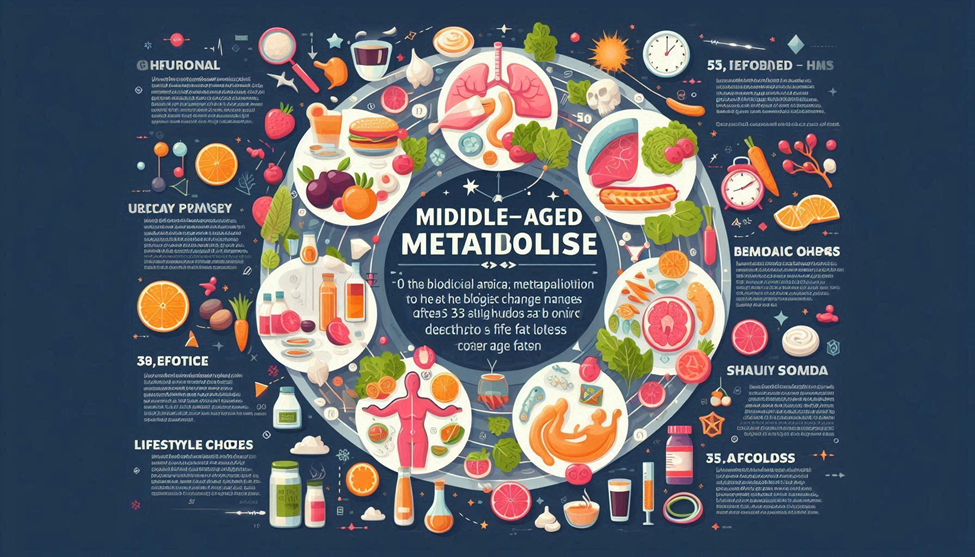
1. Aging and the Metabolic Curve: What Actually Changes After 35?
Human metabolism does not decline steadily every year. Instead, research shows your resting metabolic rate (RMR) stays mostly stable from your 20s to early 30s and then gradually begins shifting. The decline is small at first, but the cumulative effects over decades become substantial.
1.1 Decreased Muscle Mass (Sarcopenia) Begins Earlier Than People Think
Most believe muscle loss starts after age 50—but studies show the process begins around age 30–35, progressing at approximately 3–8% per decade. Muscle is metabolically active tissue; its loss reduces basal calorie needs even when your weight appears stable.
Why muscle loss accelerates fat gain:
- Muscle burns 3× more calories than fat at rest.
- Less muscle → lower metabolic rate → easier fat storage.
- Reduced strength → lower physical activity levels → fewer total daily calories burned.
- Lower anabolic hormones (testosterone, IGF-1, growth hormone) → impaired protein synthesis.
Even if you maintain your weight, your body composition shifts unfavorably, increasing fat mass at the same total weight.
1.2 Metabolism Becomes More “Energy Efficient” (Not Good for Fat Loss)
As we age, the body becomes more efficient with energy. That means:
- You burn fewer calories doing the same activities.
- The body becomes better at storing energy as fat.
- There is reduced “metabolic waste” through heat loss.
This shift occurs due to mitochondrial changes, hormonal decline, and reductions in non-exercise activity thermo genesis (NEAT).
1.3 Declines in Mitochondrial Function
Mitochondria are the powerhouses of cells. After 35:
- Mitochondria decline in number.
- Their ability to generate ATP weakens.
- Oxidative capacity decreases.
- Fat oxidation becomes less efficient.
This means the body begins preferring carbohydrates over fat as fuel, leaving fat stored in tissue.
1.4 Reduced Resting Metabolic Rate (RMR)
By age 40, most adults see:
- RMR drop by 1–2% per decade
- Total daily energy expenditure drop by 5–10%
This reduction alone can add 2–5 kg of fat per year even without overeating.
2. Hormone Changes That Make Fat Loss Harder After 35
Hormones regulate appetite, fat storage, muscle growth, and overall metabolism. After 35, several hormonal shifts occur simultaneously, making fat loss harder.
2.1 Insulin Sensitivity Declines with Age
Reduced insulin sensitivity leads to:
- Higher blood glucose
- Increased belly fat storage
- Slower fat oxidation
- Higher inflammation
Carbohydrates that were once tolerated without issue suddenly produce more fat gain.
2.2 Lepton Resistance Increases
Lepton regulates hunger and satiety. With age and increased visceral fat:
- Lepton levels rise
- Brain becomes less responsive
- Appetite increases
- Satiety decreases
This contributes to overeating and nighttime cravings.
2.3 Gherkin Regulation Shifts
Gherkin is the hunger hormone. After 35:
- Gherkin spikes become more frequent
- Hunger becomes less predictable
- Stress amplifies gherkin production
This makes calorie control more difficult.
3. Male vs. Female Metabolism after 35: Differences in the Decline
3 Key points
- Women experience hormonal fluctuations much earlier.
- Men experience steady but slow testosterone decline.
- Both genders experience reduced growth hormone and thyroid output.
3.1 Women: Estrogen Decline and Fat Redistribution
Around mid-30s, women begin the long road toward per menopause.
Estrogen decline leads to:
- Increased belly/visceral fat
- Higher insulin resistance
- Lower metabolic rate
- Greater inflammation
- Reduced muscle retention
Women face hormonal changes nearly 10 years earlier than men.
3.2 Men: Testosterone Declines 1–2% per Year
Testosterone influences:
- Muscle mass
- Fat distribution
- Energy expenditure
- Mood and motivation
- Libido
As testosterone drops, so does metabolic rate and fat-burning capacity.
4. The Cellular Theory of Middle-Age Weight Gain
After 35, the body’s cells undergo changes that influence fat storage, oxidation, and muscle retention.
4.1 Reduced AMPK Activation
AMPK is the “metabolic switch” that triggers:
- Fat burning
- Mitochondrial growth
- Appetite regulation
- Glucose uptake
Aging reduces AMPK activation, making fat loss harder even with the same diet.
4.2 motor Deregulation Affects Muscle Gain
Motor controls muscle protein synthesis.
With age:
- motor becomes less responsive
- Protein synthesis decreases
- More dietary protein is required
- Muscle breakdown increases
This leads to loss of lean mass even with training—unless nutrition is optimized.
4.3 Mitochondrial DNA Damage Increases
Cellular repair becomes less efficient, slowing metabolic rate and fat oxidation.
5. Lifestyle Factors That Compound the Biological Decline
Even though biology is a major factor, lifestyle amplifies the metabolic slowdown.
5.1 Increased Stress and Cortical
Middle age brings:
- Career pressure
- Family responsibilities
- Financial stress
- Aging parents
- Sleep reduction
Chronic stress → cortical elevation → increased belly fat and cravings.
5.2 Sedentary Lifestyle Escalates
After 35:
- People sit more
- Move less spontaneously
- Work in desk-based positions
- NEAT drops drastically
NEAT decline alone can cause 300–600 calories/day of reduced burn.
5.3 Sleep Quality Declines After 35
Sleep disruption increases:
- Insulin resistance
- Gherkin (hunger)
- Fat storage
- Cortical
Middle-aged adults average 30–90 minutes less sleep per night compared to their 20s.
5.4 Eating Patterns Change with Age
- More late-night eating
- Higher convenience food intake
- Less consistent meal timing
- Higher alcohol consumption
- More restaurant meals
These changes interact with slower metabolism to accelerate fat gain.
6. Why Belly Fat Becomes Stubborn After 35
Visceral fat increases steadily with age.
Reasons belly fat grows:
- Lower growth hormone
- Higher cortical
- Lower insulin sensitivity
- Mitochondrial decline
- Reduced fat oxidation
- Loss of muscle around the core
- Hormonal changes (estrogen/testosterone)
Visceral fat is biologically active and increases inflammation, further slowing metabolism.
7. Nutritional Changes Required After 35
Fat loss diets that worked in your 20s often fail in midlife because the nutritional needs change.
7.1 Protein Needs Increase
Due to lower protein synthesis and more muscle breakdown, midlife adults need more protein.
Recommended:
- 1.2–1.6 g/kg/day for fat loss and muscle maintenance
- Distribute protein evenly across meals
- Include leonine-rich proteins (eggs, fish, legumes, dairy)
7.2 Lower Carbohydrate Tolerance
After 35, carbohydrates:
- Spike blood sugar more
- Promote fat storage more easily
- Slow fat oxidation
Shift toward:
- Low-glycolic crabs
- Higher fiber
- Portion control in evenings
7.3 More Anti-Inflammatory Foods
Inflammation blocks AMPK and promotes fat storage.
Include:
- Omega-3s
- Berries
- Leafy greens
- Nuts and seeds
- Turmeric and ginger
7.4 Meal Timing Becomes Crucial
Prioritize:
- Protein-rich breakfasts
- Early dinners
- Avoid late-night eating
- Consistent eating windows
8. Why Exercise Needs to Change After 35
The workouts of your 20s are no longer sufficient.
8.1 Strength Training Becomes the #1 Priority
Goal: protect muscle and metabolic rate.
Focus on:
- Compound lifts
- Progressive overload
- 3–4 sessions per week
- 8–12 reps moderate weight
- Include gluts, legs, core, back
8.2 HIIT Works — But Not Too Much
HIIT improves:
- Insulin sensitivity
- Mitochondrial capacity
- Fat oxidation
But excessive high-intensity work increases cortical.
8.3 Daily NEAT Is a Metabolic Lifeline
Walk more. Move more. Stand more.
Every step fights the metabolic slowdown.
9. Middle-Aged Metabolic Adaptation: The Dieting Trap
Repeated dieting leads to metabolic adaptation—your body burns fewer calories than expected.
After 35, adaptation happens faster and more intensely.
Signs:
- You eat very little but still gain fat
- You feel cold frequently
- Low energy
- Slow recovery
- Hunger swings
- Plateau despite effort
Solution:
Reverse dieting + strength training + consistent protein intake stabilizes metabolism before fat loss phases.
10. Psychological and Behavioral Factors
Midlife introduces new emotional patterns influencing weight.
10.1 Emotional Eating Increases
Due to:
- Stress
- Burnout
- Care giving fatigue
- Hormonal fluctuations
10.2 Lower Motivation
Reduced dopamine sensitivity makes initiating lifestyle changes harder.
11. The Good News: You CAN Rebuild Your Metabolism After 35
Metabolism is adaptable. You can increase metabolic rate through specific strategies.
- Strength Training 3–4x Weekly
- Builds muscle → increases RMR → improves insulin sensitivity.
- Increase Protein to 1.2–1.6 g/kg
- Stimulates muscle protein synthesis and reduces cravings.
- Optimize Sleep
- 7–9 hours
- Cool, dark room
- No electronics late
- Consistent sleep schedule
- Reduce Stress
- Meditation
- Nature walks
- Breath work
- Reduce multitasking
- Limit caffeine
- Improve Meal Timing
- High-protein breakfast
- Fiber-rich lunch
- Early dinner
- Avoid late snacking
- Increase NEAT
- Aim for 7,000–10,000 steps
- Use standing desks
- Walk during calls
- Strengthen Mitochondria
- HIIT (1–2x weekly)
- Cold exposure
- Omega-3s
- Adequate magnesium
- Green tea and polyphones
Conclusion
Fat loss after the age of 35 becomes more challenging because the biological foundation of metabolism begins to shift in ways that are subtle at first but increasingly powerful over time. By midlife, reduced muscle mass, lower mitochondrial efficiency, hormonal fluctuations, decreased insulin sensitivity, and heightened inflammation collectively reshape how the body uses and stores energy. These internal changes are compounded by external lifestyle factors such as elevated stress, reduced sleep quality, lower daily movement, and inconsistent eating habits—creating the “perfect metabolic storm” that promotes fat gain even when caloric intake appears unchanged.
However, the science is equally clear: metabolism is not fixed. It is adaptive, trainable, and responsive to intentional lifestyle strategies. Strength training rebuilds lost muscle, protein-rich meals enhance thermo genesis and satiety, consistent sleep restores hormonal balance, and structured meal timing reduces insulin spikes. Similarly, improving NEAT, optimizing nutrient quality, and reducing stress load reinforce metabolic resilience. While middle-aged metabolism may no longer respond to quick fixes or crash dieting, it responds exceptionally well to a structured, biologically informed approach.
The key is using strategies that match your stage of life. A 35+ body needs more protein, more recovery, more strength work, and better circadian alignment—not more restriction. When approached holistically, fat loss after 35 becomes not only possible but sustainable. Instead of fighting against your biology, you learn to work with it—supporting muscle, hormones, metabolic signaling, and long-term health.
Understanding these midlife metabolic shifts empowers individuals to make smarter, more compassionate choices rather than blaming themselves or relying on outdated methods. With the right approach, midlife can mark the beginning of a stronger, leaner, and healthier metabolic chapter—not the end of one.
SOURCES
Punter, 2021 – Study on metabolic stability and decline across lifespan.
Janssen et al., 2000 – Age-related muscle loss and metabolic changes.
Short et al., 2005 – Mitochondrial function decline with age.
Speak man & Selman, 2011 – Energy efficiency and aging metabolism.
Campbell et al., 1994 – Protein synthesis reduction in older adults.
Fujita et al., 2007 – motor and anabolic resistance in aging.
Roubenoff, 2003 – Sarcopenia as metabolic disease.
Clegg et al., 2011 – Gender differences in metabolic aging.
Lovejoy et al., 2008 – Fat distribution changes in women.
Ferric et al., 2012 – Hormonal decline and metabolic function.
Kelley et al., 2002 – Insulin resistance and aging.
Kahn et al., 2006 – Cellular causes of insulin resistance.
Cummings & Shannon, 2003 – Gherkin and appetite regulation.
Myers et al., 2012 – Lepton resistance mechanisms.
Björntorp, 2001 – Cortical and central obesity.
Spiegel et al., 1999 – Sleep deprivation effects on metabolism.
Petersen et al., 2003 – Muscle mitochondrial dysfunction.
Phillips et al., 2016 – Protein needs in aging adults.
Esposito et al., 2004 – Anti-inflammatory diet benefits.
Janice et al., 2001 – NEAT and metabolic expenditure.
Boucher, 2011 – HIIT and fat oxidation.
Mira & Vicar, 2003 – Visceral fat metabolic effects.
Anton et al., 2018 – Meal timing and metabolic health.
Hardier & Howell, 2017 – Intermittent energy restriction.
Speak man, 2020 – Metabolic adaptation and weight loss plateaus.
HISTORY
Current Version
Nov 29, 2025
Written By
ASIFA
0 Comments