Introduction
Weight loss is often pursued to improve body composition, health, or athletic performance. However, an unintended consequence of energy restriction is the loss of lean muscle mass, which can compromise metabolic rate, strength, functional capacity, and long-term weight management. Muscle preservation during caloric restriction is therefore a central goal for individuals seeking sustainable fat loss without compromising performance or health.
Nutrient timing—the strategic distribution of macronutrients and calories throughout the day—has emerged as a powerful tool to optimize muscle protein synthesis (MPS), enhance recovery, and minimize muscle catabolism during weight loss. By aligning nutrient intake with metabolic and hormonal rhythms, as well as the timing of exercise, individuals can maximize lean mass retention while promoting fat loss.
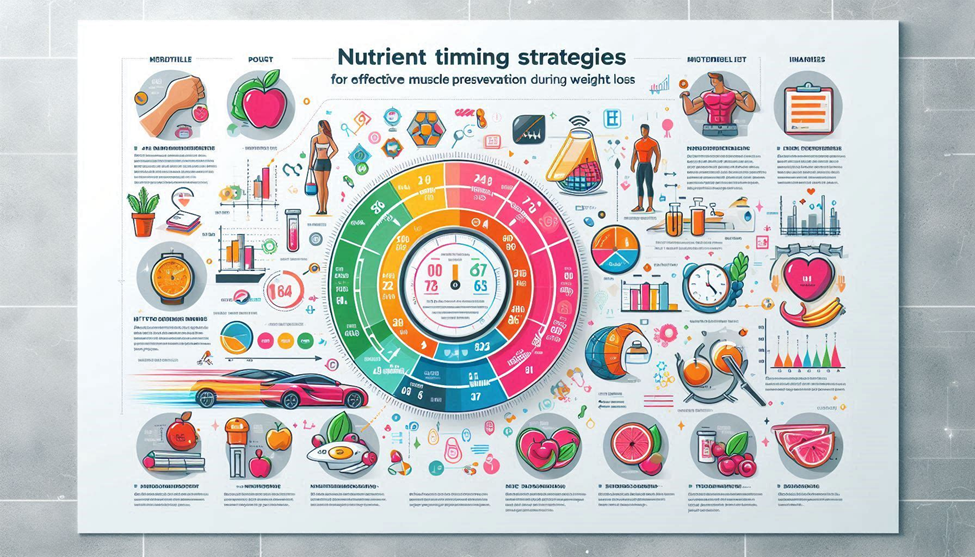
This guide explores the science and practical application of nutrient timing for muscle preservation during weight loss. It integrates evidence from clinical trials, meta-analyses, and mechanistic studies to provide a comprehensive framework for athletes, fitness enthusiasts, and individuals aiming to maintain lean mass while achieving fat reduction goals. Key topics include protein distribution, carbohydrate timing, fat intake, hormonal modulation, exercise integration, and lifestyle strategies that collectively support metabolic efficiency, anabolic signaling, and sustainable body composition improvements.
1. The Importance of Muscle Preservation during Weight Loss
1.1 Muscle Loss and Metabolic Consequences
Caloric restriction without proper dietary and exercise strategies often results in loss of both fat mass and lean body mass. Research consistently shows that 20–30% of weight lost during standard dieting can come from skeletal muscle. Loss of muscle mass has several negative implications:
- Reduced basal metabolic rate (BMR), making future weight maintenance more difficult
- Impaired glucose regulation due to reduced insulin-sensitive tissue
- Decreased strength and functional capacity, impacting physical performance and quality of life
- Altered body composition, potentially resulting in a higher fat-to-lean mass ratio
Preserving muscle during weight loss is therefore critical not only for aesthetics but also for long-term metabolic health and physical function.
1.2 Role of Muscle in Energy Expenditure
Skeletal muscle is metabolically active tissue, accounting for approximately 20–30% of resting energy expenditure. Maintaining muscle mass during caloric restriction helps sustain energy expenditure, mitigating the adaptive thermo genesis that commonly occurs during dieting. This underscores the importance of strategies such as protein-rich diets, resistance training, and precise nutrient timing to preserve lean tissue.
2. Protein and Muscle Protein Synthesis
2.1 Protein Requirements during Caloric Deficit
Adequate protein intake is the cornerstone of muscle preservation. During weight loss, studies suggest higher protein intakes—1.6–2.4 g/kg body weight/day—are necessary to offset muscle catabolism. Protein quality also matters: leonine-rich sources such as whey, eggs, lean meats, and soy proteins optimally stimulate MPS.
2.2 Protein Timing and Distribution
Emerging evidence indicates that evenly distributing protein across meals enhances MPS compared with skewed intake patterns. Ideal strategies include:
- Consuming 20–40 g of high-quality protein per meal
- Ensuring protein intake every 3–4 hours to maintain positive net protein balance
- Including protein pre- and post-resistance training to maximize anabolic response
Mechanistically, protein ingestion stimulates the motor signaling pathway, activating translation initiation and muscle growth. Lucien is particularly potent in triggering this response.
2.3 Pre- and Post-Workout Protein
- Pre-workout: Protein ingestion 1–2 hours before training provides amino acids for immediate utilization during exercise.
- Post-workout: Consuming protein within 1 hour of training optimizes recovery and MPS, counteracting exercise-induced catabolism.
3. Carbohydrate Timing and Glycogen Management
3.1 Role of Carbohydrates in Muscle Preservation
Carbohydrates support glycogen replenishment, fuel high-intensity exercise, and reduce muscle protein breakdown by attenuating cortical levels. Strategic carbohydrate intake can enhance training performance, enabling maintenance of resistance training intensity during caloric restriction.
3.2 Pre-Workout Carbohydrates
- Provides energy for resistance and aerobic exercise
- Minimizes reliance on amino acids for energy
- Supports optimal training performance and mechanical tension for MPS
3.3 Post-Workout Carbohydrates
- Accelerates glycogen resynthesis
- Promotes insulin-mediated nutrient uptake, supporting anabolic signaling
- Reduces post-exercise muscle protein breakdown
Timing carbohydrate intake around training sessions ensures energy availability while minimizing overall caloric excess during weight loss.
4. Fat Intake and Hormonal Support
4.1 Essential Fats for Muscle and Hormones
Dietary fat is critical for hormone synthesis, including testosterone, which is essential for muscle retention. Sources include:
- Omega-3 fatty acids (fatty fish, flaxseed)
- Monounsaturated fats (olive oil, avocados)
- Polyunsaturated fats (nuts, seeds)
4.2 Timing Considerations
- Fat is slow-digesting, so excessive intake immediately pre-workout may impair digestion and energy availability.
- Moderate fat intake throughout the day supports satiety and hormone function.
5. Integrating Nutrient Timing with Exercise
5.1 Resistance Training
Resistance training is the most effective stimulus for MPS. Nutrient timing amplifies these effects:
- Pre-workout protein + carbohydrates for fuel and amino acid availability
- Post-workout protein + carbohydrate for recovery and glycogen restoration
- Even distribution of protein across meals sustains anabolic signaling
5.2 Aerobic Training
Aerobic exercise enhances fat oxidation but may increase muscle protein breakdown if glycogen is low. Pairing moderate carbohydrate intake around aerobic sessions can protect lean tissue.
5.3 Training Frequency and Timing
Frequent, strategically timed meals and snacks aligned with exercise sessions maximize nutrient delivery, reduce catabolic signaling, and support MPS.
6. Hormonal Considerations
- Insulin
- Postprandial insulin promotes amino acid uptake and glycogen storage
- Proper nutrient timing leverages insulin’s anabolic properties
- Cortical
- Elevated cortical during energy restriction promotes muscle protein breakdown
- Strategically timed carbohydrate intake can attenuate cortical spikes
- Growth Hormone and Testosterone
- Adequate sleep, resistance training, and nutrient timing support anabolic hormone secretion
- Fat intake and protein distribution contribute to maintaining testosterone and IGF-1 levels
7. Practical Meal Planning Strategies
7.1 Sample Protein Distribution
| Meal | Protein (g) | Timing |
| Breakfast | 30 | Within 1 hour of waking |
| Snack | 20 | Mid-morning |
| Lunch | 30 | 3–4 hours after breakfast |
| Pre-Workout | 25 | 1–2 hours pre-exercise |
| Post-Workout | 30 | Within 1 hour of training |
| Dinner | 30 | Evening meal |
| Optional Snack | 15–20 | Pre-bedtime casein for overnight MPS |
7.2 Carbohydrate and Fat Placement
- Crabs: Around workouts and earlier in the day
- Fats: Moderate intake during non-training meals
- Micronutrients: Spread throughout the day for optimal absorption
7.3 Hydration
Adequate water intake supports muscle function, nutrient delivery, and recovery, enhancing the effectiveness of nutrient timing strategies.
8. Evidence-Based Outcomes
- Meta-analyses show that higher protein intakes combined with evenly distributed meals preserve lean mass during weight loss.
- Nutrient timing around resistance training improves strength retention and recovery.
- Carbohydrate timing supports glycogen resynthesis, enabling sustained exercise performance and protection of muscle tissue.
- Combined approaches (protein + crab + resistance training) consistently outperform traditional dieting methods for body composition preservation.
9. Behavioral and Lifestyle Factors
- Consistency is key: even nutrient distribution, planned workouts, and meal preparation enhance compliance and outcomes.
- Sleep quality supports anabolic hormone secretion.
- Stress management mitigates cortical-induced muscle catabolism.
10. Recommendations
Nutrient timing is a science-based strategy for preserving muscle during weight loss, integrating macronutrient distribution, exercise, hormonal support, and lifestyle interventions. Key recommendations:
- Prioritize adequate protein intake (1.6–2.4 g/kg/day), evenly distributed across meals.
- Align carbohydrate intake with training sessions to fuel performance and reduce muscle breakdown.
- Include healthy fats for hormonal support, avoiding high pre-workout fat intake.
- Leverage resistance and aerobic training, timed with nutrient intake for maximal anabolic response.
- Incorporate sleep, hydration, and stress management to support hormonal balance.
By strategically timing nutrients and integrating lifestyle interventions, individuals can maximize lean mass retention, enhance fat loss, and maintain metabolic health during periods of caloric restriction.
Conclusion
Preserving lean muscle mass during weight loss is a critical component of effective, sustainable fat reduction. Muscle retention not only supports basal metabolic rate and energy expenditure but also enhances functional capacity, physical performance, and overall metabolic health. Nutrient timing represents a strategic, evidence-based approach to achieving these outcomes, optimizing the availability of amino acids, glycogen, and micronutrients precisely when the body is most receptive to anabolic signaling.
Protein intake remains the cornerstone of muscle preservation. Distributing high-quality, leonine-rich protein evenly across meals, and aligning pre- and post-workout protein consumption with training sessions, maximizes muscle protein synthesis while minimizing catabolism. Carbohydrates, when timed around exercise, provide the energy necessary to sustain performance and attenuate cortical-induced muscle breakdown. Fats, although slower-digesting, are essential for hormonal support, including testosterone and other anabolic pathways, which further facilitate muscle maintenance during energy restriction.
Integration with exercise is equally important. Resistance training provides the primary anabolic stimulus, while strategic carbohydrate intake ensures that aerobic sessions do not inadvertently increase muscle catabolism. Lifestyle factors—such as sleep, stress management and hydration—enhance hormonal balance, recovery, and overall metabolic efficiency, reinforcing the benefits of nutrient timing.
Ultimately, nutrient timing is not a standalone solution but a component of a comprehensive, multi-faceted strategy for weight loss. When combined with adequate total protein, balanced macronutrients, resistance exercise, and supportive lifestyle practices, it provides a practical, scientifically grounded framework for retaining lean mass while reducing fat. By leveraging these strategies, individuals can achieve superior body composition, maintain strength and energy, and support long-term metabolic health, transforming weight loss from a purely numerical goal into a sustainable, health-optimized process.
SOURCES
Schoenfeld, B.J., & Aragon, A.A. (2018). The effect of protein timing on muscle strength and hypertrophy. Journal of the International Society of Sports Nutrition, 15, 10.
Morton, R.W., et al. (2018). Protein supplementation and resistance training outcomes. British Journal of Sports Medicine, 52, 376–384.
Tipton, K.D., & Wolfe, R.R. (2004). Protein and amino acids for athletes. Journal of Sports Sciences, 22(1), 65–79.
Phillips, S.M., et al. (2017). Dietary protein and muscle protein synthesis. Nutrition & Metabolism, 14, 45.
Ivy, J.L., et al. (2002). Post-exercise carbohydrate-protein ingestion. Journal of Applied Physiology, 93, 1155–1163.
Arête, J.L., et al. (2013). Protein distribution and muscle protein synthesis. Journal of Physiology, 591, 2319–2331.
Moore, D.R., et al. (2015). Protein dose-response in resistance exercise. American Journal of Clinical Nutrition, 101, 176–185.
Bard, N.A., et al. (2011). Pre-sleep protein ingestion enhances overnight MPS. Medicine & Science in Sports & Exercise, 43, 2294–2304.
Tipton, K.D., et al. (2001). Timing of amino acid-carbohydrate ingestion post-exercise. American Journal of Physiology-Endocrinology, 281, E197–E206.
Ker sick, C.M., et al. (2017). ISSN exercise & sports nutrition review. Journal of the International Society of Sports Nutrition, 14, 20.
Tang, J.E., et al. (2009). Whey protein hydrolysis and MPS. American Journal of Clinical Nutrition, 89, 161–168.
Morton, R.W., et al. (2015). Protein supplementation meta-analysis. British Journal of Sports Medicine, 49, 1–9.
Holmic, J.J., et al. (2010). Timing of protein intake in resistance exercise. Journal of Sports Science & Medicine, 9, 1–14.
Tipton, K.D., et al. (2007). Amino acid ingestion before and after exercise. Nutrition & Metabolism, 4, 45.
Paitakes, S.M., et al. (2013). Protein intake during caloric restriction. Applied Physiology, Nutrition, and Metabolism, 38, 434–441.
Creak, N.M., et al. (2012). Protein supplementation and muscle mass in older adults. American Journal of Clinical Nutrition, 96, 1454–1464.
Bard, N.A., et al. (2010). Exercise intensity and MPS. Journal of Applied Physiology, 109, 987–992.
Figueiredo, V.C., et al. (2015). Pre-exercise nutrition and performance. Nutrition, 31, 357–363.
Belen, M., et al. (2008). Protein co-ingestion with carbohydrate post-exercise. American Journal of Clinical Nutrition, 87, 56–63.
Aragon, A.A., & Schoenfeld, B.J. (2013). Nutrient timing reconsidered. Journal of the International Society of Sports Nutrition, 10, 5.
Stokes, T., et al. (2018). Resistance exercise and protein timing. Sports Medicine, 48, 1107–1125.
Ker sick, C.M., et al. (2006). Post-exercise supplementation and recovery. International Journal of Sport Nutrition and Exercise Metabolism, 16, 233–244.
Creak, N.M., et al. (2012). Protein timing meta-analysis. American Journal of Clinical Nutrition, 96, 1454–1464.
Tang, J.E., et al. (2009). Lucien-rich protein and MPS. American Journal of Clinical Nutrition, 89, 161–168.
Moore, D.R., et al. (2009). Timing and dose of protein intake. Journal of Physiology, 587, 2343–2352.
HISTORY
Current Version
Nov 28, 2025
Written By
ASIFA
0 Comments