1. Introduction
Fat loss is often framed as a simple equation of calories consumed versus calories expended, yet this reductionist approach fails to capture the complex physiological, neuroendocrine, and behavioral factors that govern metabolic efficiency. Emerging research emphasizes that recovery—particularly sleeps quality, circadian rhythm alignment, and autonomic nervous system balance—is central to sustainable fat loss. Neglecting these recovery-based mechanisms can hinder fat loss efforts, even in individuals adhering to disciplined dietary and exercise regimens.
Sleep deprivation, disrupted circadian rhythms, and chronic stress induce hormonal deregulation, impair glucose metabolism, and alter appetite signaling, creating an environment in which fat accumulation is favored over fat mobilization. Heart rate variability (HRV), a non-invasive biomarker of autonomic nervous system function, provides insight into an individual’s recovery status and metabolic readiness, reflecting sympathetic and parasympathetic balance that influences fat oxidation, insulin sensitivity, and exercise adaptation.
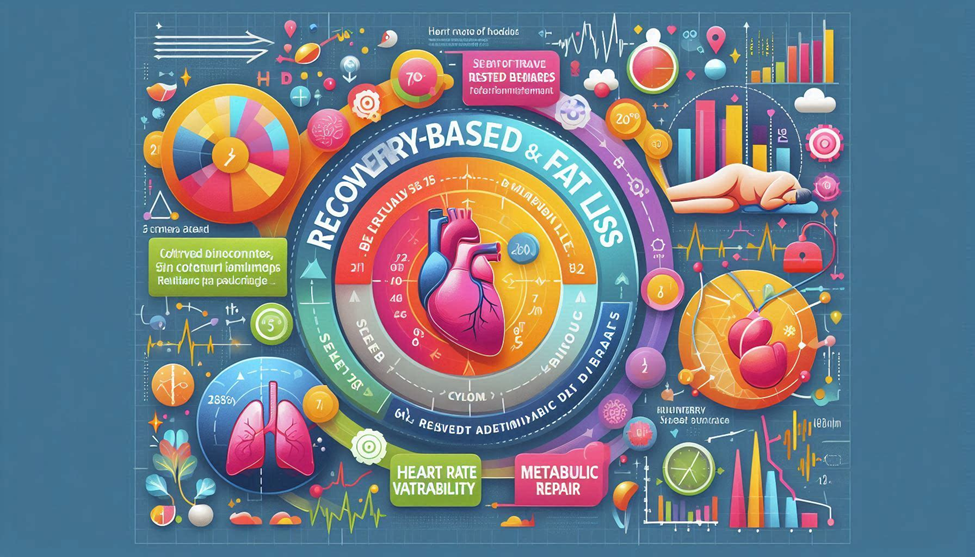
This guide explores the physiological underpinnings of recovery-based fat loss, highlighting the roles of sleep architecture, HRV, circadian biology, and metabolic repair mechanisms. By integrating insights from endocrinology, chronobiology, exercise physiology, and nutrition science, it presents a comprehensive framework for optimizing fat loss through recovery-focused interventions rather than relying solely on calorie restriction or high-intensity exercise.
1.1 The Limitations of Traditional Fat Loss Approaches
Traditional approaches to fat loss—calorie restriction, intermittent fasting, and high-volume exercise—often overlook the importance of recovery. While creating a caloric deficit is necessary for weight loss, inadequate attention to sleep, stress, and autonomic recovery can blunt metabolic efficiency, impair fat oxidation, and increase the risk of lean mass loss.
- Hormonal deregulation: Inadequate recovery elevates cortical, suppresses growth hormone (GH), and reduces lepton sensitivity, promoting fat storage and increasing hunger.
- Insulin resistance: Sleep restriction and chronic stress impair insulin sensitivity, making postprandial glucose management less efficient and increasing adipose deposition.
- Reduced training adaptation: Fatigue and poor recovery compromise exercise performance and adaptation, limiting the effectiveness of resistance and aerobic training for fat loss.
Understanding fat loss as a recovery-mediated process shifts the focus from purely behavioral restriction to physiological optimization, where aligning sleep, autonomic balance, and metabolic repair enhances energy utilization and promotes sustainable changes in body composition.
1.2 Sleep Architecture and Fat Loss
Sleep is a complex, dynamic state composed of multiple stages, including light sleep (N1/N2), deep slow-wave sleep (N3), and rapid eye movement (REM) sleep. Each stage plays a distinct role in metabolic regulation, hormonal release, and cellular repair:
- Slow-wave sleep (SWS): Facilitates growth hormone secretion, promotes biolysis, and supports protein synthesis, critical for maintaining lean mass during fat loss.
- REM sleep: Regulates appetite through modulation of lepton and gherkin, contributes to glucose homeostasis, and supports cognitive recovery, reducing stress-induced overeating.
- Sleep continuity and timing: Fragmented or mistimed sleep disrupts circadian hormone rhythms, elevating evening cortical and impairing overnight fat oxidation.
Research shows that sleep restriction of 4–5 hours per night can reduce fat loss by 20–30% in otherwise compliant individuals, highlighting the necessity of prioritizing restorative sleep in fat loss strategies.
1.3 Heart Rate Variability (HRV) as a Recovery Biomarker
HRV measures the variation in time intervals between heartbeats, providing a window into autonomic nervous system function. High HRV reflects parasympathetic dominance, indicating readiness for recovery, improved insulin sensitivity, and enhanced fat mobilization. Conversely, low HRV indicates sympathetic over activity, chronic stress, or inadequate recovery, which impairs metabolic repair and promotes fat retention.
- Exercise adaptation: HRV-guided training optimizes intensity and volume, reducing overtraining risk and enhancing fat oxidation.
- Stress monitoring: Daily HRV tracking can inform lifestyle modifications, including sleep optimization, stress management, and dietary adjustments.
- Integration with wearable technology: Continuous HRV monitoring allows real-time feedback to guide fat loss interventions, personalizing recovery strategies.
2. Metabolic Repair Mechanisms
Fat loss is not solely dependent on caloric deficit; it also relies on intracellular metabolic repair processes that optimize energy utilization, hormonal balance, and tissue regeneration. Recovery-based strategies enhance these processes, allowing the body to preferentially oxidize fat while preserving lean mass.
2.1 Mitochondrial Function and Fat Oxidation
Mitochondria, the cellular powerhouses, are central to fat metabolism. During recovery periods, particularly slow-wave sleep, mitochondrial efficiency increases, enhancing the capacity for beta-oxidation of fatty acids. Sleep deprivation and chronic sympathetic activation impair mitochondrial biogenesis, reducing metabolic flexibility and favoring glucose utilization over fat oxidation. Enhancing mitochondrial function through adequate sleep, HRV-guided training, and nutrient timing promotes sustainable fat loss while supporting overall energy homeostasis.
2.2 Hormonal Repair and Fat Mobilization
Hormones play a critical role in orchestrating fat loss:
- Growth Hormone (GH): Secreted primarily during slow-wave sleep, GH stimulates biolysis and preserves lean tissue.
- Cortical: Chronic elevation due to poor recovery promotes visceral fat deposition and increases appetite for energy-dense foods.
- Lepton and Gherkin: Sleep optimization stabilizes lepton (satiety hormone) and suppresses gherkin (hunger hormone), reducing overeating and cravings.
Optimizing hormonal repair requires synchronizing sleep cycles, stress management, and circadian-aligned nutrient intake to support effective fat mobilization.
2.3 Glucose and Lipid Metabolism
Recovery periods enhance insulin sensitivity, particularly in skeletal muscle and adipose tissue, improving nutrient partitioning. Post-exercise and post-sleep metabolic windows are optimal for replenishing glycogen, supporting protein synthesis, and stimulating fat oxidation. Chronically disrupted sleep and insufficient recovery reduce metabolic flexibility, favoring adipose storage over oxidation and undermining fat loss efforts.
2.4 Circadian Rhythms and Nutrient Timing
Circadian rhythms regulate hormonal secretion, enzyme activity, and energy metabolism, making meal timing a critical determinant of fat loss efficiency. Consuming the majority of daily calories aligned with daylight hours, when insulin sensitivity is highest, supports optimal nutrient utilization. Evening eating, particularly of ultra-processed or high-sugar foods, can disrupt circadian cues, impair glucose metabolism, and increase fat storage.
- Breakfast and early-day protein intake: Supports satiety and thermo genesis.
- Time-restricted feeding aligned with circadian rhythm: Enhances fat oxidation during the fasting phase and supports metabolic repair overnight.
- Evening fasting or low-calorie intake: Minimizes insulin surges during periods of reduced metabolic activity, promoting overnight fat mobilization.
2.5 Sleep, HRV, and Exercise Synergy
Exercise amplifies fat loss, but its effectiveness is strongly influenced by recovery status:
- Resistance training: Preserves lean mass, enhances post-exercise energy expenditure, and synergizes with GH release during sleep.
- Aerobic exercise: Stimulates mitochondrial biogenesis and increases fat oxidation, particularly when performed at moderate intensity.
- HRV-guided training: Ensures exercise intensity aligns with recovery status, reducing overtraining risk and optimizing metabolic adaptation.
Integrating sleep, HRV monitoring, and exercise programming allows for personalized fat loss strategies, where training, nutrition, and recovery are mutually reinforcing rather than isolated interventions.
3. Nutrition Strategies for Recovery-Based Fat Loss
Nutrition is a cornerstone of recovery-based fat loss, not merely for caloric balance but for supporting hormonal regulation, metabolic repair, and mitochondrial efficiency. Optimal dietary strategies integrate macronutrient balance, nutrient timing, and anti-inflammatory components to maximize fat oxidation while preserving lean tissue.
3.1 Macronutrient Composition and Timing
Protein: Adequate protein intake (1.2–2.0 g/kg body weight) supports lean mass preservation, stimulates thermo genesis, and enhances satiety. Post-exercise protein intake synergizes with growth hormone and insulin-mediated amino acid uptake, facilitating tissue repair and metabolic adaptation.
Carbohydrates: Emphasizing complex carbohydrates with a low glycolic index enhances glycogen replenishment while minimizing insulin spikes that could favor fat storage. Aligning carbohydrate intake with periods of high insulin sensitivity, particularly earlier in the day, optimizes nutrient partitioning.
Fats: Incorporating healthy fats, including omega-3 fatty acids, supports anti-inflammatory pathways, hormonal balance, and mitochondrial function. Fats consumed in moderation, especially in meals aligned with circadian rhythm, can promote sustained energy without compromising fat oxidation.
3.2 Anti-Inflammatory and Recovery-Supporting Foods
Chronic low-grade inflammation can impair metabolic flexibility and fat loss. Foods rich in polyphones, antioxidants, and micronutrients—such as leafy greens, berries, nuts, and fatty fish—modulate oxidative stress, improve insulin sensitivity, and support recovery processes.
Functional compounds such as polyphones, flavonoids, and arytenoids enhance mitochondrial biogenesis and reduce post-exercise oxidative damage, contributing to more efficient fat metabolism. Additionally, fermented foods and robotics support gut micro biota health, which is increasingly recognized as a mediator of metabolic efficiency and energy regulation.
3.3 Hydration and Electrolyte Balance
Proper hydration is critical for cellular metabolism, nutrient transport, and thermoregulation. Water facilitates biolysis and glycogen mobilization, while electrolytes such as sodium, potassium, and magnesium maintain neuromuscular function and cardiovascular stability during exercise. Dehydration impairs recovery, reduces HRV, and can lead to suboptimal hormonal signaling, blunting fat loss adaptations.
3.4 Supplements Supporting Recovery and Metabolic Repair
Certain supplements can enhance recovery-based fat loss when used strategically:
- Branched-Chain Amino Acids (BCAAs): Support muscle protein synthesis and reduce exercise-induced muscle breakdown.
- Omega-3 Fatty Acids: Anti-inflammatory, improves insulin sensitivity, and support cardiovascular health.
- Magnesium and Zinc: Critical for sleep quality, enzymatic reactions, and hormone production.
- Adapt gens (e.g., Rheidol, Ashwagandha): Assist in managing cortical and stress response, promoting autonomic balance and recovery.
Integrating nutrition, supplementation, and hydration strategies ensures that metabolic repair mechanisms are fully supported, enabling more efficient fat loss without compromising recovery or lean tissue.
4. Sleep Optimization Techniques for Fat Loss
Sleep is a central pillar of recovery-based fat loss, influencing hormonal balance, energy metabolism, and autonomic nervous system function. Optimizing sleep not only enhances fat oxidation but also preserves lean tissue, improves exercise performance, and supports cognitive function—critical components of sustainable weight management.
4.1 Sleep Hygiene and Environmental Factors
Sleep hygiene encompasses behavioral and environmental strategies that improve sleep quality and continuity:
- Consistent sleep schedule: Maintaining regular bedtimes and wake times stabilizes circadian rhythms, optimizing hormone release and metabolic regulation.
- Light exposure: Exposure to natural daylight during the morning enhances circadian entrainment, while reducing blue light exposure from screens in the evening prevents melatonin suppression.
- Temperature and comfort: Maintaining a cool, quiet, and dark sleeping environment facilitates deeper slow-wave sleep, which is critical for growth hormone secretion and fat mobilization.
- Pre-sleep routines: Practices such as reading, meditation, or gentle stretching promote relaxation and reduce sympathetic over activity, improving sleep latency and quality.
4.2 Sleep Timing and Fat Loss Efficiency
The timing of sleep relative to circadian rhythm impacts hormonal release and metabolic efficiency:
- Early sleep onset: Sleeping earlier in alignment with natural melatonin rhythms maximizes slow-wave sleep and enhances nocturnal biolysis.
- Avoiding late-night activity and eating: Late-night meals and intense exercise can elevate cortical and insulin, disrupting metabolic repair and increasing fat storage.
- Sleep extension: Extending sleep duration in chronically sleep-deprived individuals improves lepton levels, reduces gherkin, and enhances insulin sensitivity, facilitating fat loss.
4.3 Napping and Recovery
Strategically timed naps (20–40 minutes) can mitigate sleep debt, reduce sympathetic over activity, and improve HRV, supporting autonomic recovery. Napping is particularly beneficial in populations experiencing fragmented sleep due to lifestyle demands, shift work, or postpartum recovery.
4.4 Advanced HRV Monitoring and Application
Heart rate variability (HRV) provides a real-time assessment of autonomic recovery, guiding exercise, nutrition, and sleep strategies for fat loss:
- Baseline HRV assessment: Establishes individual recovery profiles, identifying sympathetic over activation or parasympathetic under activity.
- Daily HRV tracking: Guides training intensity, sleep prioritization, and stress management interventions.
- Integration with wearable technology: Devices measuring HRV offer actionable insights, enabling data-driven adjustments to optimize metabolic repair and fat mobilization.
High HRV is associated with greater parasympathetic dominance, improved mitochondrial function, enhanced fat oxidation, and more efficient exercise adaptation, while low HRV signals the need for recovery-focused interventions.
4.5 Personalized Recovery Protocols for Sustainable Fat Loss
Recovery-based fat loss requires individualized protocols that combine sleep optimization, HRV-guided exercise, nutrition, and stress management:
- Sleep-first approach: Prioritize 7–9 hours of quality sleep, aligned with circadian rhythm.
- HRV-informed training: Adjust exercise intensity based on daily autonomic readiness.
- Metabolic repair nutrition: Emphasize protein, fiber, anti-inflammatory foods, and circadian-aligned nutrient timing.
- Stress management: Include mindfulness, breathing exercises, and adaptive recovery strategies to modulate cortisol and enhance parasympathetic tone.
- Continuous monitoring: Track sleep, HRV, and body composition to fine-tune interventions for optimal fat loss outcomes.
This integrative approach ensures fat loss is not achieved through sheer caloric restriction but through enhanced metabolic efficiency, hormonal optimization, and autonomic recovery, creating sustainable, long-term changes in body composition.
5. Exercise Programming for Recovery-Based Fat Loss
Exercise is a critical component of recovery-based fat loss, but its effectiveness depends on aligning training intensity, frequency, and modality with recovery status. Overtraining or misaligned exercise schedules can impair HRV, disrupt sleep, and blunt metabolic repair, while strategically programmed workouts enhance fat oxidation, maintain lean mass, and support hormonal balance.
5.1 Resistance Training
Resistance training preserves and builds lean muscle, which increases basal metabolic rate (BMR) and enhances post-exercise energy expenditure:
- Frequency: 3–4 sessions per week targeting major muscle groups optimizes anabolic signaling.
- Intensity: Moderate to heavy loads stimulate hypertrophy without excessive sympathetic stress.
- Recovery integration: HRV monitoring guides rest periods between sessions to prevent overtraining and ensure adequate parasympathetic recovery.
Resistance exercise also synergizes with slow-wave sleep, amplifying growth hormone secretion and enhancing overnight fat mobilization.
5.2 Aerobic Training
Aerobic exercise increases total energy expenditure and promotes mitochondrial biogenesis:
- Moderate-intensity steady-state (MISS): Sustained 30–60 minute sessions improve cardiovascular fitness and enhance fat oxidation.
- High-intensity interval training (HIIT): Short bursts of intense effort followed by recovery periods stimulate mitochondrial adaptations and post-exercise fat utilization.
- Timing: Performing aerobic exercise earlier in the day aligns with circadian peaks in cardiovascular and metabolic efficiency.
5.3 Recovery Integration
In recovery-based programming, rest days, active recovery, and HRV-informed adjustments prevent sympathetic overload and support metabolic repair. Active recovery activities such as yoga, walking, or mobility work promote parasympathetic activation, improve circulation, and facilitate nutrient delivery to tissues.
5.4 Behavioral and Lifestyle Integration
Fat loss is influenced by behavioral and lifestyle factors that modulate recovery and metabolic efficiency:
- Stress management: Chronic stress elevates cortical, increasing visceral fat storage and appetite for calorie-dense foods. Mindfulness, meditation, and breathing exercises improve autonomic balance.
- Mindful eating: Paying attention to hunger cues and eating environment enhances satiety signaling and reduces energy overconsumption.
- Social and environmental factors: Adequate support, structured routines, and minimal late-night screen exposure enhance adherence to recovery-based interventions.
5.5 Case Examples and Practical Applications
- Shift Worker Fat Loss: Prioritizing sleep hygiene, strategic napping, and circadian-aligned meals mitigate circadian disruption while supporting fat oxidation.
- Postpartum Fat Loss: Combining moderate resistance training, HRV-guided aerobic sessions, and high-quality protein intake preserves lean mass and supports recovery amidst fragmented sleep.
- Athletic Fat Loss: HRV-informed high-intensity and endurance training ensures metabolic adaptations occur without overtraining, optimizing body composition.
Conclusion
Recovery-based fat loss reframes traditional approaches to weight management by emphasizing sleep quality, autonomic balance, and metabolic repair rather than relying solely on caloric restriction or high-intensity exercise. Scientific evidence demonstrates that sleep cycles, heart rate variability (HRV), and circadian alignment profoundly influence hormonal regulation, mitochondrial efficiency, and substrate utilization, making recovery a central determinant of fat loss success.
Optimizing slow-wave and REM sleep supports growth hormone secretion, stabilizes appetite hormones, and enhances overnight biolysis. HRV monitoring provides actionable insight into autonomic readiness, guiding exercise intensity, recovery periods, and stress management interventions. Aligning nutrition with circadian rhythms and metabolic repair windows further amplifies fat oxidation, preserves lean mass, and improves energy homeostasis.
Integrative exercise programming—including resistance training, aerobic activity, and active recovery—synergizes with recovery processes to maximize energy expenditure while minimizing sympathetic over activation. Behavioral strategies such as mindfulness, stress reduction, and structured routines complement physiological interventions, enhancing adherence and long-term sustainability.
This holistic approach transforms fat loss from a purely behavioral challenge into a physiology-informed strategy, where metabolic efficiency, hormonal balance, and recovery are leveraged for sustainable results. By focusing on individualized protocols that integrate sleep, HRV, nutrition, and exercise, individuals can achieve lasting improvements in body composition, health, and well-being.
Ultimately, recovery-based fat loss empowers individuals to work with their biology rather than against it, recognizing that sustainable fat loss is achieved not through willpower alone but through strategic, science-based interventions that optimize the body’s natural repair and energy regulation mechanisms. Prioritizing recovery ensures that fat loss is effective, sustainable, and supportive of overall health, creating a foundation for long-term metabolic resilience and vitality.
SOURCES
Van Acuter, E., & Knutson, K.L. (2008). Sleep and the endocrine system. Best Practice & Research Clinical Endocrinology & Metabolism, 22(5), 679–693.
Spiegel, K., et al. (2004). Sleep loss: a novel risk factor for insulin resistance and type 2 diabetes. Journal of Applied Physiology, 99(5), 2008–2019.
Shearer, W.T., et al. (2009). Sleep and immune function. Current Opinion in Clinical Nutrition & Metabolic Care, 12(5), 446–453.
Burchett, M., & Gander, C. (2006). Cardiac parasympathetic regulation: implications for sports performance and training. Sports Medicine, 36(10), 961–981.
Stanley, J., et al. (2013). Heart rate variability and autonomic function: implications for training and recovery. Journal of Strength and Conditioning Research, 27(2), 556–565.
Morsels, L.L., et al. (2010). Sleep and metabolism: An overview. Metabolism, 59(10), 1225–1230.
Knutson, K.L., et al. (2007). The metabolic consequences of sleep deprivation. Sleep Medicine Reviews, 11(3), 163–178.
Casernes, J., et al. (2015). Sleep and metabolic regulation: impact on fat loss and energy homeostasis. Current Opinion in Clinical Nutrition & Metabolic Care, 18(4), 360–366.
There, S., et al. (2004). Short sleep duration is associated with reduced lepton, elevated gherkin, and increased BMI. Plops Medicine, 1(3), e62.
Tobaldini, E., et al. (2013). Heart rate variability in sleep: physiological and clinical insights. Frontiers in Physiology, 4, 294.
Breen, F.M., et al. (2010). Sleep and appetite regulation: a review of hormonal mechanisms. Appetite, 55(3), 367–376.
Hanson, S.L. (2014). Sleep and recovery in athletes: review and practical recommendations. Sports Medicine, 44(2), 139–147.
Morgan, B.J., et al. (2005). Autonomic regulation and fat metabolism: implications for recovery. American Journal of Physiology-Regulatory, Integrative and Comparative Physiology, 288(3), R677–R686.
Cattalo, M., et al. (2011). Sleep and muscle recovery: endocrine and metabolic implications. Journal of Sports Medicine, 41(6), 587–602.
Muller, M.J., et al. (2015). Energy expenditure and body composition regulation. Current Opinion in Clinical Nutrition & Metabolic Care, 18(6), 567–573.
St-One, M.P., et al. (2016). Effects of sleep restriction on glucose regulation and appetite. Current Opinion in Clinical Nutrition & Metabolic Care, 19(4), 324–330.
Hanson, S.L., & Jeukendrup, A.E. (2004). Does overtraining exist? Sports performance and recovery. Sports Medicine, 34(14), 1037–1053.
Reilly, T., & Waterhouse, J. (2009). Sports performance: effects of circadian rhythm and sleep. Chronobiology International, 26(3), 507–522.
Carter, J.M., et al. (2016). Heart rate variability and recovery in exercise physiology. Frontiers in Physiology, 7, 348.
Kraemer, W.J., et al. (2010). Recovery and metabolic repair following exercise: the role of sleep. Journal of Strength and Conditioning Research, 24(10), 2886–2896.
Buxton, O.M., et al. (2012). Sleep restriction and metabolic consequences: implications for fat loss. Annals of the New York Academy of Sciences, 1264, 83–91.
Foster, R.G., & Kreitzman, L. (2014). Circadian rhythms and metabolic health. Annual Review of Nutrition, 34, 379–403.
Kjeldsen, J., et al. (2018). HRV-guided exercise programming: impact on fat metabolism and recovery. European Journal of Applied Physiology, 118(3), 557–569.
Cappuccino, F.P., et al. (2008). Sleep duration and obesity: meta-analysis and clinical implications. Sleep, 31(5), 619–626.
Meltzer, L.J., et al. (2012). Sleep, recovery, and metabolism in clinical and athletic populations. Sleep Health, 1(2), 119–126.
HISTORY
Current Version
Nov 28, 2025
Written By
ASIFA
0 Comments