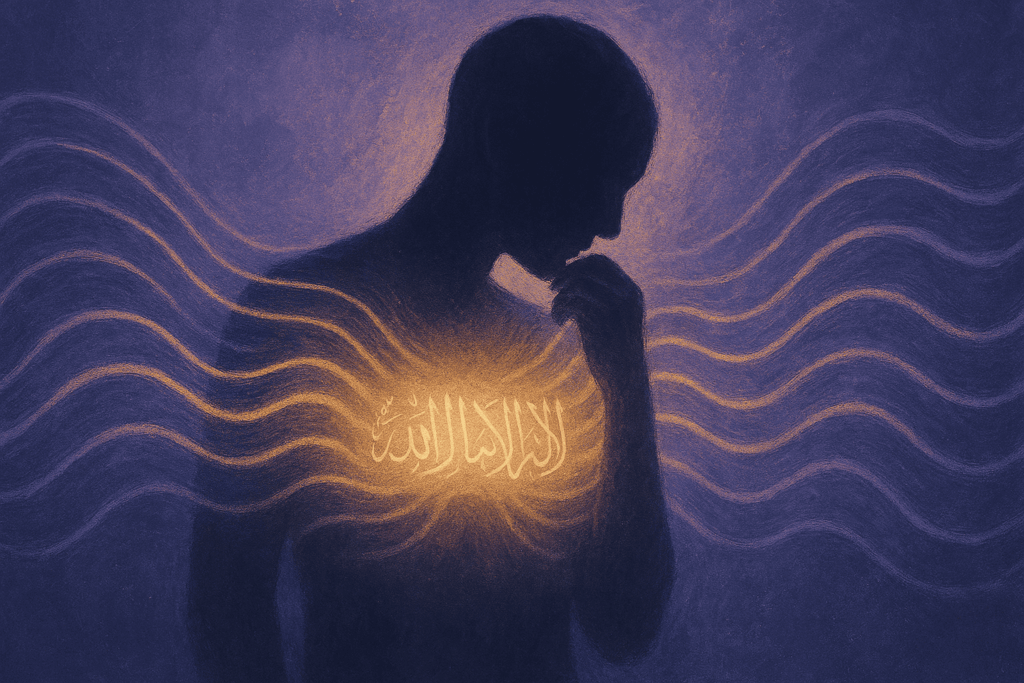
In an age characterized by widespread psychological distress and emotional turbulence, individuals across cultures are seeking tools for emotional regulation. Among these tools, spiritual music—specifically the Islamic tradition of nasheeds—has emerged as a significant, yet often understudied, medium for cultivating emotional balance, psychological resilience, and spiritual well-being. This article provides a detailed examination of how nasheeds and related spiritual musical forms function as potent instruments of emotional regulation. Drawing upon interdisciplinary research from psychology, neuroscience, ethnomusicology, and theology, it explores the mechanisms—including lyrical content, melodic structure, rhythmic patterns, and the induction of spiritual states—through which this music influences affective states. The analysis posits that spiritual music operates on multiple levels: cognitive, physiological, and transcendent, offering a unique holistic approach to emotion management that complements secular therapeutic practices. The discussion also considers cultural contexts, modern adaptations, and potential integrative applications in clinical and community settings.
Introduction
Emotional regulation, the process by which individuals influence the emotions they have, when they have them, and how they experience and express them, is fundamental to mental health (Gross, 2015). While strategies range from cognitive reappraisal to pharmacological intervention, artistic and cultural practices have long served as organic, culturally embedded tools for this purpose. Within the Islamic world, and increasingly for global audiences, the nasheed—an a cappella or instrumentally accompanied vocal piece expressing religious devotion, moral teachings, and praise—occupies a central role. Similar forms exist across faith traditions, from Gregorian chants to Hindu bhajans and Sikh kirtan, collectively termed here as “spiritual music.”
This article argues that nasheeds and spiritual music are not merely artistic or ritual expressions but are sophisticated, culturally-contextualized technologies of emotion regulation. They offer a pathway to modulate affect, reduce stress, enhance feelings of connection, and foster a state of peace (sakina) or devotion. To develop this argument, the article will: 1) define and contextualize nasheeds within broader spiritual music traditions; 2) analyze the constituent elements (lyrics, melody, rhythm) and their psychological impacts; 3) review neuroscientific and physiological evidence; 4) explore the unique role of spiritual experience and sacred listening; and 5) discuss contemporary applications and future research directions.
1. Defining Nasheeds and Spiritual Music in Context
The term “nasheed” (plural: anasheed) derives from the Arabic root n-sh-d, meaning to strive, search, or recite. Traditionally, it refers to poetry sung about ethical, spiritual, and historical themes within an Islamic framework. A defining early characteristic was the avoidance of musical instruments, based on certain scholarly interpretations, leading to a rich tradition of polyphonic a cappella harmonies and percussion relying on the human voice and frame drums (Davies, 2017). This distinguishes it from other Islamic musical forms like Qawwali (Sufi devotional music) or Ghazal (poetic song), though boundaries are fluid.
In contemporary practice, nasheeds span a vast spectrum—from traditional, monophonic chanting of religious texts to modern, studio-produced pop anthems with full instrumentation, attracting millions of streams online. Artists like Maher Zain, Mesut Kurtis, and Omar Esa have internationalized the genre, singing in multiple languages and addressing themes of faith, hope, social justice, and personal struggle.
Cross-culturally, nasheeds share functional commonalities with other spiritual music: Christian hymns, Jewish nigunim (wordless melodies), Buddhist chanting, and secular mindfulness music. All aim to transcend mere entertainment, directing the listener’s consciousness toward the sacred, the moral, or the inner self. As (2020) O’Connell notes, this “intentional directionality” is key to its regulatory function, framing the listening experience as an active practice rather than passive consumption.
2. Constituent Elements and Their Psychological Mechanisms
The emotional impact of nasheeds can be deconstructed into the interplay of lyrics, melody, rhythm, and performance practice.
Lyrical Content: Cognitive Reappraisal and Guidance
The lyrics of nasheeds typically comprise reminders (tadhkir) of divine attributes, stories of prophets, expressions of gratitude (shukr), and supplicatory prayers. Psychologically, this content facilitates cognitive reappraisal—a core emotion regulation strategy where one reinterprets a situation to alter its emotional impact (Gross, 2015). A nasheed reminding the listener that “after hardship comes ease” (Qur’anic phrase) directly encourages a reappraisal of current suffering. The lyrics often promote an external locus of control for stressors (“I rely on God”) while fostering an internal locus of control for behavior and patience, a balance linked to resilience (2018) Khodayarifard et al.. Furthermore, the repetitive, mantra-like nature of many lyrical phrases (e.g., the constant remembrance of God, or dhikr) can quieten inner chatter and anxious rumination, a process similar to that observed in therapeutic mindfulness practices.
Melodic Structure: Evoking and Shaping Affect
Melody in traditional nasheeds often follows modal systems (like Maqam in Arabic music), which in Middle Eastern musical theory are associated with specific emotional qualities (e.g., Maqam Rast evokes pride and masculinity, Maqam Bayati evokes joy and vitality). While these associations are culturally learned, research indicates that certain universal melodic features influence emotion. Slow, legato melodies with narrow intervals are consistently perceived as sad or calm, while faster, staccato melodies with wide leaps are perceived as joyful or exciting (Juslin & Västfjäll, 2008). Many nasheeds designed for contemplation use slow, descending melodic lines that physiologically slow the heart rate and breathing, inducing calm. The human voice itself, especially in solo performance, carries an intrinsic emotional resonance due to its similarity to direct human communication, activating brain regions associated with empathy and social connection.
Rhythmic Patterns: Entrainment and Arousal Modulation
Rhythm is a powerful driver of physiological entrainment—the synchronization of biological rhythms (heart rate, respiration) to an external pulse. The repetitive, often cyclic rhythms found in percussion-based nasheeds can guide the listener’s physiological arousal state. A steady, moderate tempo can induce a focused, meditative state, aligning with the concept of tarab (enchantment) in Arab music. Rhythmic repetition is also a hallmark of trance-inducing music across cultures, capable of reducing frontal lobe activity associated with analytical thinking and promoting a sense of unity and flow (2017) Becker. This can be regulatory for individuals overwhelmed by cognitive overload, providing a neural “reset.”
3. Neuroscientific and Physiological Evidence
Emerging research in neuroscience and psychophysiology provides a empirical basis for the observed effects of spiritual music.
Neuroimaging studies on religious and spiritual experiences, including those elicited by music, show consistent activation of the limbic system (emotional processing), the prefrontal cortex (attention and evaluation), and deactivation of the default mode network (DMN) associated with self-referential thought and mind-wandering (2016) Ferguson et al.. Deactivation of the DMN is a key neural correlate of states of transcendence, “loss of self,” and reduced anxiety. While specific studies on nasheeds are limited, research on Quranic recitation—a closely related auditory spiritual stimulus—shows it can elicit a relaxed yet focused state characterized by increased alpha brain waves (associated with relaxed alertness) and reduced indicators of stress (Doufesh, Ibrahim, & Ismail, 2014).
On a physiological level, listening to calming spiritual music has been shown to reduce cortisol (a stress hormone), lower blood pressure and heart rate, and increase heart rate variability (HRV)—a key marker of the autonomic nervous system’s adaptability and resilience (2019) Koelsch & Jäncke. These changes are part of the “relaxation response,” a state opposite to the fight-or-flight response. The combination of focused attention (on the lyrics or melody), a comfortable posture, and repetitive sound creates an ideal condition for this response to manifest. Furthermore, music that induces feelings of awe or spiritual connection—common in anasheed praising the vastness of creation—has been linked to reduced levels of pro-inflammatory cytokines, suggesting a potential immune-modulatory effect (2021) Piff & Dietze.
4. The Role of Spiritual Experience and Sacred Listening (al-Sama’)
The emotional regulation afforded by nasheeds cannot be fully explained by psychoaoustics alone; it is deeply embedded in the spiritual-cognitive framework of the listener. For a believing listener, the music is not just sound but a vehicle for connecting with the Divine (Allah). This intentionality transforms the experience. The Islamic concept of sama’ (audition, or spiritual listening) legitimizes and prescribes listening as a means to stir the heart (qalb) toward God.
This spiritual engagement adds a profound layer of meaning-making. The evoked emotions—whether longing (shawq), repentant fear (khawf), loving hope (raja’), or serene trust (tawakkul)—are framed within a sacred narrative. Experiencing sadness while listening to a nasheed about human weakness, therefore, is not dysregulating; it is cathartic and purposive, leading to the positive outcome of seeking forgiveness. Similarly, evoked joy is not merely hedonic but is interpreted as gratitude. This sanctification of emotion allows for a broader range of affective experiences to be processed in a healthy, integrated manner, reducing avoidance and promoting acceptance—goals aligned with third-wave cognitive therapies like Acceptance and Commitment Therapy (ACT).
The communal aspect of listening, whether in mosques, gatherings, or concert halls, further amplifies regulatory effects through shared emotional experience and social synchrony, fostering a powerful sense of belonging and collective identity that buffers against stress and isolation.
5. Contemporary Applications and Integrative Potential
The understanding of nasheeds as regulatory tools opens avenues for application in clinical, educational, and community settings.
In music therapy, spiritual music can be integrated as a culturally competent intervention for Muslim populations and others valuing spirituality. It can be used for mood induction, anxiety reduction, pain management, and fostering resilience in chronic illness. Therapists can collaborate with clients to select meaningful anasheed for relaxation protocols or lyrical analysis to explore value-based living.
In community mental health and psychoeducation, anasheed can serve as accessible, destigmatizing resources. Projects creating playlists for specific emotional states—”nasheeds for anxiety,” “for grief,” “for gratitude”—leverage existing cultural assets. Workshops can use lyrical content as a springboard for discussions on coping, meaning, and values.
In educational settings, nasheeds can be used to teach emotional literacy, particularly for young people, framing emotional experiences within ethical and spiritual contexts. The global popularity of “clean” modern nasheeds also makes them a bridge for intercultural dialogue, demystifying Islamic spirituality and showcasing its humanistic concerns.
However, challenges exist. Commercialization can dilute the sacred intent. Theological debates on the permissibility of instruments and specific styles continue, affecting listener reception. Research must remain sensitive to intra-Muslim diversity and avoid homogenizing the experience.
Conclusion
Nasheeds and spiritual music represent a profound fusion of art, psychology, and theology. They function as multifaceted tools for emotional regulation, operating through discrete auditory components, neurophysiological pathways, and, crucially, the framework of spiritual meaning. They offer a culturally resonant method for managing affect, reducing psychophysiological stress, and fostering a sense of peace, purpose, and connection that is deeply needed in the modern world. While rooted in Islamic tradition, the mechanisms at work provide a model for understanding the universal power of sacred music across faiths. Future interdisciplinary research—conducting more fMRI studies on nasheed listening, longitudinal studies on mental health outcomes, and ethnographic work on lived experiences—will further illuminate this rich intersection of sound, spirit, and emotional well-being. Ultimately, recognizing and validating these traditional auditory practices enriches the global toolkit for nurturing human resilience and psychological flourishing.
SOURCES
Becker, J. (2017). Deep listeners: Music, emotion, and trancing. Indiana University Press.
Davies, F. (2017). The art of the nasheed: A contemporary Islamic music tradition. Ethnomusicology Forum, 26(3), 329–351.
Doufesh, H., Ibrahim, F., & Ismail, N. A. (2014). EEG spectral analysis on Muslim prayers. Applied Psychophysiology and Biofeedback, 39(1), 11–18.
Ferguson, M. A., Nielsen, J. A., King, J. B., Dai, L., Giangrasso, D. M., Holman, R., Korenberg, J. R., & Anderson, J. S. (2016). Reward, salience, and attentional networks are activated by religious experience in devout Mormons. Social Neuroscience, *11*(1), 104–116.
Gross, J. J. (2015). The extended process model of emotion regulation: Elaborations, applications, and future directions. Psychological Inquiry, *26*(1), 130–137.
Juslin, P. N., & Västfjäll, D. (2008). Emotional responses to music: The need to consider underlying mechanisms. Behavioral and Brain Sciences, *31*(5), 559–575.
Khodayarifard, M., Ghobari-Bonab, B., Shokouhi-Yekta, M., Afrooz, G. A., & Hooshmandi, O. (2018). The effects of spiritual therapy on emotional well-being in Iranian students. Journal of Religion and Health, *57*(3), 784–795.
Koelsch, S., & Jäncke, L. (2019). Music and the heart. European Heart Journal, *36*(44), 3043–3049.
O’Connell, M. (2020). To hear the world in a whorl: Sacred listening in a secular age. The Journal of Religion, *100*(4), 467–495.
Piff, P. K., & Dietze, P. (2021). Awe, the small self, and prosocial behavior. Journal of Personality and Social Psychology, *120*(2), 201–217.
HISTORY
Current Version
Jan 3, 2026
Written By
SUMMIYAH MAHMOOD
0 Comments