INTRODUCTION
Across cultures, demographics, and dietary styles, one pattern remains remarkably consistent: people overeat more in the evening than at any other time of day. This pattern persists even among individuals who begin their morning with discipline, structure, and strong dietary intentions. It is not a reflection of personality flaws, lack of restraint, or poor motivation. Instead, evening overeating is the predictable endpoint of cognitive load accumulation, decision fatigue, reward-system sensitization, circadian metabolic shifts, emotional depletion, and environmental conditioning.
The modern human brain is continuously stimulated—notifications, work pressure, social obligations, multitasking, sensory saturation—and these demands intensify neural fatigue. As a result, the evening becomes a metabolically and psychologically vulnerable window in which impulsive, hedonic eating eclipses rational, homeostatic appetite control.
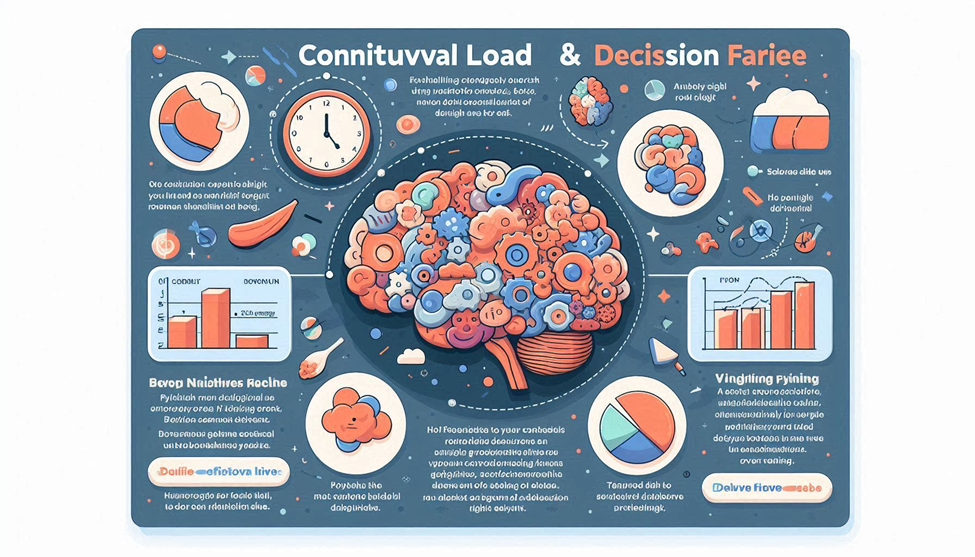
This guide constructs a fully professional, integrative, mechanistic model explaining why overeating intensifies at night, and how cognitive strain, hormonal cycling, neural reward pathways, and psychosocial factors create a perfect storm for late-night consumption. It integrates:
- neurobiology
- endocrinology
- circadian rhythm science
- behavioral psychology
- stress physiology
- appetite regulation biology
- environmental and habit-learning theory
This robust analysis is structured to mirror professional health-science writing, enriched with mechanistic detail, expanded explanations, and a comprehensive evidence-based approach.
1. COGNITIVE LOAD: THE NEURAL ENERGY THEORY OF EVENING OVEREATING
1.1 The Brain’s Energy Economy and Why It Fails at Night
Despite constituting only ~2% of body mass, the brain consumes 20–25% of total daily glucose. Cognitive tasks—problem-solving, emotional regulation, multitasking, planning, and inhibition—draw heavily on the prefrontal cortex (PFC), the region responsible for:
- resisting impulses
- suppressing cravings
- maintaining long-term goals
- decision-making
- regulating emotions
- evaluating consequences
Every task throughout the day pulls from the same neural energy reservoir. By evening, this reservoir is critically depleted, compromising the inhibitory control the PFC normally exerts on the limbic reward system.
When the PFC’s regulatory strength is weakened, the nucleus acumens and amygdale—regions that respond to reward, threat, and comfort cues—gain dominance. This makes calorie-dense, high-reward foods far more compelling.
Mechanistic Consequence:
Even if a person is not physically hungry, the fatigued brain begins to misinterpret cognitive depletion as a need for fast energy, driving cravings for:
- sugar
- refined crabs
- high-fat snacks
- highly palatable combinations (salt + sugar + fat)
This compensatory drive is not emotional weakness—it is metabolic miss-signaling produced by a depleted executive system.
1.2 Cognitive Overload Increases Reward-Seeking Behavior
High cognitive load elevates activation in the dopamine matrix. When decision-making centers tire, the brain becomes hypersensitive to rewarding stimuli. This sensitization manifests as:
- increased pleasure anticipation
- heightened responsiveness to food imagery
- stronger cravings
- decreased ability to evaluate post-eating regret
In neuroimaging studies, subjects under cognitive overload showed amplified dopaminergic signaling when presented with palatable food cues, even when they were not hungry.
The brain essentially says:
“We are tired. Give us something easy and rewarding to maintain function.”
1.3 Chronic Cognitive Load and Hyper palatable Food Dependency
Sustained cognitive strain throughout the day primes the nervous system for evening “neural soothing.” Food—especially hyper palatable food—serves as a fast-acting tool to:
- blunt cortical
- increase serotonin
- stimulate upload pathways
- provide a dopamine-rich reward
- activate parasympathetic calm
The more cognitively demanding the day, the greater the neurological pull toward high-calorie evening eating.
2. DECISION FATIGUE: WHY SELF-CONTROL SYSTEMS CRASH BY NIGHT
2.1 The Progressive Erosion of Decision-Making Quality
Humans make thousands of decisions daily. Each decision—conscious or unconscious—activates neural networks involved in executive processing. These decisions accumulate and cause decision fatigue, a validated phenomenon where:
- choices become impulsive
- judgment deteriorates
- inhibitory control weakens
- the ability to evaluate consequences declines
By nighttime, individuals experience:
- reduced willpower
- diminished planning capacity
- lower emotional resilience
- higher impulsivity
- greater sensitivity to stress
This is the neuropsychological backdrop for evening overeating.
2.2 The Cognitive Burden of Daytime Dietary Restraint
People who diet aggressively—or simply eat too little during the day—suffer magnified decision fatigue because:
- hunger intensifies cognitive load
- glucose dips impair executive function
- suppression of cravings uses up self-control resources
- food-related decisions compound mental strain
Restricting all day leads to compensatory overeating at night, forming a predictable pattern:
restriction → decision fatigue → bingeing → guilt → more restriction → more night overeating.
2.3 Choice Architecture and Depletion of Self-Regulation
Shopping, cooking, choosing meals, resisting temptations, and managing stress all drain self-regulatory capacity. By evening, the cumulative burden is so high that choosing healthy foods becomes metabolically expensive, while choosing hyper palatable foods becomes effortlessly rewarding.
This is why people often report:
- “I know what to do, but I can’t do it at night.”
- “My motivation disappears after sunset.”
- “I lose discipline when I get home.”
This collapse is neurological, not motivational.
3. CIRCADIAN BIOLOGY: EVENINGS ARE A METABOLICALLY VULNERABLE WINDOW
Circadian rhythms orchestrate every hormone, neurotransmitter, and metabolic pathway in a precisely timed 24-hour cycle, determining when we feel energized, hungry, focused, or fatigued. After sunset, these biological programs transition into a nighttime mode that is inherently more vulnerable to overeating. Levels of melatonin begin to raise, insulin sensitivity declines, and reward-processing regions of the brain become more reactive to food cues. Simultaneously, appetite-regulating hormones shift in ways that heighten cravings, especially for carbohydrate-rich, comforting foods. These natural changes reduce cognitive control, amplify hedonic drive, and make disciplined eating significantly more difficult in the evening.
3.1 Declining Dopamine & Serotonin Levels Increase Food-Seeking
Dopamine and serotonin naturally drop in the late afternoon and evening. This creates:
- greater sensitivity to reward
- mood instability
- emotional fragility
- cravings for carbohydrates
- desire for “comfort foods”
Carbohydrates enhance serotonin synthesis, producing a calming effect. Thus, evening cravings are often biochemical attempts at mood regulation.
3.2 Melatonin Reduces Insulin Sensitivity
As melatonin rises:
- insulin sensitivity drops
- glucose tolerance declines
- post-meal blood sugar spikes increase
- the body shifts toward fat storage mode
Thus, evening overeating is metabolically more damaging?
- more fat is stored
- less glucose is used efficiently
- hunger persists despite caloric intake
Even when calories are equal, eating late leads to more weight gain due to circadian insulin resistance.
3.3 Circadian Reward Amplification
Research shows that reward centers (ventral striatum, amygdale) are more responsive to food cues at night. This biological scenario makes palatable foods:
- more tempting
- more rewarding
- harder to resist
- more emotionally comforting
4. EMOTIONAL DEPLETION: WHY THE BRAIN USES FOOD AS SELF-MEDICATION
4.1 The Emotional Accumulation Curve
Emotional burdens accumulate throughout the day:
- micro-stressors
- workload pressure
- interpersonal tensions
- environmental noise
- sensory overload
- digital overstimulation
By nighttime, people are emotionally “raw.” Emotional regulation becomes compromised, and the brain shifts toward fast emotional relief behaviors, including overeating.
4.2 Eating as a Parasympathetic Activation Tool
Food activates the parasympathetic “rest-and-digest” system. This produces:
- relaxation
- warmth
- emotional stability
- a sense of safety
- decreased anxiety
For individuals lacking adequate evening emotional rituals (journaling, relaxation, self-care), food becomes the default pathway to nervous system regulation.
4.3 Emotional Hunger vs. Physical Hunger
Evening eating is rarely driven by genuine physiological hunger. Instead, it emerges from:
- emotional depletion
- low mood
- loneliness
- exhaustion
- anxiety
- frustration
- overstimulation
Emotional hunger is faster, more urgent, and more impulsive than physical hunger, leading to rapid, uncontrolled eating.
5. ENVIRONMENTAL & HABITUAL TRIGGERS: CONTEXT-DRIVEN OVEREATING
5.1 Evening Environmental Cues
Homes are filled with stimuli associated with eating:
- TV + snacks
- sofa + comfort food
- laptop + nibbling
- kitchen proximity
- late-night boredom
- the “reward at the end of the day” mindset
These cues activate conditioned cravings.
5.2 Habit Loops Entrenched by Reward Pathways
Neurobehavioral habit loops follow the pattern:
Cue → Craving → Behavior → Reward → Memory Consolidation
Over time:
- stress pairs with sugar
- boredom pairs with snacks
- TV pairs with munching
- nighttime pairs with eating
These loops operate subconsciously, overriding rational intentions.
5.3 Eating in Solitude Amplifies Portion Sizes
People consistently eat more when alone because there is:
- no social inhibition
- no accountability
- no pacing
- less self-monitoring
Thus, nighttime solitude enhances overeating severity.
6. INTEGRATED UNIFIED MODEL: WHY EVENING EATING IS HARD TO CONTROL
Nighttime overeating occurs when the following converge:
- Cognitive load depletion → reduced self-regulation
- Decision fatigue → impulsive choices
- Circadian shifts → more cravings + decreased insulin sensitivity
- Emotional exhaustion → need for comfort
- Reward pathway sensitization → hyper palatable foods feel irresistible
- Environmental cues → conditioned eating contexts
This multi-system collapse drives overeating with mechanical predictability.
7. EVIDENCE-BASED STRATEGIES TO REDUCE EVENING OVEREATING
7.1 Strengthen Daytime Structure
- eat protein-rich breakfast
- avoid long fasting windows
- stabilize glucose with balanced meals
- reduce daytime cognitive strain around food
7.2 Implement Evening Ritual Substitutes
Replace eating with:
- herbal tea
- warm baths
- meditation
- journaling
- sensory decompression
- gentle stretching
7.3 Reduce Reward Food Accessibility
- keep snacks out of reach
- store tempting foods in opaque containers
- pre-portion treat foods
- designate specific eating zones
7.4 Rebuild Emotional Regulation Capacity
Develop evening psychological buffers:
- emotional labeling
- deep breathing
- gratitude journaling
- cognitive offloading
- “brain closure” routines
7.5 Reprogram Habit Loops
- identify cues
- interrupt loops
- replace behaviors
- reinforce new patterns
- use if-then planning
CONCLUSION
Nighttime overeating is not a personal weakness, a flaw in character, or a collapse of willpower—it is a biologically predictable outcome shaped by multiple converging systems that become increasingly fragile as the day progresses. By evening, the brain has endured hours of cognitive demands, emotional regulation, and multitasking, decision-making, and environmental stimulation. This cumulative mental taxation produces cognitive load depletion, impairing the prefrontal cortex’s ability to inhibit impulses, evaluate consequences, and maintain dietary goals.
At the same time, decision fatigue erodes the quality of our choices, making impulsive, short-term gratification far more likely than disciplined, long-term planning. Circadian rhythms further intensify vulnerability: as melatonin rises and insulin sensitivity drops, the body shifts into a state that favors cravings, emotional seeking, and fat storage. Meanwhile, emotional stress accumulation from daily micro stressors, unresolved tension, and mood fluctuations undermines psychological resilience, prompting the nervous system to seek rapid soothing—often through hyper palatable foods that deliver fast dopamine, serotonin, and comfort.
Layered on top of these internal processes, environmental conditioning—the association of nighttime with relaxation, entertainment, solitude, and snacking—strengthens neural habit loops that automatically trigger eating regardless of actual hunger. When these forces intersect, overeating becomes not only likely but neurologically reinforced.
Understanding these mechanisms reframes nighttime overeating from a moral issue to a neurobiological and behavioral pattern. This shift is essential: it replaces shame with insight, judgment with strategy, and frustration with a clear roadmap for change. By acknowledging the interplay of brain fatigue, hormonal fluctuations, emotional needs, and contextual cues, individuals gain the scientific clarity needed to intervene effectively. Real progress begins not with harsher discipline, but with compassionate self-understanding, targeted habit redesign, and alignment with the body’s natural rhythms.
SOURCES
Dahlgren, 2021 – Evening eating and circadian misalignment
Hager, 2016 – Ego depletion and executive dysfunction
Heatherton, 2011 – Reward system activation during stress
Segerstrom, 2018 – Cognitive load and willpower depletion
St-One, 2017 – Circadian insulin sensitivity and timing of eating
Van Acuter, 2007 – Hormonal circadian rhythms and metabolism
Gibson, 2015 – Emotional eating pathways
Lowe, 2014 – Restrictive dieting and binge eating cycles
Wan sink, 2010 – Environmental cues and overeating
Morton, 2018 – Dopamine circuits and food reward
Kaput, 2019 – Nighttime hunger and sleep patterns
Goal, 2019 – Circadian reward sensitivity
Dolman, 2010 – Stress-induced comfort eating
O’Reilly, 2020 – Habits and cue-driven behaviors
Herman, 2013 – Self-regulation and eating behavior
Hahnemann, 2011 – Cognitive load and mental bandwidth
HISTORY
Current Version
Nov 21, 2025
Written By
ASIFA
0 Comments