Introduction
In modern metabolic physiology, one of the most insidious yet often overlooked drivers of central adiposity is chronic stress. While caloric imbalance, sedentary behavior, and genetics are traditionally emphasized in discussions of weight gain, mounting evidence demonstrates that the stress hormone cortical plays a pivotal role in fat distribution, energy homeostasis, and metabolic health. Cortical, produced by the adrenal cortex via the hypothalamic-pituitary-adrenal (HPA) axis, regulates a spectrum of physiological functions: immune modulation, inflammation, gluconeogenesis, blood pressure, and central nervous system activity. Under acute stress, cortical contributes adaptively to energy mobilization and survival. However, in the context of persistent psychological, emotional, or physiological stress, cortical becomes a chronic metabolic signal that reshapes adipose tissue distribution, promotes visceral fat accumulation, and undermines insulin sensitivity.
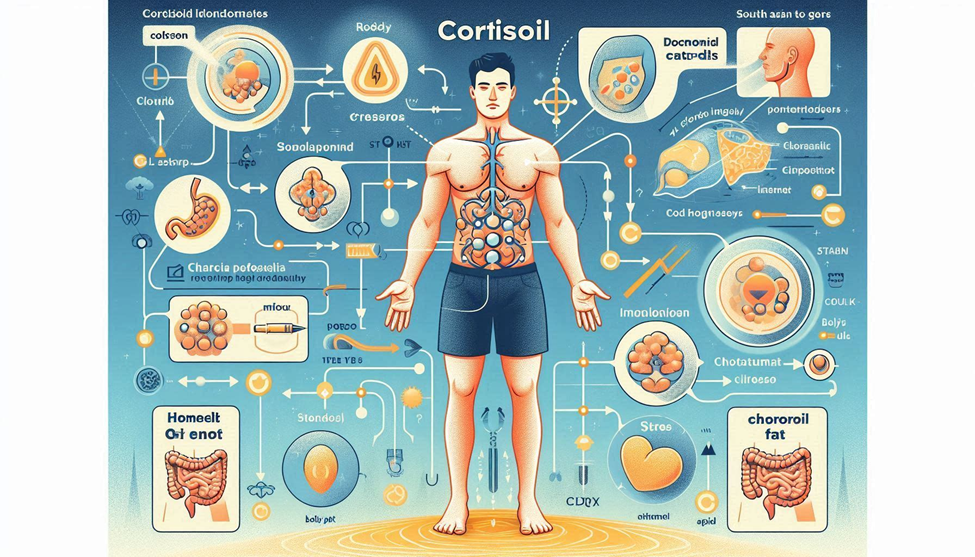
Central (visceral) fat accumulation is particularly concerning because it is metabolically active, secreting pro-inflammatory cytokines (e.g., IL-6, TNF-α) and adipokines (e.g., resisting, lepton) that exacerbate insulin resistance, dyslipidemia, and cardiovascular risk. Unlike subcutaneous fat, visceral adiposities are more responsive to glucocorticoid stimulation, possess higher expression of 11β-hydroxysteroid dehydrogenate type 1 (11β-HSD1), and display enhanced biogenic activity. As such, chronic cortical elevation selectively drives the accumulation of abdominal fat, a hallmark of metabolic syndrome, type 2 diabetes, and cardiovascular disease. Understanding the biological, neuroendocrine, and behavioral mechanisms by which cortical influences fat storage is critical for developing integrative strategies to mitigate stress-driven obesity.
This guide provides a comprehensive exploration of cortisol’s role in weight physiology, emphasizing the molecular mechanisms of visceral fat accumulation, HPA axis deregulation, circadian misalignment, diet-stress interactions, and lifestyle interventions to counteract cortical-mediated adiposity. By framing stress and cortical as central, rather than peripheral, contributors to metabolic deregulation, this analysis moves beyond simplistic “eat less, move more” paradigms toward a mechanistic, evidence-based, and clinically relevant understanding of abdominal fat accumulation.
1. Cortical: Molecular Physiology and Regulatory Pathways
1.1 The Hypothalamic-Pituitary-Adrenal (HPA) Axis
Cortical secretion is governed by the HPA axis, a finely tuned neuroendocrine circuit:
- The hypothalamus releases corticotrophin-releasing hormone (CRH) in response to stressors.
- CRH stimulates the anterior pituitary to secrete adrenocorticotropic hormone (ACTH).
- ACTH signals the adrenal cortex to produce cortical.
- Cortical feeds back to the hypothalamus and pituitary via glucocorticoid receptors, modulating further CRH and ACTH release.
This axis ensures adaptive stress responses, regulates energy metabolism, and maintains homeostasis under acute stress conditions.
1.2 Circadian Rhythm of Cortical
Cortical follows a diurnal pattern, peaking in the early morning (around 7–9 a.m.) and reaching a nadir around midnight. This rhythm coordinates:
- Glucose availability
- Blood pressure regulation
- Immune function
- Metabolic fuel partitioning
Chronic stress or sleep disruption blunts this circadian rhythm, leading to chronically elevated cortical or a “flattened” diurnal curve, both of which are linked to increased visceral fat deposition.
1.3 Cortical Receptors in Adipose Tissue
Adiposities express glucocorticoid receptors (GRs), which mediate cortisol’s transcriptional effects:
- Up regulation of biogenic enzymes (e.g., acetyl-Coal carboxyl’s, fatty acid syntheses)
- Down regulation of biolytic pathways under chronic exposure
- Increased differentiation of preadipocytes into visceral adiposities
- Enhanced activity of 11β-HSD1, which regenerates active cortical locally
Visceral fat exhibits higher GR density than subcutaneous fat, explaining its preferential expansion under chronic cortical exposure.
2. Chronic Stress and Visceral Adiposity: Mechanistic Insights
2.1 Energy Mobilization and Storage Paradox
Acute cortical promotes:
- Gluconeogenesis in the liver
- Biolysis in peripheral adipose tissue
- Protein catabolism in skeletal muscle
Paradoxically, chronic cortical leads to:
- Preferential lipid deposition in the abdomen
- Suppression of peripheral fat mobilization
- Insulin resistance that traps glucose and lipids in adiposities
2.2 Glucose-Insulin-Cortical Interactions
Chronic cortical:
- Increases hepatic gluconeogenesis
- Elevates fasting glucose levels
- Induces hyperinsulinemia
- Drives visceral fat accumulation via insulin-mediated lip genesis
This explains why chronic stress can result in metabolic syndrome even in individuals without caloric excess.
2.3 Appetite Regulation and Reward Pathways
Cortical interacts with:
- Neuropeptide Y (NPY): Increases appetite, particularly for calorie-dense, high-sugar, high-fat foods
- Dopaminergic reward circuits: Enhances hedonic eating
- Lepton resistance: Disrupts satiety signaling
The result is stress-induced overeating, often termed “comfort eating,” which preferentially contributes to abdominal fat gain.
2.4 Fatty Acid Flux and Visceral Fat Sensitivity
Chronic cortical alters adiposity metabolism:
- Visceral fat exhibits increased lipoprotein lipase (LPL) activity, facilitating triglyceride uptake
- Peripheral fat (subcutaneous) may experience impaired biolysis
- The net effect is redistribution of energy to central depots
3. Sleep, Circadian Disruption, and Cortical Deregulation
3.1 Sleep Deprivation and Evening Cortical
- Insufficient sleep raises evening cortical
- Blunted nocturnal decline impairs glucose tolerance
- Promotes central fat accumulation independently of caloric intake
3.2 Shift Work and Circadian Misalignment
- Night shift work disrupts HPA axis rhythm city
- Increases risk for visceral obesity, insulin resistance, and cardio metabolic disease
- Supports the concept that temporal alignment of cortical rhythms is critical for metabolic health
4. Nutritional Interactions with Cortical
4.1 High Glycolic Diets and Stress-Induced Fat Gain
- Rapid glucose fluctuations increase insulin and cortical co-activation
- Promotes visceral lip genesis
- Combined with stress-induced appetite increase, leads to preferential abdominal fat deposition
4.2 Anti-inflammatory and Nutrient-Dense Foods
- Omega-3 fatty acids reduce cortical-mediated inflammation
- Polyphones (green tea catechism, cur cumin) attenuate HPA activation
- Fiber-rich diets modulate gut micro biota, producing SCFAs that influence adrenal function
4.3 Timing and Chromo-Nutrition
- Aligning meals with circadian cortical peaks optimizes substrate utilization
- Evening high-calorie intake under elevated cortical contributes disproportionately to visceral fat
5. Physical Activity and Cortical Modulation
- Acute Exercise
- Transiently increases cortical, mobilizes energy
- Enhances substrate availability for muscle and liver
- Chronic Exercise
- Regular aerobic and resistance training reduces basal cortical
- Improves insulin sensitivity
- Promotes healthy adipokine profiles
- Exercise Timing
- Morning exercise aligns with natural cortical peaks, amplifying beneficial effects
- Evening high-intensity exercise may transiently elevate cortical, potentially disrupting sleep
6. Psychological Stress Management and BAT Interaction
- Mind-Body Approaches
- Meditation, yoga, and breath work reduce HPA axis hyper activation
- Decrease chronic cortical burden
- Lower inflammatory cytokines and visceral fat accumulation
- Cognitive Behavioral Therapy (CBT)
- Modulates stress perception
- Reduces stress-eating patterns
- Restores healthy HPA axis feedback
- Social Support and Resilience
- Strong social networks buffer cortical response to stress
- Reduce emotional eating
- Improve adherence to healthy lifestyle behaviors
7. Pharmacological and Nutraceutical Modulation
- Cortical-Lowering Nutraceuticals
- Phosphatidylserine: attenuates exercise- and stress-induced cortical spikes
- Ashwagandha: adaptogenic effect reducing basal cortical
- Magnesium: modulates adrenal responsiveness
- Pharmacological Interventions
- Mifepristone: glucocorticoid receptor antagonist (used experimentally for Cushing’s syndrome)
- Beta-blockers: may reduce sympathetic stimulation of HPA axis
8. Inflammatory and Immune Implications
Visceral adipose tissue under the influence of chronically elevated cortical is not merely an inert energy reservoir; it is a highly active endocrine organ that orchestrates systemic inflammation and metabolic dysfunction. Chronic cortical exposure enhances the secretion of pro-inflammatory cytokines, including interleukin-6 (IL-6), tumor necrosis factor-alpha (TNF-α), and monocot chemo attractant protein-1 (MCP-1), which collectively establish a persistent low-grade inflammatory environment. These signaling molecules disrupt normal insulin receptor pathways, leading to insulin resistance in peripheral tissues, while simultaneously impairing endothelial function through oxidative stress, endothelial nitric oxide suppression, and vascular inflammation. The inflammatory milieu also accelerates atherogenesis, promoting plaque formation and increasing cardiovascular risk.
Importantly, this pro-inflammatory state creates a vicious cycle: elevated cortical drives visceral fat accumulation, which further amplifies cytokine production, perpetuating HPA axis deregulation and metabolic derangements. Unlike subcutaneous fat, visceral adiposities possess higher glucocorticoid receptor density and enhanced biogenic activity, rendering them more sensitive to cortisol’s deleterious effects. Consequently, chronic stress does more than increase abdominal girth; it transforms visceral fat into an active driver of systemic metabolic syndrome, cardiovascular disease, and chronic inflammatory disorders. Understanding these molecular and endocrine mechanisms underscores the critical importance of stress management, circadian alignment, and anti-inflammatory lifestyle interventions in mitigating the health consequences of cortical-driven abdominal adiposity.
9. Integrated Lifestyle Strategies for Cortical and Visceral Fat Control
Effective management of stress-induced visceral adiposity requires a multifaceted, integrative approach that targets the neuroendocrine, behavioral, and metabolic contributors to chronic cortical elevation. Sleep optimization forms the cornerstone of this strategy; consistently achieving 7–9 hours of quality sleep stabilizes diurnal cortical rhythms, enhances insulin sensitivity, and improves energy partitioning. Adequate sleep also supports lepton and gherkin balance, reducing stress-related appetite deregulation and the propensity for calorie-dense comfort foods. Complementing sleep, mind-body practices such as meditation, yoga, and controlled breath work exert profound effects on HPA axis modulation, lowering basal cortical levels, dampening sympathetic over activity, and promoting parasympathetic dominance, which collectively reduce the chronic inflammatory milieu associated with visceral fat deposition.
Regular physical activity—a balanced combination of aerobic exercise, resistance training, and high-intensity interval training (HIIT)—further counteracts cortical-driven central adiposity by enhancing glucose uptake in skeletal muscle, improving mitochondrial efficiency, and promoting adipokine profiles favorable to metabolic flexibility. Exercise also stimulates the release of cytokines such as iris in, which facilitate browning of white adipose tissue, thereby increasing energy expenditure. Dietary strategies, emphasizing an anti-inflammatory, nutrient-dense intake rich in omega-3 fatty acids, dietary fiber, and polyphones, support adrenal function, mitigate oxidative stress, and favorably modulate gut micro biota, which in turn influences HPA axis activity.
Chromo-nutrition, or aligning caloric intake with cortical peaks and circadian rhythms, optimizes substrate utilization and prevents late-night hyperglycemia and lipid storage. Stress awareness strategies, including cognitive-behavioral techniques and robust social support networks, help individuals identify and manage emotional triggers for overeating. Finally, avoiding chronically elevated stimulants such as excess caffeine or energy drinks reduces prolonged adrenal stimulation and prevents further disruption of cortical dynamics. Together, these interventions restore HPA axis homeostasis, attenuate stress-induced eating patterns, and redirect energy metabolism toward lean tissue preservation and healthy fat utilization, ultimately minimizing visceral fat accumulation and promoting long-term metabolic resilience.
Conclusion
Chronic stress is a hidden yet potent driver of central adiposity, mediated primarily by persistent cortical elevation, HPA axis deregulation, and downstream metabolic consequences. Visceral fat is preferentially sensitive to cortical due to receptor density, 11β-HSD1 activity, and enhanced biogenic pathways. Beyond caloric excess, modern stressors—including sleep disruption, social pressures, and emotional strain—create a metabolic milieu favoring abdominal fat gain, insulin resistance, inflammation, and cardio metabolic risk.
Effective mitigation requires an integrative, mechanistically informed approach: optimizing sleep and circadian alignment, employing mind-body stress management, regulating dietary patterns, engaging in structured physical activity, and potentially leveraging nutraceutical interventions. Recognizing cortical as a central player in weight physiology reframes obesity not merely as a matter of “willpower” or caloric imbalance but as a systemic, neuroendocrine, and behavioral phenomenon that demands targeted, evidence-based interventions.
SOURCES
Choruses, 2009. Stress and disorders of the stress system. Nature Reviews Endocrinology.
Segos & Choruses, 2002. Hypothalamic–pituitary–adrenal axis, neuroendocrine factors, and stress. Endocrine Reviews.
Bjorntorp, 2001. Do stress reactions cause abdominal obesity and co morbidities? Obesity Reviews.
Peel et al., 2000. Stress and body shape: stress-induced cortical secretion and central fat. Psychoneuroendocrinology.
Kyrie et al., 2006. Stress hormones and metabolic syndrome. Trends in Endocrinology & Metabolism.
Björntorp & Osmond, 2000. Obesity and cortical. Nutrition Reviews.
Kudielka & Kirschbaum, 2005. Sex differences in HPA axis responses to stress. Biological Psychology.
Osmond, 2005. Role of stress in visceral obesity and metabolic syndrome. Nutrition.
Vicinity et al., 2009. Stress, cortical, and abdominal obesity. Obesity Facts.
Marin et al., 1992. Cortical secretion in obesity. Journal of Clinical Endocrinology & Metabolism.
Bhatt et al., 2020. Chronic stress and metabolic health: mechanisms and interventions. Frontiers in Endocrinology.
Sapolsky, 2004. Why zebras don’t get ulcers: the acclaimed guide to stress, stress-related diseases, and coping. Holt Paperbacks.
Pervanidou & Choruses, 2012. Neuroendocrinology of stress in children and adolescents. Hormone Research in Pediatrics.
Segos et al., 2000. The role of stress in visceral fat accumulation. Annals of the New York Academy of Sciences.
Dolman et al., 2003. Chronic stress and comfort food: HPA axis and metabolic consequences. Physiology & Behavior.
Peel et al., 2001. Stress and energy balance: stress-induced eating and obesity. Annals of the New York Academy of Sciences.
Tatiana et al., 1996. Cortical, energy expenditure, and visceral fat in humans. American Journal of Physiology.
Bjorntorp, 1996. Neuroendocrine control of visceral fat. International Journal of Obesity.
Osmond et al., 1998. Cortical and fat distribution in men. Obesity Research.
Vgontzas et al., 2001. Sleep apnea, cortical, and abdominal obesity. Journal of Clinical Endocrinology & Metabolism.
Chide & Steptoe, 2009. Cortical and cardiovascular risk: meta-analysis. Journal of Hypertension.
Adam & Peel, 2007. Stress, eating, and the HPA axis: mechanistic review. Psychoneuroendocrinology.
Hackett & Steptoe, 2017. Type 2 diabetes, cortical, and stress. Nature Reviews Endocrinology.
Segos et al., 2006. Stress, glucocorticoids, and obesity. Annals of the New York Academy of Sciences.
Osmond & Bjorntorp, 2000. The hypothalamic-pituitary-adrenal axis activity as a predictor of cardiovascular risk. Metabolism.
HISTORY
Current Version
Nov 21, 2025
Written By
ASIFA
0 Comments