Introduction
Water is not merely a passive component of human physiology; it is a central mediator of metabolism, appetite regulation, and energy homeostasis. The body’s fluid balance influences a myriad of physiological processes, including nutrient transport, thermoregulation, cellular signaling, and hormonal modulation. Suboptimal hydration can contribute to misregulated appetite, increased caloric intake, fatigue, impaired cognitive function, and disrupted energy expenditure, which collectively may promote weight gain and metabolic deregulation. Understanding hydration physiology is therefore essential for designing dietary and lifestyle interventions aimed at improving satiety, energy levels, and overall metabolic efficiency.
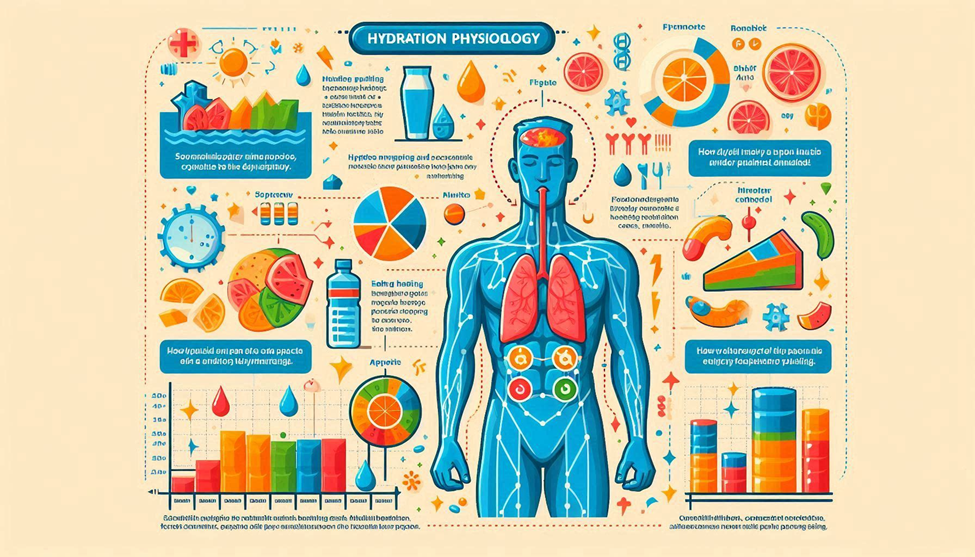
Hydration status modulates hormones that govern hunger and satiety, including gherkin, lepton, and vasopressin. Even mild dehydration can elevate perceived hunger, reduce satiety signaling, and increase the likelihood of energy-dense food consumption. Furthermore, inadequate fluid intake impairs cognitive performance and physical energy, creating a feedback loop wherein fatigue drives increased consumption of calorie-dense foods as an attempted energy compensatory mechanism. Conversely, optimal hydration enhances metabolic flexibility, supports effective nutrient utilization, and maintains cellular homeostasis, thereby influencing both short-term appetite control and long-term weight management.
This guide explores the physiological mechanisms linking hydration to appetite regulation and fatigue-associated eating. It reviews hormonal pathways, neural circuits, energy metabolism, cognitive effects, and behavioral outcomes. In addition, it examines clinical studies on hydration interventions, practical guidelines for fluid intake, and strategies to leverage hydration as a tool for appetite control and sustainable metabolic health.
1. Hydration and Appetite Regulation
1.1 Hormonal Mechanisms
Hydration status significantly affects the secretion and action of hormones integral to appetite regulation:
- Gherkin: Known as the “hunger hormone,” gherkin levels rise during fasting or dehydration, stimulating appetite and caloric intake. Mild dehydration can amplify gherkin secretion, leading to increased hunger even in energy-replete states.
- Lepton: Secreted by adipose tissue, lepton suppresses hunger. Dehydration may impair lepton signaling, reducing satiety and promoting overeating.
- Vasopressin (ADH): Beyond its role in fluid retention, vasopressin influences energy homeostasis and may interact with central satiety centers to modify eating behavior.
1.2 Neural Pathways
Fluid balance is sensed by osmoreceptors in the hypothalamus, particularly in the lamina terminals. Signals from these osmoreceptors integrate with actuate nucleus circuits, where appetite-regulating neurons such as NPY/Agro (orexigenic) and POMC/CART (anorexigenic) reside. Even subtle dehydration can increase orexigenic signaling and suppress anorexigenic pathways, elevating caloric intake.
1.3 Sensory Perception and Appetite
Dehydration may mimic sensations of hunger through oral dryness and gastrointestinal cues, leading to misinterpretation of thirst as a need for food. This mechanism partially explains why increased water intake can reduce overall calorie consumption during meals.
2. Hydration and Fatigue-Driven Eating
2.1 Energy Metabolism and Cellular Hydration
Water is critical for cellular metabolism: it participates in hydrolysis reactions, nutrient transport, and mitochondrial ATP production. Inadequate hydration leads to reduced mitochondrial efficiency, causing early onset fatigue. Fatigue, in turn, drives the consumption of high-energy, often carbohydrate-rich foods, reinforcing a cycle of overeating and metabolic stress.
2.2 Central Nervous System Effects
Mild dehydration impairs cognitive performance, attention, and mood, as observed in both young adults and older populations. Neurological fatigue can enhance reward-driven eating, particularly toward hyper palatable foods high in sugar and fat, as the brain seeks rapid energy compensation. Functional MRI studies reveal that dehydration heightens orbit frontal cortex and nucleus acumens activity, regions linked to food reward processing.
2.3 Behavioral Implications
Individuals often underestimate fluid needs and rely on thirst alone as a cue. This can result in habitual dehydration, particularly in sedentary adults or those consuming caffeinated or diuretic beverages. The combination of low hydration, cognitive fatigue, and reward-driven neural pathways creates an environment conducive to overeating and poor dietary choices.
3. Hydration and Energy Expenditure
3.1 Thermoregulation
Adequate hydration supports thermoregulatory processes such as sweating and vasodilatation. Dehydration impairs heat dissipation, increases perceived exertion during physical activity, and reduces voluntary energy expenditure. This blunting of metabolic efficiency contributes to energy imbalance.
3.2 Metabolic Rate Modulation
Water consumption itself can transiently increase resting energy expenditure. Studies have shown that ingestion of 500 mol of water can increase metabolic rate by 10–30% for approximately 30–40 minutes, potentially mediated by sympathetic nervous system activation. This subtle thermogenic effect may complement appetite control strategies and weight management interventions.
4. Types of Fluids and Their Effects
- Water
- Optimal for hydration without added calories.
- Enhances satiety before meals, reducing subsequent energy intake.
- Electrolyte Solutions
- Maintain osmotic balance, particularly during exercise.
- Support fluid retention and mitigate dehydration-related fatigue.
- Beverages with Thermogenic Compounds
- Green tea (catechism), coffee (caffeine), and spicy beverages (capsaicin) can modestly increase energy expenditure and biolysis when consumed as part of a balanced diet.
- These fluids may synergistically enhance metabolic rate while maintaining hydration.
- Avoidance of Sugar-Sweetened Beverages
- Excess sugars can undermine hydration efficacy by promoting dieresis and contribute additional calories, thereby exacerbating weight gain and metabolic stress.
5. Clinical and Experimental Evidence
5.1 Hydration Interventions and Appetite
- Dennis et al. (2010): Consuming 500 mol of water 30 minutes before meals reduced caloric intake by 75–90 kcal in middle-aged adults.
- Bachmann et al. (2003): Water-induced thermo genesis increased metabolic rate by 30% in adults within 30–40 minutes post-ingestion.
5.2 Hydration and Fatigue-Related Eating
- Pros et al. (2014): Mild dehydration impaired cognitive function and increased subjective fatigue, which correlated with higher caloric consumption in free-living adults.
- Armstrong et al. (2012): Adequate fluid intake during exercise mitigated compensatory snacking behaviors post-exercise.
6. Hydration Strategies for Appetite and Fatigue Management
- Pre-Meal Hydration: Consume 300–500 mol of water 20–30 minutes before meals to enhance satiety.
- Consistent Daily Intake: Aim for 2–3 liters per day, adjusted for activity, climate, and body size.
- Hydration with Electrolytes: Include sodium, potassium, and magnesium for prolonged activity or heavy sweating.
- Limit Diuretic Beverages: Excess caffeine or alcohol can increase fluid loss and disrupt appetite signaling.
- Monitor Hydration Status: Urine color, thirst cues, and body weight changes provide practical indicators of hydration.
- Integration with Lifestyle and Nutrition
Hydration interventions reach their maximum effectiveness when integrated into a comprehensive lifestyle approach that addresses multiple aspects of metabolism and eating behavior. Pairing fluid intake with a balanced macronutrient distribution ensures that carbohydrates, proteins, and healthy fats are optimally utilized, while also supporting stable blood glucose levels and prolonged satiety. When meals are thoughtfully composed with sufficient protein and fiber, water enhances gastrointestinal transit and contributes to a feeling of fullness, reducing the likelihood of overeating.
Incorporating high-fiber, water-rich foods—such as fresh fruits, vegetables, and broths—further amplify the benefits of hydration. These foods not only provide essential vitamins, minerals, and phytonutrients but also increase gastric volume without adding excess calories, promoting a sense of satiety and regulating appetite signals.
Regular physical activity complements hydration by improving cardiovascular efficiency, increasing metabolic flexibility, and enhancing nutrient delivery to tissues. Exercise also heightens awareness of bodily cues, making individuals more attuned to the interplay between thirst, hunger, and energy needs.
Finally, mindful eating practices—such as slowing the pace of meals, observing sensations of hunger and thirst, and avoiding automatic or emotional eating—allow individuals to distinguish between true energy requirements and fluid deficits. Together, these integrative strategies position adequate hydration as a foundational tool for controlling appetite, sustaining energy, optimizing nutrient absorption, and supporting long-term metabolic health.
8. Mechanistic Summary
| Hydration Effect | Mechanism | Outcome |
| Appetite regulation | Gherkin ↓, Lepton ↑, Vasopressin signaling | Reduced caloric intake |
| Fatigue mitigation | Improved mitochondrial efficiency, CNS hydration | Enhanced energy, decreased compensatory eating |
| Metabolic rate | Water-induced thermo genesis, SNS activation | Increased energy expenditure |
| Cognitive support | Maintains neural osmotic balance | Better decision-making, reduced reward-driven eating |
| Hormonal balance | Modulates satiety and hunger hormones | Stabilized energy intake |
9. Future Directions and Research Needs
While the relationship between hydration, appetite, and fatigue is increasingly evident, future research should explore:
- Individual variability in hydration needs and appetite responses
- Longitudinal impacts of sustained hydration on weight management
- Interaction between hydration, gut hormones, and the micro biome
- Optimal fluid types and timing for specific populations, including older adults, athletes, and individuals with metabolic disorders
Conclusion
Hydration is a critical, yet often underappreciated, pillar of metabolic health, influencing appetite regulation, energy balance, and overall physiological function. Water is not simply a passive medium for biochemical reactions; it actively participates in nutrient transport, cellular metabolism, thermoregulation, and neural signaling. Even mild dehydration—a deficit as small as 1–2% of total body water—can trigger a cascade of hormonal, neural, and cognitive responses that profoundly impact eating behavior. For instance, inadequate fluid intake elevates gherkin, the hunger hormone, while impairing lepton-mediated satiety signaling, resulting in heightened food cravings and a tendency to over consume energy-dense foods. Concurrently, dehydration affects central nervous system function, reducing alertness, cognitive performance, and mood, which can indirectly drive compensatory eating as the brain seeks quick energy sources to overcome perceived fatigue.
Physiologically, hydration status also modulates thermo genesis and energy expenditure. Water ingestion stimulates sympathetic nervous system activity and may transiently increase metabolic rate, supporting the body’s ability to oxidize nutrients efficiently. Adequate hydration ensures optimal mitochondrial function and nutrient utilization, reducing feelings of lethargy and improving exercise performance. Moreover, fluid intake interacts with gut and central appetite pathways, signaling fullness and modulating reward-driven eating, thereby helping individuals distinguish between true hunger and thirst cues.
Integrating strategic hydration into daily routines—through pre-meal water consumption, consumption of water-rich foods, and maintenance of consistent fluid balance—can synergize with balanced nutrition, regular physical activity, and mindful eating practices. By doing so, individuals can not only enhance satiety and reduce caloric intake but also maintain sustained energy levels, cognitive clarity, and metabolic flexibility. In this way, hydration becomes a practical, low-risk, and scientifically grounded strategy for supporting appetite control, mitigating fatigue-driven eating, and promoting long-term metabolic and overall health.
SOURCES
Dennis, E.A., et al. (2010). Water consumption increases weight loss in middle-aged adults: A pre-meal intervention study. Obesity, 18(12), 3007–3013.
Bachmann, M., et al. (2003). Water-induced thermo genesis. Journal of Clinical Endocrinology & Metabolism, 88(12), 6015–6019.
Pros, N., et al. (2014). Effects of progressive fluid restriction on mood and physiological markers of dehydration in women. British Journal of Nutrition, 111(5), 1023–1032.
Armstrong, L.E., et al. (2012). Hydration and appetite in active adults. Appetite, 59(3), 676–681.
Poplin, B.M., Dance, K.E., & Rosenberg, I.H. (2010). Water, hydration, and health. Nutrition Reviews, 68(8), 439–458.
Stoke, J.D., et al. (2008). Drinking water is associated with weight loss in overweight dieting women independent of diet and activity. Obesity, 16(11), 2481–2488.
Maugham, R.J., & Sheriffs, S.M. (2010). Dehydration and rehydration in health and disease. Nutrition Reviews, 68(2), 97–109.
Sake, M.N., et al. (2007). American College of Sports Medicine position stand: Exercise and fluid replacement. Medicine & Science in Sports & Exercise, 39(2), 377–390.
Chevron, S.N., & Kennewick, R.W. (2014). Dehydration: Physiology, assessment, and performance effects. Comprehensive Physiology, 4(1), 257–285.
Genie, M.S., et al. (2011). Evidence-based approach to lingering hydration questions. Current Sports Medicine Reports, 10(4), 211–216.
Armstrong, L.E. (2007). Assessing hydration status: The elusive gold standard. Journal of the American College of Nutrition, 26(5 Supple), 575S–584S.
Require, E., & Constant, F. (2010). Water as an essential nutrient: The physiological basis of hydration. European Journal of Clinical Nutrition, 64(2), 115–123.
Cleaner, S.M. (1999). Water: An essential but overlooked nutrient. Journal of the American Dietetic Association, 99(2), 200–206.
Riel, S.K., & Davy, B.M. (2013). The hydration equation: Update on water balance and cognitive performance. Nutrition Reviews, 71(11), 647–659.
Poplin, B.M., et al. (2016). Water, hydration, and health. Nutrition Reviews, 74(Supple 2), 1–16.
Stoke, J.D. (2005). High water intake in the prevention of obesity: Mechanisms and recommendations. Obesity Research, 13(12), 2153–2160.
Maugham, R.J., et al. (2015). Hydration and health: A review. Nutrition Reviews, 73(Supple 2), 97–104.
Armstrong, L.E., & Johnson, E.C. (2018). Hydration assessment techniques and fluid balance. Comprehensive Physiology, 8(2), 667–730.
Sake, M.N., Chevron, S.N., & Carter, R. (2005). Human water needs. Nutrition Reviews, 63(6 Pt 2), S30–S39.
Rogers, P.J., & Blundell, J.E. (1990). Water consumption and appetite modulation. Appetite, 15(3), 171–178.
Murray, R., et al. (2007). Hydration status and cognitive performance in athletes. Nutrition Reviews, 65(Supple 1), S24–S28.
Grand jean, A.C., et al. (2003). The effect of hydration on performance and fatigue. Nutrition Reviews, 61(9), S16–S20.
Pereira, M.A., & Greer, J. (2003). Water and weight management. Nutrition Today, 38(5), 198–202.
Poplin, B.M., et al. (2010). Sugar-sweetened beverages, hydration, and energy balance. Obesity Reviews, 11(6), 403–414.
Stoke, J.D., et al. (2007). Drinking water and weight management: Evidence and mechanisms. Nutrition Reviews, 65(12 Pt 2), S87–S90.
HISTORY
Current Version
Nov 26, 2025
Written By
ASIFA
0 Comments