Introduction
Unplanned eating often referred to as “mindless” or “impulsive” eating, represents a significant barrier to achieving nutritional goals, whether for weight management, metabolic health, or performance optimization. Despite growing awareness about the importance of structured meals, many individuals still struggle to adhere to planned eating patterns due to emotional triggers, environmental cues, and cognitive overload. Recent research highlights the interplay between behavioral psychology and nutrition, emphasizing that meal prep is not simply about cooking in advance, but about creating systems that leverage human psychology to minimize unplanned consumption.
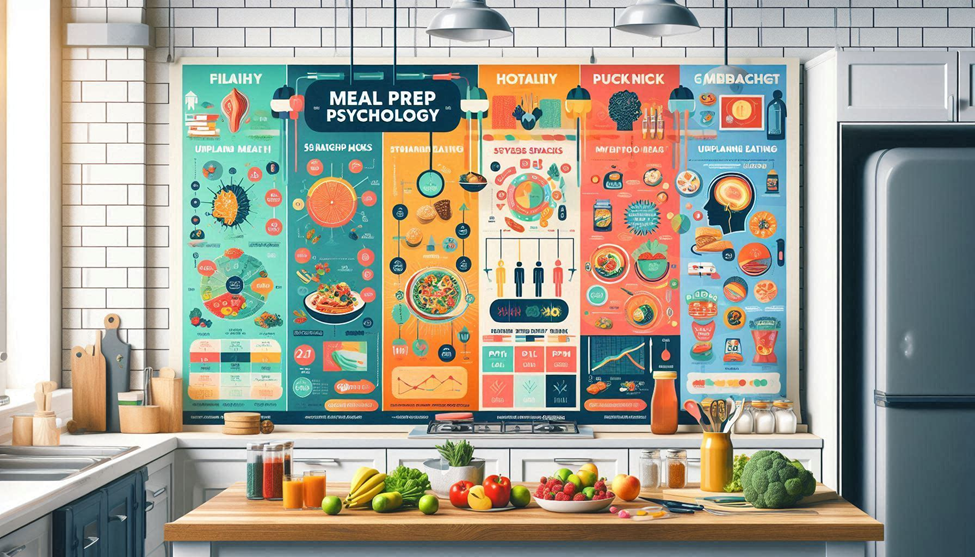
This guide explores the psychological principles underlying unplanned eating and provides evidence-based strategies for building meal prep systems that reduce cognitive load, enhance self-regulation, and foster long-term adherence to healthy eating patterns.
1. Understanding Unplanned Eating
1.1 Defining Unplanned Eating
Unplanned eating can take multiple forms:
- Snack impulses: Grabbing energy-dense foods in response to stress, boredom, or environmental cues.
- Portion creep: Eating larger portions than intended, often subconsciously, particularly when food is readily available.
- Emotional eating: Using food as a coping mechanism for negative emotions such as stress, anxiety, or sadness.
Psychologists classify these behaviors as failures of self-regulation, influenced by the interaction between homeostatic hunger signals, hedonic drives, and environmental triggers (Herman & Policy, 2008).
1.2 Cognitive Load and Decision Fatigue
Decision fatigue occurs when the brain’s executive function is depleted due to repeated decision-making throughout the day. Food-related decisions, though seemingly trivial, accumulate cognitive load, increasing the likelihood of impulsive eating (Baumeister et al., 2008). For example, after a day of complex decisions at work, an individual may reach for calorie-dense snacks not out of hunger but as a cognitive shortcut to reward and convenience.
1.3 Environmental and Social Triggers
External cues significantly impact unplanned eating:
- Visual cues: Seeing snacks on a counter can trigger unconscious eating.
- Olfactory cues: Smells of baked goods or fast food can evoke cravings.
- Social cues: Eating is often influenced by peers, family, or colleagues, resulting in consumption beyond internal hunger signals (Higgs, 2015).
Recognizing these triggers is critical to designing a meal prep system that preempts impulsive choices.
2. The Psychology of Meal Prep
Meal prep is more than a culinary activity—it is a behavioral intervention. Effective meal prep reduces the cognitive burden associated with food choices, creates structured routines, and leverages behavioral economics principles to minimize unplanned eating.
2.1 System 1 vs. System 2 Eating
According to dual-process theory, human behavior is governed by:
- System 1 (fast, automatic): Drives impulsive, habit-based eating.
- System 2 (slow, deliberate): Governs planned, mindful eating.
Meal prep strengthens System 2 control by preloading healthy choices and reducing reliance on System 1, which is prone to environmental and emotional triggers (Hahnemann, 2011).
2.2 Habit Formation through Structured Planning
Meal prep promotes habit formation, turning deliberate actions into automatic behaviors. Key psychological principles include:
- Cue-Routine-Reward Loop: Identifying environmental or temporal cues (e.g., Sunday evening), performing the routine (meal prep), and reinforcing with rewards (stress relief, time saved).
- Context-dependent repetition: Preparing meals in a consistent environment strengthens neural pathways associated with self-regulation.
- Implementation intentions: Planning meals in advance with explicit if-then statements (“If I feel hungry at 3 PM, I will eat the pre-portioned nuts prepared on Sunday”) enhances adherence (Gollwitzer, 1999).
3. Designing a Meal Prep System
3.1 Step 1: Inventory and Environment Audit
The first step is evaluating your kitchen environment:
- Remove high-risk foods: Ultra-processed snacks, sugary drinks, and calorie-dense foods that are not pre-portioned.
- Stock supportive options: Pre-chopped vegetables, portioned nuts, lean proteins, and whole grains.
- Optimize visibility: Place healthy options at eye level and less convenient foods out of immediate reach (Wan sink & so BAL, 2007).
3.2 Step 2: Portion Control and Pre-Portioning
Pre-portioned meals prevent portion creep and reduce self-control demands:
- Use containers to divide meals and snacks.
- Pre-weigh items to standardize caloric intake.
- Consider visual cues, such as color-coded containers for macronutrients, to reinforce balanced eating.
3.3 Step 3: Temporal Structuring
Timing plays a critical role in unplanned eating:
- Time-block meals: Eating at consistent intervals reduces reactive snacking.
- Meal timing according to circadian rhythm: Aligning meal consumption with biological hunger signals enhances satiety and metabolic efficiency (Garrulity & Gómez-Abellán, 2014).
3.4 Step 4: Behavioral Substitution
For habitual triggers:
- Stress: Replace high-calorie snacks with non-food coping strategies (breathing exercises, short walks).
- Boredom: Introduce “activity snacks,” such as reading or a hobby, instead of automatic snacking.
- Social situations: Bring pre-prepared portions to events to resist overconsumption.
4. Cognitive Strategies to Reinforce Meal Prep
4.1 Mindful Eating Practices
Integrating mindfulness enhances awareness of hunger and fullness cues:
- Eat without distractions such as screens.
- Practice hunger ratings before and after meals.
- Acknowledge emotional triggers without acting on them (Kris teller & Wolver, 2011).
4.2 Visualization and Mental Rehearsal
Mental rehearsal strengthens self-control:
- Visualize the upcoming week’s meals and challenges.
- Imagine scenarios where unplanned eating might occur and rehearse appropriate responses.
4.3 Reward Systems
Positive reinforcement consolidates new eating habits:
- Non-food rewards (e.g., leisure activity, small purchase) for completing meal prep or adhering to pre-planned meals.
- Track progress visually using charts or apps to create intrinsic motivation.
5. Nutritional Considerations in Meal Prep
While psychology forms the foundation, nutritional adequacy ensures that pre-prepared meals sustain satiety and metabolic health.
5.1 Macronutrient Balance
- Protein: High-protein meals enhance satiety and reduce subsequent snacking (Leidy et al., 2015).
- Complex carbohydrates: Slow-digesting crabs stabilize blood glucose and prevent cravings.
- Healthy fats: Incorporating nuts, seeds, avocado, or olive oil increases satiety and provides essential fatty acids.
5.2 Fiber and Micronutrients
- Fiber-rich foods (vegetables, legumes, whole grains) slow digestion and enhance fullness.
- Micronutrient-dense foods (leafy greens, berries, nuts) support mood and energy regulation, reducing emotional eating triggers.
5.3 Hydration
- Adequate hydration prevents misinterpretation of thirst as hunger.
- Integrate pre-portioned water bottles or flavored water options to reinforce habit cues.
6. Meal Prep Tools and Technology
Technology can amplify the psychological benefits of meal prep:
6.1 Apps and Tracking Tools
- Meal planning apps: Automate grocery lists, portion sizes, and scheduling.
- Calorie and nutrient trackers: Provide immediate feedback and reinforce accountability.
- Reminder systems: Phone notifications or smart watches to cue meals and snacks.
6.2 Kitchen Tools
- Container sets: Portion control, color coding, and ease of reheating.
- Labeling systems: Indicate prep date, meal type, or macronutrient content.
- Pre-choppers and storage solutions: Reduce friction and time barriers to consistent meal prep.
7. Psychological Barriers and Solutions
7.1 Motivation and Consistency
- Motivation fluctuates; systems reduce reliance on willpower.
- Habit stacking: Attach meal prep to existing routines (e.g., prep after grocery shopping).
- Commitment devices: Share weekly meal prep goals publicly or with a partner to enhance accountability (Fitzsimons & Finke, 2010).
7.2 Emotional Eating
- Identify emotional triggers via journaling.
- Replace reactive eating with emotion-focused coping strategies such as mindfulness, cognitive restructuring, or brief physical activity.
- Prepare emotionally satisfying yet nutritionally balanced meals (e.g., dark chocolate with nuts instead of candy bars).
7.3 Cognitive Overload
- Simplify meal plans to reduce decision fatigue.
- Reuse recipes to minimize constant planning.
- Batch-cook ingredients that can be combined in multiple ways (versatile proteins, roasted vegetables, grains).
8. Case Study: Systems Approach in Action
Participant Profile: 35-year-old office worker, frequent unplanned snacking after work.
Intervention:
- Conducted kitchen audit: Removed high-calorie snacks from desk and pantry.
- Introduced pre-portioned meals: Balanced macros, fiber-rich vegetables.
- Implemented visual cues: Color-coded containers to identify meals.
- Used meal planning app: Scheduled meals and reminders.
- Incorporated mindful eating exercises: Five-minute pre-meal breathing and hunger assessment.
Outcome (12 Weeks):
- Reported 60% reduction in unplanned snacking.
- Weight reduction of 4 kg without explicit calorie restriction.
- Increased sense of control and reduced decision fatigue.
This illustrates the synergy of environmental design, psychological strategies, and meal prep systems.
9. Advanced Strategies for Sustainability
9.1 Modular Meal Prep
- Prepare base ingredients that can be mixed and matched across meals.
- Enhances variety without increasing planning complexity.
- Example: Roasted chicken, quinoa, and sautéed vegetables can form salads, bowls, or wraps.
9.2 Adaptive Planning
- Adjust portions and meal types based on weekly schedule changes.
- Use predictive planning for events, travel, or social occasions.
- Incorporate flexible “buffer meals” to reduce stress and maintain adherence.
9.3 Social and Community Support
- Group meal prep sessions can reinforce accountability.
- Sharing recipes and strategies with peers fosters habit reinforcement.
- Online forums or social media groups provide tips, motivation, and emotional support.
10. Integrating Meal Prep into Lifestyle
10.1 Long-Term Behavior Change
- View meal prep as a behavioral scaffolding tool, not a temporary diet.
- Gradually automate preparation and decision-making processes.
- Celebrate milestones to reinforce positive behaviors.
10.2 Preventing Relapse
- Identify high-risk scenarios and plan pre-portioned meals for them.
- Maintain a variety of satisfying meal options to avoid monotony.
- Periodically re-evaluate kitchen environment and psychological triggers.
Conclusion
Meal prep psychology serves as a vital bridge between theoretical nutritional knowledge and the practical reality of consistent, health-supportive eating behaviors. While understanding macronutrient ratios, calorie balance, and nutrient timing is critical, the translation of this knowledge into daily practice often fails due to the psychological and environmental barriers that promote unplanned eating. Cognitive fatigue, emotional stress, and the omnipresence of highly palatable, convenient foods create a context in which even motivated individuals can struggle to maintain dietary consistency. Meal prep, when approached strategically, addresses these challenges by establishing systems that simplify decision-making, reduce cognitive load, and preempt impulsive food choices.
By designing meals in advance, individuals essentially outsource the majority of daily dietary decisions to structured routines, freeing cognitive resources for other aspects of life while simultaneously creating a buffer against environmental triggers. The integration of behavioral science principles—such as habit formation, cue-routine-reward loops, and implementation intentions—enhances the effectiveness of meal prep by converting deliberate actions into automatic, sustainable behaviors. Furthermore, combining these behavioral strategies with cognitive tools like mindfulness, mental rehearsal, and adaptive planning strengthens self-regulation, reducing the influence of emotional or situational triggers that commonly lead to overeating or poor food choices.
Effective meal prep also leverages practical nutritional planning to ensure that pre-prepared meals are not only convenient but also balanced, satisfying, and aligned with physiological needs. Meals designed with appropriate portions, macronutrient balance, fiber content, and micronutrient density reinforce satiety, stabilize blood glucose, and support energy regulation, making it easier to resist unplanned snacking. In essence, meal prep psychology is not merely a time-saving practice but a comprehensive framework that fuses nutritional knowledge, psychological insight, and strategic planning to cultivate mindful, consistent, and sustainable eating patterns, ultimately empowering individuals to achieve long-term health and wellness goals.
SOURCES
Wan sink, B. (2010). Mindless Eating: Why We Eat More Than We Think. New York: Bantam.
Robinson, E., et al. (2014). Eating behavior and portion control: Insights from psychology. Appetite, 73, 60–67.
Herman, C. P., & Policy, J. (2008). External cues in the control of food intake in humans: The sensory-normative approach. Appetite, 51(3), 498–501.
Baumeister, R. F., et al. (2008). Self-regulation and ego depletion: Implications for eating behavior. Appetite, 51(3), 603–605.
Higgs, S. (2015). Social norms and their influence on eating behaviors. Current Opinion in Behavioral Sciences, 3, 39–44.
Hahnemann, D. (2011). Thinking, Fast and Slow. New York: Farrar, Straus and Giroux.
Gollwitzer, P. M. (1999). Implementation intentions: Strong effects of simple plans. American Psychologist, 54(7), 493–503.
Wan sink, B., & So BAL, J. (2007). Mindless eating: The 200 daily food decisions we overlook. Environment and Behavior, 39(1), 106–123.
Garrulity, M., & Gómez-Abellán, P. (2014). Timing of food intake and obesity: A review of epidemiological evidence. Nutrition, 30(3), 323–330.
Kris teller, J. L., & Wolver, R. Q. (2011). Mindfulness-based eating awareness training for treating binge eating disorder: The conceptual foundation. Eating Disorders, 19(1), 49–61.
Leidy, H. J., et al. (2015). The role of protein in weight management and satiety. American Journal of Clinical Nutrition, 101(6), 1320S–1329S.
Fitzsimons, G. M., & Finke, E. J. (2010). Interpersonal influences on self-control. Social and Personality Psychology Compass, 4(3), 161–175.
Rolls, B. J. (2009). The relationship between dietary energy density and energy intake. Physiology & Behavior, 97(5), 609–615.
Cohen, D. A., & Abbey, S. H. (2012). Contextual influences on eating behaviors: Heuristics and cues. Health Psychology, 31(6), 685–694.
Hollis, J. F., et al. (2013). Behavioral weight loss interventions: Evidence for self-monitoring and structured meal planning. Obesity Reviews, 14(5), 361–376.
Jeffery, R. W., et al. (2000). Environmental influences on eating and physical activity. Annual Review of Public Health, 21, 205–235.
Wing, R. R., & Phelan, S. (2005). Long-term weight loss maintenance. American Journal of Clinical Nutrition, 82(1), 222S–225S.
French, S. A., et al. (2012). Environmental influences on eating behaviors. Annual Review of Public Health, 33, 175–201.
Herman, C. P., & Mack, D. (1975). Restrained and unrestrained eating. Journal of Personality, 43(4), 647–660.
McCrery, M. A., et al. (2010). Mindful eating and its effect on dietary behavior. Appetite, 55(1), 91–99.
Wan sink, B., & Chanson, P. (2006). Can “low-fat” nutrition labels lead to obesity? Journal of Marketing Research, 43(4), 605–617.
Baumeister, R. F., Vows, K. D., & Tice, D. M. (2007). The strength model of self-control. Current Directions in Psychological Science, 16(6), 351–355.
Holland’s, G. J., et al. (2013). Healthy food choice architecture: Can changing environmental cues shift behavior? BMC Public Health, 13, 1–11.
Thales, R. H., & Sun stein, C. R. (2008). Nudge: Improving Decisions about Health, Wealth, and Happiness. New Haven: Yale University Press.
Lilly, P., et al. (2010). How habits are formed: Modeling habit formation in the real world. European Journal of Social Psychology, 40(6), 998–1009.
HISTORY
Current Version
Nov 22, 2025
Written By
ASIFA

0 Comments