Introduction
Body weight regulation is a complex, multifactorial process influenced by genetic, environmental, behavioral, and hormonal factors. Among these, reproductive hormones—including estrogen, progesterone, and testosterone—play pivotal roles in modulating body composition, appetite, energy expenditure, fat distribution, and metabolic homeostasis. The interactions of these hormones create a dynamic physiological landscape in which weight regulation is not solely dependent on caloric intake or physical activity but is intimately linked to endocrine signaling pathways that respond to both internal and external stimuli.
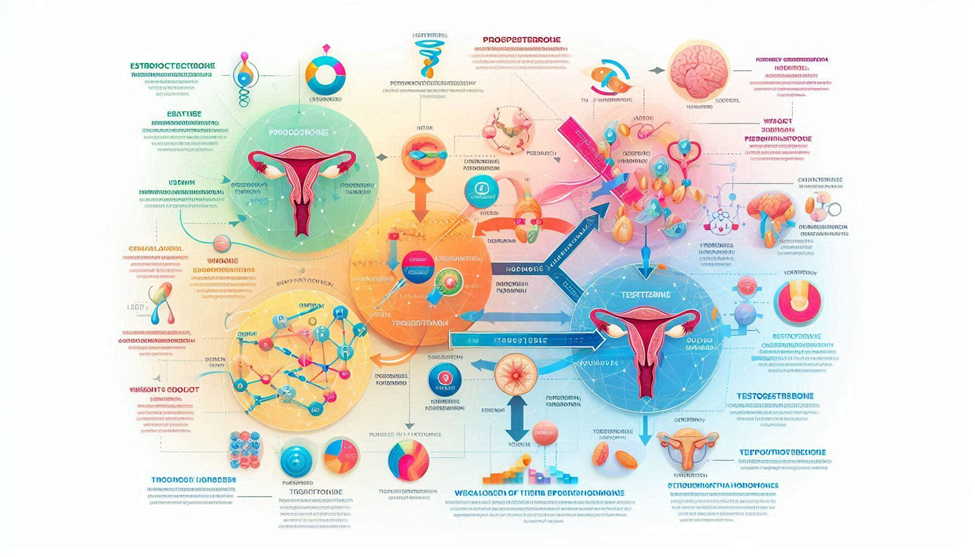
This guide provides a comprehensive, professional, and mechanistic review of how reproductive hormones influence weight and metabolism. It examines the effects of estrogen, progesterone, and testosterone individually, as well as their interactions, highlighting the nuances of hormonal fluctuations across life stages, sex differences, and the impact of exogenous hormonal interventions. The discussion also integrates recent insights into neuroendocrine regulation, adipose tissue signaling, and molecular pathways, offering a clinically relevant framework for understanding weight dynamics in the context of reproductive endocrinology.
1. Estrogen and Weight Regulation
1.1 Mechanisms of Estrogen Action
Estrogen is a key regulator of energy balance, adipose tissue distribution, and appetite. Its primary actions are mediated through estrogen receptors (ERα and Era) located in the hypothalamus, adipose tissue, skeletal muscle, liver, and pancreas. Activation of these receptors influences:
- Hypothalamic satiety pathways: Estrogen enhances pro-opiomelanocortin (POMC) neuron activity, promoting satiety and reducing food intake.
- Peripheral metabolism: Estrogen improves insulin sensitivity in skeletal muscle and liver, enhancing glucose uptake and reducing hepatic gluconeogenesis.
- Adipose tissue distribution: Estrogen favors subcutaneous fat deposition over visceral fat accumulation, which is metabolically protective.
1.2 Estrogen across the Lifespan
- Puberty: Rising estrogen levels in females promote fat deposition in gluteofemoral regions, supporting reproductive readiness.
- Reproductive years: Cyclical estrogen fluctuations influence appetite, energy expenditure, and water retention, contributing to weight variability across menstrual cycles.
- Per menopause and menopause: Declining estrogen levels shift fat distribution toward visceral adiposity, increase central insulin resistance, and elevate cardio metabolic risk.
1.3 Estrogen and Appetite Regulation
- Estrogen suppresses gherkin, the hunger hormone, and enhances lepton sensitivity, thereby modulating energy intake.
- During low-estrogen phases (e.g., late lacteal phase or menopause), reduced satiety signaling can lead to increased caloric intake and weight gain.
2. Progesterone and Weight Dynamics
2.1 Progesterone Overview
Progesterone interacts closely with estrogen and plays a significant role in fluid balance, appetite modulation, and metabolic rate, acting as a key regulator of energy homeostasis. Mechanistically, progesterone influences hypothalamic appetite centers, alters resting energy expenditure, modulates insulin and glucose metabolism, and promotes adipose tissue energy storage, particularly during the lacteal phase, preparing the body for potential pregnancy.
- Neuroendocrine effects: Progesterone acts on the hypothalamus to counterbalance estrogen’s anorexigenic effects, often promoting increased appetite and food intake during the luteal phase.
- Thermogenic effects: Progesterone raises basal body temperature and resting energy expenditure, partially offsetting increased caloric intake.
2.2 Progesterone across the Menstrual Cycle
- Follicular phase: Progesterone is low; estrogen predominates, appetite is often suppressed.
- Lacteal phase: Progesterone peaks; many women experience heightened cravings, increased caloric intake, and water retention, contributing to transient weight gain.
2.3 Progesterone and Metabolic Interactions
- Progesterone modulates glucose metabolism, reducing insulin sensitivity slightly, which can transiently increase postprandial glucose levels.
- It also influences lipid metabolism, supporting adipose tissue expansion and energy storage in preparation for potential pregnancy.
3. Testosterone and Body Composition
3.1 Testosterone Effects in Males
- Testosterone maintains lean body mass, promotes biolysis, and inhibits fat accumulation, particularly in the visceral depot.
- It enhances mitochondrial function and oxidative metabolism, supporting higher basal metabolic rates.
- Low testosterone levels in men are associated with increased fat mass, reduced muscle mass, insulin resistance, and obesity.
3.2 Testosterone Effects in Females
- Testosterone is present at lower levels in females but contributes to muscle maintenance, bone density, and metabolic rate.
- Excess androgen activity, as in polycystic ovary syndrome (PCOS), promotes central adiposity, insulin resistance, and deregulated appetite, linking reproductive hormones to obesity risk in women.
3.3 Testosterone and Energy Regulation
- Testosterone modulates hypothalamic pathways controlling energy intake and expenditure.
- It interacts with adipokines like lepton and adiponectin to influence fat storage, thermo genesis, and insulin sensitivity.
4. Hormonal Interactions and Weight
4.1 Estrogen-Progesterone Interplay
- Estrogen and progesterone interact to fine-tune energy balance across the menstrual cycle, with estrogen promoting satiety and progesterone partially counterbalancing this effect.
- Deregulation, such as low estrogen combined with high progesterone or androgen excess, predisposes to fat accumulation and metabolic disruption.
4.2 Estrogen-Testosterone Interactions
- Estrogen indirectly modulates testosterone bioavailability by influencing sex hormone-binding globulin (SHBG) levels.
- Testosterone can enhance lean mass and metabolic rate, mitigating fat accumulation during estrogen decline (e.g., menopause).
4.3 Progesterone-Testosterone Interactions
- Progesterone can modulate androgen receptor activity and affect appetite, energy storage, and thermo genesis.
- Imbalances in these interactions may contribute to PCOS, hypothalamic amenorrhea, and obesity-related reproductive dysfunction.
5. Hormonal Fluctuations and Life Stage Considerations
- Puberty: Hormonal surges influence fat deposition, energy expenditure, and appetite regulation.
- Reproductive years: Menstrual cycle variations affect short-term weight changes and appetite.
- Pregnancy: Progesterone and estrogen promote energy storage, increasing fat mass for fetal development.
- Per menopause and Menopause: Declining estrogen and progesterone increase visceral fat, insulin resistance, and obesity risk.
- Aging: Testosterone decline in men and estrogen decline in women exacerbate sarcopenic obesity and metabolic dysfunction.
6. Hormonal Deregulation and Obesity
6.1 PCOS
- Hyperandrogenism leads to visceral fat accumulation, insulin resistance, and altered appetite signaling.
- Estrogen-progesterone imbalance further exacerbates weight gain.
6.2 Hypogonadism
- Low testosterone in men reduces lean mass and energy expenditure, increasing adiposity.
- Hormonal replacement therapy can partially reverse these effects.
6.3 Menopause
- Estrogen deficiency shifts fat to the abdominal region, reduces insulin sensitivity, and elevates cardiovascular risk.
- Hormone therapy may mitigate weight gain but requires careful risk-benefit assessment.
7. Neuroendocrine and Adipose Tissue Mechanisms
Reproductive hormones exert profound effects on central and peripheral energy regulation, integrating neuroendocrine and metabolic signals to fine-tune appetite, energy expenditure, and substrate utilization. Estrogen and progesterone, for instance, directly influence hypothalamic neurons that control energy intake, including pro-opiomelanocortin (POMC) neurons, which promote satiety and neuropeptide Y (NPY)/agouti-related peptide (Agro) neurons, which stimulate hunger. Estrogen enhances POMC neuron activity while suppressing NPY/Agro signaling, leading to reduced food intake and improved energy balance, particularly during the follicular phase of the menstrual cycle. Progesterone, in contrast, can partially counterbalance these effects by stimulating appetite and promoting caloric intake during the lacteal phase, demonstrating the dynamic interplay between these hormones in cyclical appetite regulation.
Testosterone exerts its metabolic effects not only through lean mass maintenance but also by stimulating brown adipose tissue (BAT) activity and thermo genesis, thereby increasing energy expenditure. BAT activation enhances mitochondrial uncoupling, leading to heat production and increased caloric burn, which contributes to overall energy homeostasis.
Additionally, adipokines, including lepton, adiponectin, and resisting, form a critical interface between reproductive hormones and peripheral metabolism. Lepton communicates energy stores to the hypothalamus, enhancing satiety signals, while adiponectin improves insulin sensitivity and fatty acid oxidation. Resisting can impair insulin signaling, but its effects are modulated by steroids. The coordinated action of these adipokines with reproductive hormones ensures fine-tuned regulation of appetite, energy balance, and glucose metabolism, highlighting the intricate network linking endocrine and metabolic health.
8. Practical Implications for Weight Management
- Hormone-aware nutrition: Adjusting caloric intake and macronutrient timing based on menstrual cycle phase or life stage.
- Exercise considerations: Resistance training preserves lean mass, particularly in low-testosterone or postmenopausal states.
- Medical interventions: Hormone replacement therapy, anti-androgen therapy, or testosterone supplementation may support metabolic health in cases of deficiency or imbalance.
- Precision nutrition: Personalized strategies considering hormonal status, body composition, and metabolic phenotype can optimize weight outcomes.
9. Emerging Research and Future Directions
- Investigating estrogen receptor modulators for targeted metabolic effects without reproductive side effects.
- Micro biome-hormone interactions: exploring how gut bacteria metabolize estrogen and influence energy balance.
- Integrating genetic, epigenetic, and hormonal data to predict weight trajectories and metabolic risk.
- Advanced imaging of fat depots and adipose tissue function in response to hormonal fluctuations.
Conclusion
Reproductive hormones—estrogen, progesterone, and testosterone—exert profound and interconnected influences on body weight regulation, appetite control, fat distribution, and overall metabolic homeostasis. Their effects are mediated through a combination of central neuroendocrine signaling, including hypothalamic pathways that modulate hunger, satiety, and energy expenditure, and peripheral metabolic mechanisms, such as insulin sensitivity, adipose tissue biolysis, skeletal muscle energy utilization, and hepatic glucose production. Estrogen, for instance, promotes subcutaneous fat deposition, enhances lepton sensitivity, and suppresses gherkin-mediated hunger, while progesterone modulates appetite and energy storage, often counterbalancing estrogen’s satiety-promoting effects during the lacteal phase. Testosterone, in both sexes, supports lean muscle mass maintenance, mitochondrial efficiency, and basal metabolic rate, while influencing visceral fat accumulation through androgen receptor signaling.
Hormonal fluctuations across the menstrual cycle, pregnancy, per menopause, and aging create periods of increased vulnerability to weight gain and metabolic deregulation. These changes are further compounded by conditions such as polycystic ovary syndrome (PCOS), hypogonadism, and menopause, where altered hormone ratios can exacerbate central adiposity, insulin resistance, and appetite deregulation. Understanding the precise interactions among these hormones allows for the design of personalized, hormone-aware interventions, integrating dietary composition, meal timing, macronutrient balance, and physical activity in a way that aligns with individual endocrine profiles.
Clinically, hormone-targeted strategies may include cycle-aware nutrition planning, protein and fiber optimization to modulate satiety, resistance training to preserve lean mass, and, where indicated, medical interventions such as hormone replacement therapy or testosterone supplementation. Additionally, emerging research into the neuroendocrine-adipose axis and micro biome-hormone interactions provides opportunities for novel interventions that enhance metabolic flexibility and mitigate obesity risk. By incorporating these multifaceted approaches, it is possible to optimize weight management, improve body composition, and support long-term cardio metabolic health for both women and men, moving beyond a one-size-fits-all paradigm to a precision, physiology-driven framework for sustainable metabolic well-being.
SOURCES
Lovejoy, J.C., 2009. The menopause and obesity: changes in body composition and fat distribution. Obesity Reviews.
Santoro, N., 2015. Menopausal transition and metabolic health: endocrine considerations. Endocrine Reviews.
Power, M.L., 2013. Sex hormones and energy balance: mechanisms of action. Physiology & Behavior.
Miller, V.M., 2014. Estrogen therapy and metabolic regulation in postmenopausal women. Journal of Clinical Endocrinology & Metabolism.
Ding, E.L., 2007. Sex hormone levels and adiposity in adults. Obesity.
Kautzky-Willer, A., 2016. Sex differences in obesity and type 2 diabetes: hormonal influences. Molecular Metabolism.
Pasqual, R., 2007. Obesity and reproductive hormones: the role of androgens. Journal of Steroid Biochemistry & Molecular Biology.
Denair, A., 1997. Polycystic ovary syndrome and insulin resistance: metabolic consequences. Endocrine Reviews.
Kapok, D., 2005. Testosterone deficiency and obesity in men: mechanisms and management. Journal of Clinical Endocrinology & Metabolism.
Frank, A.P., 2015. Androgens and adipose tissue distribution in women. Journal of Clinical Endocrinology & Metabolism.
Thereof, A., 2013. Estrogen, fat distribution, and cardiovascular risk. Endocrinology & Metabolism Clinics of North America.
Blucher, M., 2012. Sex steroids, adipokines, and metabolic health. Nature Reviews Endocrinology.
Santoro, N., 2018. Hormonal fluctuations and appetite regulation across the menstrual cycle. Endocrinology.
Aplomb, S., 2015. PCOS, obesity, and reproductive hormones: a clinical perspective. Fertility and Sterility.
Clegg, D.J., 2012. Estrogen and central regulation of food intake. American Journal of Physiology – Regulatory, Integrative and Comparative Physiology.
Heine, P.A., 2000. Estrogen receptor signaling and body weight regulation. Endocrinology.
CSU, Y., 2011. Hypothalamic pathways integrating reproductive hormones and energy balance. Nature Neuroscience.
Harman, S.M., 2001. Testosterone and metabolic syndrome in aging men. Journal of Clinical Endocrinology & Metabolism.
Rossi, R., 2010. Progesterone, appetite, and energy homeostasis. Frontiers in Endocrinology.
Lovejoy, J.C., 2016. Sex hormones and adipose tissue: mechanisms of redistribution. Obesity Research & Clinical Practice.
Ago, Q., 2014. Reproductive hormones and hypothalamic regulation of energy expenditure. Journal of Neuroendocrinology.
Gambier, A., 2002. Androgens and insulin resistance in women: implications for obesity. Obesity Research.
Faulkner, J., 2015. Hormone therapy, body composition, and metabolic outcomes in postmenopausal women. Menopause.
Ago, H., 2018. Testosterone therapy and visceral fat reduction in hypogonadal men. Endocrine.
Blucher, M., 2014. Sex differences in obesity: endocrine regulation and metabolic implications. Nature Reviews Endocrinology.
HISTORY
Current Version
Nov 21, 2025
Written By
ASIFA
0 Comments