Introduction
Over the past two decades, the field of longevity science has undergone a paradigm shift, moving away from a sole reliance on traditional metrics such as body weight or body mass index (BMI) and instead placing greater emphasis on body composition, particularly lean mass. Lean mass, which encompasses skeletal muscle, organ tissue, bone, and connective tissue, is increasingly recognized not merely as a structural or functional component of the body, but as a metabolically active tissue that plays a central role in regulating multiple physiological systems critical to lifespan. Unlike fat mass, which primarily serves as an energy reserve, lean mass actively contributes to strength, mobility, and physical independence, enabling individuals to maintain functional capacity across decades. Furthermore, lean tissue is a major site for glucose uptake and insulin-mediated metabolism, acting as a buffer against hyperglycemia and mitigating the risk of metabolic disorders such as type 2 diabetes, fatty liver disease, and metabolic syndrome. Beyond metabolic regulation, lean mass supports mitochondrial function, serving as a reservoir for energy production, while also promoting organ resilience through amino acid provision during times of physiological stress or illness. Epidemiological evidence consistently demonstrates that low lean mass, often characterized clinically as sarcopenia, is associated with significantly increased risk of all-cause mortality, with some studies indicating that it’s predictive value rivals or even surpasses traditional risk factors such as obesity or smoking, particularly in older populations. This compelling evidence highlights the importance of focusing not merely on total body weight, but on the preservation and augmentation of lean tissue throughout the lifespan. By understanding the complex biological mechanisms that link lean mass to longevity—including endocrine signaling, myosin secretion, mitochondrial efficiency, neuromuscular integration, and nutrient partitioning—researchers and clinicians can develop targeted interventions that support metabolic health, reduce chronic disease burden, and enhance functional independence. This guide therefore explores these multidimensional connections in detail, providing a comprehensive framework for strategies aimed at preserving lean mass and optimizing healthy lifespan.
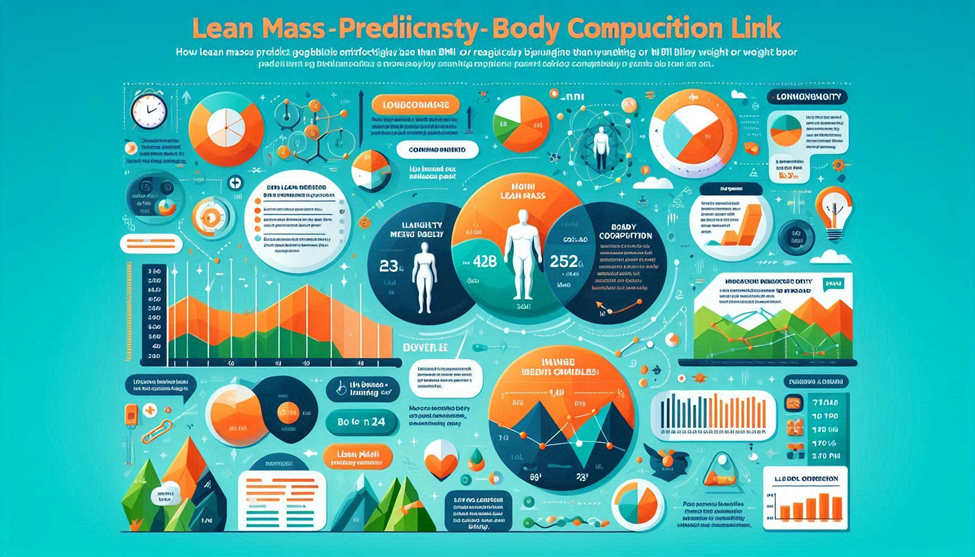
1. Lean Mass as a Metabolic Organ, Not Just Muscle
Lean body mass includes:
- Skeletal muscle
- Organs
- Bone
- Connective tissue
- Body water
- Red blood cell mass
But among these, skeletal muscle is the largest and most metabolically influential. Modern research views muscle as:
1.1 A Metabolic Furnace
Muscle contributes up to 30–40% of whole-body resting metabolic rate. Even at rest, muscle burns calories to maintain ion gradients, protein turnover, and mitochondrial activity.
The more lean mass you have:
- the higher your resting metabolic rate
- the higher your carbohydrate tolerance
- the better your metabolic flexibility
- the lower your likelihood of fat gain
This is why the same calorie intake can cause fat gain in someone with low muscle but maintenance in someone with high muscle.
1.2 A Glucose Disposal Engine
Muscle is the primary site of glucose uptake, responsible for up to 85% of insulin-stimulated glucose disposal after eating.
More muscle →
more glucose uptake →
Lower blood sugar →
Lower insulin →
Lower risk of:
- type 2 diabetes
- metabolic syndrome
- fatty liver
- insulin resistance–driven aging
1.3 An Endocrine Organ
Muscle releases cytokines, which influence:
- inflammation control
- brain function
- immune health
- adipose tissue metabolism
- bone strength
- mitochondrial biogenesis
These muscle-derived hormones may be one of the reasons muscle mass is so tightly tied to lifespan.
1.4 A Mitochondrial Reservoir
Mitochondria decline with age, and the tissues that hold the most mitochondria—muscle—dictate the pace of this decline.
More lean mass = more mitochondria = slower aging.
This positions muscle as an anti-aging organ.
2. Sarcopenia: The Silent Longevity Killer
Sarcopenia—age-related loss of muscle—begins as early as age 30, accelerating after age 50 at up to 1–2% muscle loss per year, and even faster during illness, inactivity, stress, or nutrient deficits.
2.1 Consequences of Sarcopenia That Shorten Lifespan
- Reduced metabolic rate
- Increased fat accumulation
- Worsened insulin resistance
- Increased inflammation
- Osteoporosis risk
- Frailty and falls
- Reduced organ reserve
- Cognitive decline
- Immune vulnerability
2.2 Sarcopenic Obesity: A High-Risk Phenotype
This condition combines low muscle with high fat.
Two individuals can have the same BMI—but vastly different risks—based on body composition.
Sarcopenic obesity is associated with:
- higher mortality
- more cardiovascular disease
- worse metabolic dysfunction
- higher inflammatory burden
- lower resilience to illness
Traditional BMI-based health assessments miss this entirely.
3. Lean Mass and Mortality: The Evidence Base
Large cohort studies consistently show:
- Higher lean mass = lower all-cause mortality
- Higher muscle strength = longer lifespan
- Better muscle quality = better metabolic health
- Grip strength = one of the strongest predictors of longevity
Some findings:
- Muscle strength predicts mortality better than blood pressure or cholesterol.
- Low muscle quality increases mortality risk 2–3×.
- Each additional kilogram of clean mass reduces mortality risk.
- Low handgrip strength is linked to cardiovascular and cancer mortality.
- Leg strength strongly predicts independence in older adults.
This is not just correlation—mechanistic pathways explain these outcomes.
4. Biological Pathways Linking Lean Mass to Longevity
4.1 Insulin Sensitivity & Glucose Homeostasis
Lean mass increases insulin sensitivity through:
- GLUT-4 expression
- mitochondrial density
- capillary perfusion
- anti-inflammatory cytokines
- nutrient partitioning
Better insulin sensitivity reduces chronic disease risk across the lifespan.
4.2 Miocene Signaling: The Anti-Inflammatory Hormones of Muscle
Key cytokines and their functions:
- Iris in – improves fat metabolism
- IL-6 (muscle-derived) – anti-inflammatory in exercise context
- BDNF – brain growth & cognitive protection
- Misstating inhibition – promotes muscle growth & metabolic activity
- FGF-21 – metabolic regulation
These compounds modulate aging pathways similar to caloric restriction and exercise.
4.3 Mitochondrial Preservation
Muscle mass supports:
- mitochondrial biogenesis
- higher mitochondrial turnover
- improved oxidative phosphorylation
- reduced ROS production
- enhanced metabolic efficiency
Better mitochondrial health = slower aging.
4.4 Immune & Inflammatory Regulation
Muscle acts as a buffer during infection or illness by:
- providing amino acids for immune cells
- preventing excessive catabolism
- reducing cytokine storms
- enhancing resilience
Older adults with more lean mass have lower mortality from infections.
4.5 Mechanical Loading and Bone–Muscle Crosstalk
Bone responds to muscle-generated force.
Low muscle → rapid bone loss
High muscle → bone density retention
This reduces fracture risk, disability, and mortality.
4.6 Organ Reserve and Stress Tolerance
Lean mass protects against:
- hospital-related muscle catabolism
- metabolic stress
- surgery recovery complications
- fasting stress
- acute infections
Older adults with low lean mass have dramatically higher hospitalization mortality.
5. Muscle Quality vs. Quantity: Why Both Matter
Lean mass is not only about size.
Muscle quality includes:
- fiber composition
- fat infiltration (myosteatosis)
- mitochondrial health
- neuromuscular efficiency
- capillary density
High muscle quality predicts:
- mobility
- glucose regulation
- strength
- lower fall risk
- reduced metabolic disease
Maintaining both muscle mass and muscle quality is the optimal longevity strategy.
6. Nutrition for Lean Mass across the Lifespan
This is the area where most people fall short. Muscle is a nutrient-hungry tissue—especially for protein, minerals, and amino acids.
6.1 Protein Requirements by Age and Goal
Younger adults (20–40):
1.2–1.6 g/kg/day
Middle-aged adults (40–65):
1.4–1.8 g/kg/day
Older adults (65+):
1.6–2.0 g/kg/day
Why protein needs increase with age:
- reduced anabolic sensitivity
- higher protein breakdown
- reduced digestion efficiency
- inflammatory burden
- decreased physical activity
- mitochondrial degeneration
Protein Distribution Rule
Aim for 25–40 g per meal, especially breakfast, to stimulate muscle protein synthesis.
6.2 Optimal Protein Sources
- eggs
- poultry
- fish
- lean meats
- Greek yogurt
- cottage cheese
- lentils, beans (complementary proteins)
- tofu/temper
- whey protein
- casein protein
- collagen (not sufficient alone—pair with complete proteins)
6.3 Essential Amino Acids
Lucien
The trigger for muscle protein synthesis.
Aim for 2.5–3 g per meal.
Creative
Increases strength, muscle quality, brain health, and insulin sensitivity.
Beta-almandine, turbine, lysine
Support muscle recovery and cellular function.
6.4 Anti-Inflammatory Foods That Preserve Lean Mass
- berries
- leafy greens
- fatty fish
- turmeric + black pepper
- olive oil
- nuts/seeds
- green tea
- tomatoes
- cruciferous vegetables
These combat chronic inflammation that accelerates muscle breakdown.
6.5 Micronutrients Critical for Muscle & Longevity
- Vitamin D
- Vitamin K2
- Magnesium
- B12
- Foliate
- Iron (when deficient)
- Zinc
- Selenium
- Potassium
Deficiency in any of these impairs muscle strength and metabolic health.
7. Training Strategies to Build and Preserve Lean Mass
7.1 Resistance Training: The Foundation of Longevity
The body responds to mechanical tension with:
- muscle growth
- bone strengthening
- myosin release
- improved insulin sensitivity
- increased mitochondrial density
Frequency:
2–4 sessions/week
Core exercises:
- squats
- deadlights
- push-ups
- pulls/rows
- overhead presses
- lunges
- loaded carries
7.2 Strength > Cardio for Longevity (But Both Matter)
Cardio improves:
- VO₂ max
- mitochondrial volume
- blood flow
- cardiovascular health
But resistance training is more strongly tied to:
- lower mortality
- lower diabetes risk
- higher metabolic rate
- better hormonal profiles
- fall prevention
Optimal approach is combined training.
7.3 Neuromuscular Training
Stimulates brain–muscle communication:
- balance work
- agility drills
- coordination training
- proprioception exercises
These dramatically reduce fall risk in aging.
7.4 High-Intensity Interval Training (HIIT)
Benefits:
- enhances mitochondrial efficiency
- increases muscle quality
- improves metabolic flexibility
- reduces visceral fat
Use sparingly, balanced with recovery.
8. The Longevity Model: How Lean Mass Interacts With Fat Mass
Lean mass and fat mass are interconnected:
- higher lean mass improves fat oxidation
- higher muscle mass reduces visceral fat storage
- lean mass increases NEAT (non-exercise movement)
- more muscle → higher metabolic rate
The ideal body composition phenotype for longevity is:
- high lean mass
- low visceral fat
- moderate essential fat
- low chronic inflammation
This phenotype is linked with:
- healthy aging
- lower disease burden
- lower mortality
- improved functional independence
9. Lean Mass and Cognitive Longevity: The Brain–Muscle Axis
Muscle communicates directly with the brain through:
- BDNF
- iris in
- lactate signaling
- anti-inflammatory cytokines
These pathways enhance:
- memory
- neuroplasticity
- stress resilience
- mood regulation
Older adults with higher muscle mass have lower risk of:
- dementia
- Alzheimer’s disease
- depression
- cognitive decline
Muscle is a brain-protective organ.
10. Lean Mass and Immune Resilience
Muscle acts as an amino acid reservoir during:
- infection
- trauma
- surgery
- stress
- fasting
- malnutrition
Leaner mass → shorter recovery → reduced risk of complications.
Older adults with more muscle have significantly lower mortality from:
- influenza
- COVID-like respiratory infections
- sepsis
- hospitalizations
11. Lean Mass Preservation across Aging: A Decade-by-Decade Blueprint
- In your 20s: Build as much muscle as possible—your peak sets your aging trajectory.
- In your 30s: Combat the onset of anabolic decline with consistent resistance training.
- In your 40s: Adjust protein intake upward and increase recovery awareness.
- In your 50s: Prioritize mobility, joint care, and progressive strength training.
- In your 60s: Focus on muscle maintenance, balance, and neuromuscular training.
- In your 70s+: Resistance training becomes life-saving: prevents disability and frailty.
Conclusion
Lean mass is emerging as one of the most powerful predictors of how long—and how well—we live. More than BMI, weight, or even body fat percentage, lean mass reflects metabolic vitality, mitochondrial density, immune resilience, hormonal balance, cognitive protection, mobility, and functional independence. Muscle is far more than tissue for movement—it is a dynamic endocrine organ, a glucose-regulating machine, a mitochondrial reservoir, and a biochemical shield against aging.
Across dozens of biological systems, lean mass acts as a stabilizing force, supporting cardiovascular health, metabolic flexibility, neurological preservation, and emotional well-being. As age progresses, the decline in muscle mass becomes one of the central drivers of frailty, chronic disease, and mortality. But this decline is not inevitable. Through strategic nutrition, intelligent resistance training, optimized protein intake, micronutrient sufficiency, and balanced physical activity, individuals can maintain or even build lean mass across their lifespan.
Ultimately, the longevity–body composition link shifts the narrative from “losing weight” to “building and protecting the tissue that protects you.” Long life is not achieved by shrinking the body, but by strengthening it. Lean mass is longevity—biologically, metabolically, and functionally.
SOURCES
Cruz-Gentofte, 2010 – European consensus on sarcopenia definition and diagnosis.
Mitchell et al., 2012 – Protein synthesis response to resistance training.
Bauer et al., 2013 – Protein intake recommendations for muscle preservation in aging.
Studenski et al., 2014 – Grip strength as a predictor of mortality in aging adults.
Westcott, 2012 – Strength training impact on metabolic and functional health.
Fried et al., 2001 – Frailty phenotype and age-related functional decline.
Duets et al., 2014 – Protein requirements and anabolic resistance in older adults.
Levine et al., 2014 – Protein intake and mortality risk across age groups.
Wilkes et al., 2009 – Muscle protein synthesis after feeding and amino acid ingestion.
Phillips et al., 2014 – Resistance training as the primary driver of lean mass maintenance.
Wolfe, 2006 – Essential amino acids in muscle protein synthesis regulation.
Short et al., 2005 – Age-related mitochondrial decline in muscle tissue.
Carted et al., 2016 – Exercise modulation of insulin sensitivity.
Newman et al., 2006 – Body composition and mortality: sarcopenia vs. obesity.
Booth et al., 2012 – Mechanisms of exercise preventing chronic disease.
Sawyer et al., 2008 – Muscle strength, falls, and functional aging.
Land et al., 2012 – Protein intake and frailty risk.
Kim & Park, 2012 – Sarcopenic obesity and metabolic complications.
Cesar et al., 2006 – Inflammation and muscle decline in aging adults.
Level, 1995 – Aging effects on muscle fiber size and number.
Rolland et al., 2008 – Physical activity interventions for sarcopenia.
Houston et al., 2008 – Dietary protein sources and muscle health in older adults.
Fielding et al., 2011 – Comprehensive review of sarcopenia mechanisms.
Morley et al., 2014 – Sarcopenia consensus updates and diagnostic criteria.
Lopez-Orin et al., 2013 – The hallmarks of aging and tissue degeneration.
HISTORY
Current Version
Nov 19, 2025
Written By
ASIFA
0 Comments