Blood Flow Restriction Training (BFR)—also known as occlusion training, KAATSU training, or ischemic resistance training—has evolved from a niche Japanese method in the 1960s into one of the most studied and widely applied training modalities in modern strength science. Its accelerated rise in rehabilitation settings, professional sports, military conditioning, and hypertrophy-focused fitness programming reflects a fundamental scientific insight: muscle growth and strength gains do not always require heavy loads. Under controlled vascular restriction, even extremely light loads can induce biochemical, hormonal, and cellular responses comparable to traditional high-intensity resistance training.
For populations unable to lift heavy weights—post-operative patients, older adults, injured athletes, and individuals with joint limitations—BFR represents one of the most transformative innovations in exercise science. At the same time, healthy trainees and elite athletes now use BFR to increase training frequency, reduce joint wear, and accelerate hypertrophy during reloads or high-volume phases.
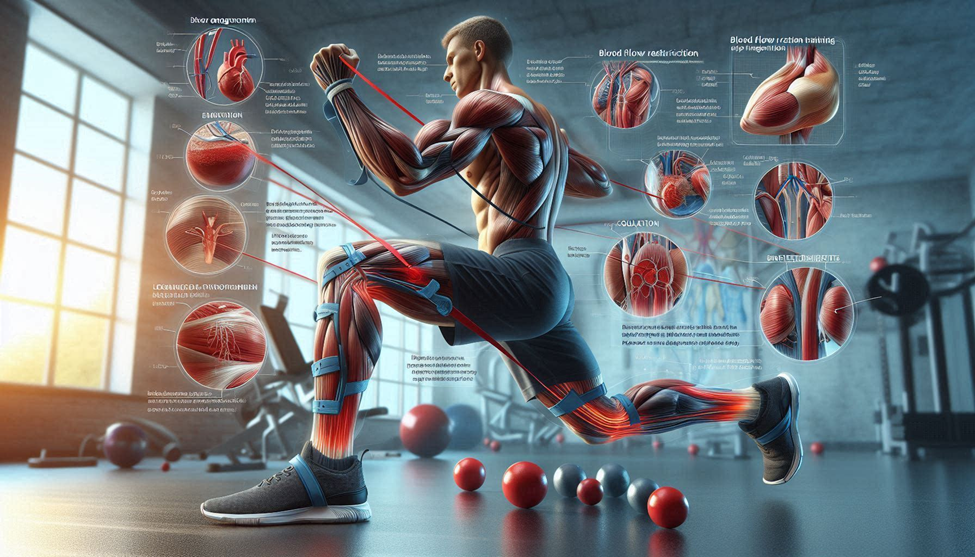
This guide offers a structured, evidence-driven examination of how BFR works, why it produces hypertrophy, its performance applications, risk mitigation strategies, clinical use, and advanced programming techniques. The goal is to provide a professional, physiology-rich exploration suitable for researchers, coaches, clinicians, and scientifically sophisticated strength trainees.
1. Origins and Evolution of Blood Flow Restriction Training
1.1 Early Development (KAATSU Training in Japan)
Blood flow restriction began in the 1960s with Dr. Yoshiaki Sato, who developed “KAATSU trains,” a method that used controlled proximal limb pressure to induce metabolic stress while lifting light weights. His experiments revealed that lactate accumulation, hypoxia, and reduced venous return created hypertrophy and strength gains out of proportion to load intensity.
1.2 Growth in Western Sports Science
During the 2000s and 2010s, Western researchers expanded on Sato’s work, standardizing cuff pressures, developing pneumatic systems, and validating safety protocols. The recognition that BFR could produce hypertrophy with loads as low as 20–30% of 1RM revolutionized rehabilitation and significantly broadened clinical and athletic adoption.
2. The Core Physiology: How BFR Actually Works
Blood flow restriction alters the internal environment of the muscle in ways that mimic—or even amplify—the anabolic signals normally associated with high-intensity loading. These mechanisms include:
2.1 Venous Occlusion with Partial Arterial Flow
Properly applied BFR cuffs restrict venous outflow while permitting partial arterial inflow. This alters local hemodynamic, creating:
- Intramuscular pooling of blood
- Reduced oxygen availability (local hypoxia)
- Accelerated metabolite accumulation
- Increased intramuscular pressure
This combination generates a biochemical stimulus that the body interprets as extremely hard work—even when loads are light.
2.2 Metabolic Stress as a Primary Driver of Hypertrophy
Metabolite accumulation (lactate, H+, Pi) is one of the strongest known anabolic triggers.
BFR multiplies metabolic stress through:
- Restricted clearance
- Faster fatigue of slow-twitch fibers
- Early recruitment of fast-twitch fibers
- Increased cell swelling and osmotic stress
- Elevated concentration of anabolic by-products
The synergy of metabolic stress + hypoxia is central to BFR’s hypertrophic effect.
2.3 Fast-Twitch Fiber Recruitment at Low Loads
Typically, fast-twitch (Type II) fibers are recruited under heavy loading or high power demands. Under BFR, the early fatigue of Type I fibers forces the body to recruit Type II fibers even during light loads. This is a unique advantage for individuals unable to perform high-load or explosive training.
2.4 Endocrine Response and Growth Hormone Surge
BFR produces one of the largest exercise-induced spikes in growth hormone (GH) ever recorded in exercise science.
Growth hormone supports:
- Collagen synthesis
- Soft tissue repair
- Biolysis
- Indirect anabolic signaling
Although GH itself does not directly cause hypertrophy, its effects on tissue remodeling and recovery are profound.
2.5 motor Activation and Protein Synthesis
Hypoxia, mechanical tension, cell swelling, and metabolic stress all activate mTORC1, the primary regulator of muscle protein synthesis. BFR has been shown to stimulate muscle protein synthesis to levels similar to 60–80% 1RM high-intensity training.
2.6 Antigenic and Vascular Adaptations
BFR stimulates production of VEGF (vascular endothelial growth factor), leading to:
- New capillary formation
- Improved blood flow efficiency
- Increased nutrient delivery
- Reduced muscle ischemia over time
This makes BFR especially powerful in rehabilitation settings.
3. Training Loads, Pressures, and Protocol Variables
Precise prescription determines the effectiveness and safety of BFR.
3.1 Load Recommendations
Optimal loads for BFR strength/hypertrophy training:
- 20–30% 1RM for hypertrophy
- 30–40% 1RM for strength-endurance
- No-load or bodyweight for post-surgical rehab
3.2 Repetition Scheme
The standard, evidence-based BFR protocol:
30 – 15 – 15 – 15
(75 total reps)
Alternatively:
- AMRAP sets
- 45–90 sec rest intervals
- Continuous cuff inflation throughout the series
3.3 Cuff Pressure
Pressure varies according to cuff width, limb size, and device type. Best practice uses a percentage of Limb Occlusion Pressure (LOP):
- 40–50% LOP for upper body
- 60–80% LOP for lower body
3.4 Cuff Width Considerations
- Wider cuffs = lower occlusion pressure needed
- Narrow cuffs = higher pressure but more comfort
4. Cellular Mechanisms: A Deeper Dive
- Cell Swelling as an Anabolic Trigger: The “hydration hypothesis” of hypertrophy states that intracellular swelling increases anabolic signaling and reduces proteolysis. BFR amplifies this substantially.
- Satellite Cell Activation and My nuclear Accretion: Satellite cells are essential for muscle repair and hypertrophy. BFR significantly increases activation, proliferation, and incorporation of satellite cells into developing fibers.
- Reactive Oxygen Species (ROS) and Redo Signaling: BFR increases ROS production, which—when controlled—acts as a beneficial signaling molecule:
- Enhances hypertrophy
- Promotes angiogenesis
- Increases mitochondrial biogenesis
- Improves metabolic efficiency
- Misstating down regulation: Some studies indicate BFR may reduce misstating expression, removing an inhibitory brake on muscle growth.
5. Performance Benefits beyond Hypertrophy
5.1 Strength Improvements
Although loads are light, BFR improves strength indirectly via:
- Increased CSA (cross-sectional area)
- Enhanced neuromuscular activation
- Greater fast-twitch fiber recruitment
Strength gains are generally slightly lower than traditional heavy training—but remarkably close given the low load.
5.2 Endurance Performance
BFR improves local muscular endurance by:
- Increasing capillarization
- Enhancing lactate tolerance
- Improving oxidative enzyme activity
Cyclists and runners often use BFR during low-intensity sessions to enhance performance while reducing joint stress.
5.3 Explosive Power (when paired with high-load phases)
Although BFR alone is not a power modality, integrating BFR into per iodized programming can:
- Enhance recovery
- Improve hypertrophy
- Increase tendon robustness
All of which indirectly support improved power output.
6. Rehabilitation Applications: One of the Strongest Use Cases
6.1 Post-Surgical Rehabilitation
After surgeries such as ACL reconstruction, shoulder labial repair, meniscus procedures, or tendon repair, heavy loading is restricted for weeks or months. BFR enables:
- Early hypertrophy maintenance
- Prevention of postoperative muscle wasting
- Faster return to functional loading
- Reduced atrophy of quadriceps and hamstrings
6.2 Tendon and Joint Pain Management
For individuals with:
- Patellofemoral pain
- Tendinopathy
- Osteoarthritis
- Chronic joint irritation
BFR enables muscle strengthening without excessive joint compression.
6.3 Neurological and Geriatric Rehab
In older adults or stroke patients, BFR enhances:
- Muscle preservation
- Functional strength
- Mobility
- Circulation
It is one of the few proven methods to improve strength when loading capacity is very low.
7. Hormonal and Systemic Benefits
- Growth Hormone Increases: BFR produces GH spikes up to 100–300% greater than traditional low-load exercise.
- IGF-1 and motor Pathway Activation: BFR enhances IGF-1 expression and increases phosphorylation of key anabolic signaling proteins.
- Miocene Release: BFR may influence beneficial cytokines such as:
- IL-6 (muscle repair and metabolism)
- VEGF (vascular growth)
- Follistatin (supports hypertrophy)
8. Practical Programming and Use Cases
8.1 For Bodybuilders and Strength Athletes
Use BFR to:
- Increase training volume without joint stress
- Extend hypertrophy phases
- Improve weak points
- Add metabolic stress at the end of sessions (“BFR finishers”)
- Maintain muscle during reload weeks
8.2 For Athletes in High-Skill Sports (basketball, MMA, soccer)
BFR allows athletes to train muscle qualities without disrupting:
- Skill training
- Tactical sessions
- On-field workload
- Central nervous system freshness
8.3 For Power lifters During Reloads
BFR preserves hypertrophy while dramatically reducing mechanical loading.
8.4 For General Fitness Populations
Especially beneficial for:
- People with joint pain
- Beginners unable to lift heavy
- Individuals seeking faster hypertrophy with minimal load
9. Advanced BFR Techniques
- BFR Aerobic Training: Walking or cycling with BFR can improve:
- Lomax
- Leg strength
- Endurance performance
- BFR with Slow Eccentric Tempo: Slow eccentrics + BFR multiply metabolic stress and increase muscle signaling intensity.
- BFR on Isolation Exercises: Ideal for:
- Biceps, triceps
- Quadriceps extensions
- Leg curls
- Calves
10. Safety Considerations: The Most Critical Section
BFR is safe when properly used, but misuse increases risk.
- Contraindications: Avoid BFR if you have:
- Thrombosis or clotting disorders
- Uncontrolled hypertension
- Severe varicose veins
- Sickle cell disease
- Cancer with vascular involvement
- Pregnancy (precautionary)
- Potential Side Effects: Typically mild and temporary:
- Tingling
- Mild numbness
- Subcutaneous bruising
- Delayed onset muscle soreness (DOMS)
- Serious but Rare Risks
- Nerve compression (from excessive pressure)
- Deep vein thrombosis (rare with proper protocols)
- Rhabdomyolysis (rare and typically linked to extreme misuse)
- Safety Best Practices
- Use validated cuffs—not elastic bands
- Determine LOP (limb occlusion pressure)
- Avoid supramaximal pressures
- Start conservatively
11. Who Should Use BFR—and Who Should Not
Ideal Candidates
- Post-surgical patients
- Older adults
- Athletes during heavy seasons
- Individuals with chronic joint pain
- Bodybuilders seeking hypertrophic detail
- People with limited access to heavy weights
Not Recommended For
- Individuals with known vascular disease
- Unmanaged metabolic or cardiovascular conditions
- Anyone without proper instruction or equipment
12. The Future of BFR Research and Technology
Expect rapid evolution in the next 10 years:
- Smart cuffs tracking pressure, fatigue, and perfusion
- BFR integrated with wearable sensors
- Personalized occlusion algorithms
- Wider adoption in physical therapy
- Research on cognitive effects, bone density, and hormonal balance
Conclusion
Blood Flow Restriction Training represents one of the most significant advancements in exercise science, rehabilitation, and strength conditioning over the past several decades. Its ability to produce muscle hypertrophy, preserve lean mass, increase strength, and accelerate recovery using very low external loads makes it uniquely valuable across populations—from elite athletes to individuals with severe physical limitations. BFR challenges conventional assumptions about the necessity of heavy loading for muscular adaptation, demonstrating that metabolic stress, hypoxia, and intracellular signaling can create an environment conducive to growth even in the absence of high mechanical tension.
While high-load resistance training remains the gold standard for maximal strength development, BFR acts as a powerful adjunct, enabling athletes to enhance muscle volume, safely increase training frequency, and reduce joint wear. Its role in rehabilitation is even more profound, offering a scientifically validated method to maintain or rebuild muscle during periods when heavy training is unsafe or impossible. For older adults and clinical populations, BFR provides a rare combination of efficacy and safety—stimulating hypertrophy, vascular health, and functional capacity with minimal orthopedic stress.
However, despite its benefits, BFR must be implemented with precision. Proper cuff pressures, appropriate loading schemes, validated equipment, and awareness of contraindications are critical to minimizing risk. When executed correctly, BFR is remarkably safe, with adverse events being extremely rare.
Looking forward, emerging technologies, smart cuffs, and increasingly refined physiological models will likely make BFR even more accessible and personalized. Whether used to enhance athletic performance, accelerate rehabilitation, prevent muscle loss, or support general fitness goals, BFR stands at the forefront of modern training innovations—proving that effective muscle building is not solely defined by the weight on the bar, but by the physiological environment created within the muscle.
SOURCES
Sato, Y. (2005). The history and development of KAATSU training. International Journal of KAATSU Training Research.
Tankard, Y. et al. (2000). Rapid increase in plasma growth hormone after low-intensity resistance exercise with vascular occlusion. Journal of Applied Physiology.
Abe, T. et al. (2006). Effects of low-intensity walk training with restricted leg blood flow on muscle strength and hypertrophy. Journal of Sports Science.
Olenek, J. et al. (2012). A mechanistic approach to blood flow occlusion. Sports Medicine.
Pope, Z. et al. (2013). The safety of blood flow restriction training: a systematic review. Scandinavian Journal of Medicine & Science in Sports.
Scott, B. et al. (2015). Blood flow restricted exercise for athletes: a review of available evidence. Journal of Strength and Conditioning Research.
Fry, C. et al. (2010). Blood flow restriction stimulates fiber-type-specific my fiber hypertrophy. Journal of Applied Physiology.
Pearson, S. & Husain, S. (2015). Mechanisms of blood flow restriction exercise training. Journal of Physiology.
Laurent no, G. et al. (2012). Strength training with blood flow restriction diminishes misstating gene expression. Medicine & Science in Sports & Exercise.
Clark, B. et al. (2011). Vascular responses to skeletal muscle ischemia. Exercise and Sport Sciences Reviews.
Karrabul, M. et al. (2013). Impact of low-intensity blood flow-restricted training on older adults. Clinical Physiology and Functional Imaging.
Russo, L. et al. (2012). Hormonal responses to low-load resistance exercise with blood flow restriction. Journal of Sports Science.
Wernbom, M. et al. (2009). A review of blood flow restriction-induced muscle hypertrophy. European Journal of Applied Physiology.
Jesse, M. et al. (2018). Applying the cuff: practical considerations for BFR. Frontiers in Physiology.
Hughes, L. et al. (2017). Blood flow restriction training in clinical musculoskeletal rehabilitation: a systematic review. British Journal of Sports Medicine.
Counts, B. et al. (2016). Muscle adaptations to low-load resistance training with BFR. Muscle & Nerve.
Slays, J. et al. (2016). Effectiveness of BFR aerobic training on VO₂ and endurance. Journal of Human Kinetics.
Daniel, S. et al. (2016). Mechanisms of muscle hypertrophy under low-load conditions. Physiology Reports.
Undermanned, D. et al. (2014). Protein synthesis responses to BFR and low-load training. Journal of Applied Physiology.
Marini, T. & Clark, B. (2009). Blood flow restriction and muscle function in aging. Journal of Gerontology: Biological Sciences.
Takano, H. et al. (2005). Hemodynamic and endocrine responses to BFR resistance exercise. International Journal of KAATSU Training Research.
Alexandra, M. et al. (2018). BFR load thresholds for hypertrophy: meta-analysis. Sports Medicine.
Counts, B. et al. (2015). Acute and chronic effects of BFR training on muscle thickness. Physiological Reports.
Karin, A. & Strata, K. (2011). Safety evaluation of limb-restricted blood flow exercise. Clinical Physiology and Functional Imaging.
Moderate, H. et al. (2008). Cross-sectional muscle growth following BFR interventions. Journal of Strength and Conditioning Research
HISTORY
Current Version
Dec 12, 2025
Written By
ASIFA


0 Comments