1. Introduction:
Blood Flow Restriction (BFR) training—also referred to as occlusion training or KAATSU training—has rapidly evolved from a relatively obscure, experimental technique into a widely recognized and highly utilized strategy across multiple fields, including bodybuilding, clinical rehabilitation, military conditioning programs, elite athletic performance, and the health and wellness management of aging populations. Its growing popularity is grounded in the unique ability to elicit significant muscular and metabolic adaptations with relatively low mechanical loads, offering a practical solution for those who cannot engage in traditional heavy resistance training. This accessibility has positioned BFR as an indispensable tool for populations ranging from post-surgical patients to professional athletes seeking to maximize training efficiency while minimizing joint stress.
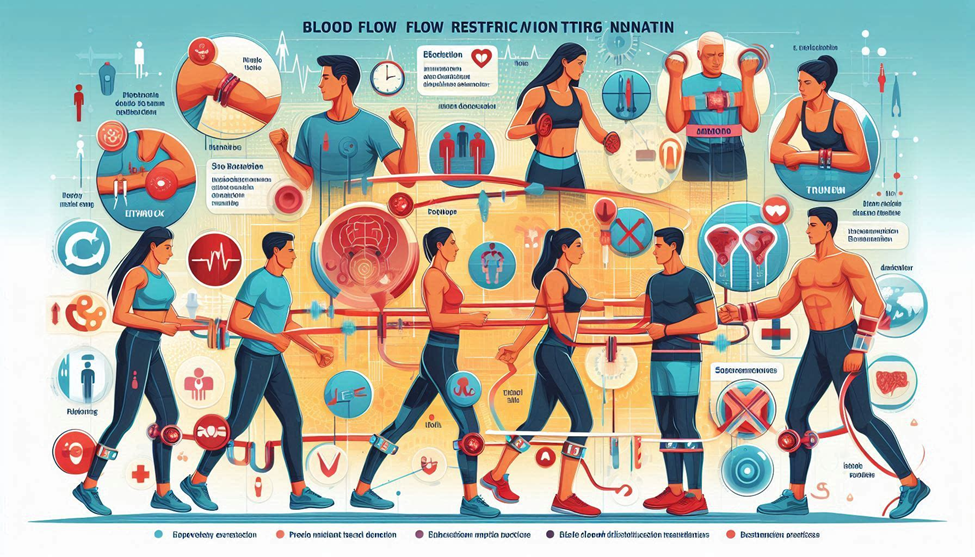
At its core, BFR training leverages the principle that partially restricting venous blood flow from a working muscle—while maintaining arterial inflow—creates an environment of hypoxia and metabolite accumulation that accelerates hypertrophic signaling. Under typical resistance training protocols, achieving meaningful muscle growth generally necessitates lifting moderately heavy to heavy loads, typically in the range of 60–80% of one-repetition maximum (1RM). In contrast, research demonstrates that BFR can trigger comparable hypertrophic and strength adaptations at only 20–30% of 1RM. Such light loading makes BFR particularly valuable in rehabilitation settings, for older adults, or for individuals with joint limitations or other conditions that restrict heavy lifting. Essentially, BFR allows muscles to “think” they are lifting heavy loads even when the external load is relatively minimal.
However, despite its apparent simplicity, BFR is not merely a matter of wrapping a cuff around a limb and performing high-repetition sets. Improper application can lead to a range of adverse effects, from excessive arterial occlusion and nerve compression to impaired muscle function, elevated blood pressure, bruising, and even increased risk of clotting in susceptible individuals. Recognizing these potential hazards underscores the critical importance of understanding the physiological mechanisms behind BFR, its appropriate protocols, and the individualization required for safe and effective implementation.
This guide is designed to provide a comprehensive exploration of BFR training. Readers will gain a detailed understanding of the physiological processes that underpin BFR, including metabolic stress, cellular swelling, and hormonal responses. In addition, evidence-based best practices, practical step-by-step application strategies, and program design guidelines for hypertrophy, strength, rehabilitation, and sport-specific performance will be discussed. Special attention is given to contraindications, red flags, and safety protocols to ensure that practitioners can utilize BFR effectively while minimizing risk. By the conclusion of this guide, readers will have the knowledge to determine when BFR is appropriate and how to apply it in a safe, structured, and individualized manner across diverse populations.
2. What Exactly Is Blood Flow Restriction Training?
2.1 Basic Definition
Blood Flow Restriction Training involves applying an external pressure—typically via cuffs, straps, or specialized pneumatic systems—to the upper arms or upper legs to restrict venous blood outflow while allowing partial arterial inflow.
This creates a “traffic jam” of blood inside the working muscles.
- Arterial blood → can still enter the muscle (partially)
- Venous return → is blocked or significantly slowed
This environment leads to:
- Rapid metabolite accumulation
- Cellular swelling
- High levels of type II fiber recruitment at low loads
- Accelerated fatigue
- Greater anabolic signaling
2.2 Key Principle: Partial Occlusion, Not Total Occlusion
Many people misunderstand BFR and believe the goal is to cut off circulation entirely. This is dangerous and absolutely incorrect.
The goal:
✔ Reduce venous return (blood leaving the muscle)
✔ Maintain arterial inflow (blood entering the muscle)
The danger:
✖ Cutting off arterial inflow entirely
✖ Using power lifting knee wraps too tightly
✖ Using random straps without pressure measurement
Using BFR safely depends entirely on proper occlusion pressure, which we will explore later.
3. The Science behind BFR: Why Low Weights Can Build Muscle like Heavy Lifting
3.1 Hypoxic (Low Oxygen) Muscle Environment
When venous blood cannot escape the muscle, oxygen levels drop rapidly.
This hypoxic state:
- Forces the muscle to rely on anaerobic pathways
- Triggers fast-twitch fiber recruitment even with light loads
- Increases lactate and hydrogen ion accumulation
- Stimulates growth hormone secretion
- Activates motor pathways for hypertrophy
3.2 The Metabolic Stress Mechanism
Metabolic stress is one of the three major drivers of hypertrophy (along with mechanical tension and muscle damage). Under BFR:
- Lactate increases 3–5× faster
- Muscle acidity increases
- Cell swelling increases
- Metabolite build-up “tricks” the muscle into thinking it is lifting heavy
- Motor unit recruitment shifts earlier to Type II fibers
This metabolic stress accelerates hypertrophic signaling similar to traditional heavy resistance training.
3.3 Enhanced Fast-Twitch Fiber Recruitment
Normally, fast-twitch muscle fibers are engaged only when loads exceed ~65% of the 1RM or near muscular failure.
But with BFR:
Fast-twitch recruitment happens even at 20–30% of 1RM.
This makes BFR powerful for:
- Injured athletes
- Elderly populations
- Beginners
- Individuals with joint pain
- Post-surgical recovery
3.4 Muscle Protein Synthesis (MPS) Pathways
BFR stimulates:
- Increased motor activation
- Higher IGF-1 expression
- Lower misstating expression (misstating inhibits muscle growth)
- Increased VEGF (supports angiogenesis and vascular improvements)
3.5 Hormonal Responses
Research shows BFR significantly increases:
- Growth hormone
- IGF-1
- Nitric oxide
- Vascular endothelial factors
These hormones contribute to structural muscle remodeling, tendon strengthening, and improved blood vessel health.
4. Benefits of BFR Training: Why It Works for So Many Populations
4.1 Muscle Growth with Light Loads
Using 20–30% of 1RM under BFR produces hypertrophy similar to heavy training.
This makes it ideal for:
- Rehab settings
- Joint-sensitive lifters
- Off-season athletes avoiding joint stress
- High-frequency training phases
4.2 Strength Preservation and Gains
Although strength gains from BFR alone are smaller than heavy training, it is excellent for maintaining strength when heavy loads are not possible.
4.3 Reduced Joint Stress
Using light weights means:
- Lower compressive joint forces
- Lower shear stress
- Reduced cartilage loading
- Great for individuals with arthritis or post-injury
4.4 Accelerated Rehabilitation
BFR has been used in:
- ACL reconstruction rehab
- Knee replacement recovery
- Rotator cuff repair
- Achilles tendon rehab
- Post-fracture muscular atrophy prevention
It allows meaningful strength work when heavy lifting is not safe.
4.5 Increased Muscle Endurance
BFR significantly enhances:
- Local muscular endurance
- Capillary density
- Fatigue resistance
This has implications for endurance athletes and sport-specific conditioning.
4.6 Prevention of Muscle Wasting (Atrophy)
BFR helps maintain muscle mass during:
- Bed rest
- Immobilization
- Post-surgery periods
- Chronic injury
5. How to Apply BFR Safely: The Complete Guidelines
This section is critical for safety and effectiveness.
5.1 Equipment Options
A. Pneumatic Cuffs (Medical or Performance Grade)
- Most accurate
- Measure Limb Occlusion Pressure (LOP)
- Adjustable and safe
- Used in physiotherapy centers
B. Elastic BFR Bands
- Common in gyms
- Inexpensive
- More variable pressure
- Requires experience to judge tightness
C. Knee Wraps (Least Recommended)
- Hard to measure pressure
- Often too tight
- Can easily occlude arterial flow
- Higher complication risk
5.2 Placement of the Cuffs
Upper Body:
Place the cuff at the very top of the arm, just below the shoulder (proximal to the deltoid).
Muscles targeted:
- Biceps
- Triceps
- Forearms
- Shoulders (indirectly)
Lower Body:
Place the cuff at the very top of the thigh, just below the glutei fold.
Muscles targeted:
- Quadriceps
- Hamstrings
- Gluts (somewhat)
- Calves (indirect through blood pooling)
5.3 Tightness Level and Pressure Recommendations
This is the most misunderstood part.
Upper Body:
Use 40–50% of limb occlusion pressure (LOP).
Lower Body:
Use 60–80% LOPS.
Why the difference?
- Legs have larger muscles
- Require more pressure to restrict venous return
- Too much pressure on legs can be dangerous
5.4 “Perceived Tightness Scale” (If No Medical Cuffs Are Available)
Since many gym users rely on bands rather than pneumatic cuffs:
- Arms: 6/10 tightness
- Legs: 7/10 tightness
- Never go to 10/10 tightness
- You should feel pressure, not pain
5.5 Signs Your Wrap Is Too Tight
Stop immediately if you experience:
- Numbness
- Tingling
- Sharp pain
- Loss of sensation
- Skin turning cold or white
- Excessive swelling
- Unusual discoloration
5.6 Session Length
Do not keep cuffs on for longer than:
- 10–15 minutes for upper body
- 15–20 minutes for lower body
Remove the cuffs between exercises if doing a multi-exercise session.
6. BFR Training Protocols: Sets, Reps, Load & Rest
6.1 The Classic BFR Protocol (Most Proven)
This is the standardized method from research:
- Load: 20–30% of 1RM
- Sets: 4
- Reps: 30, then 15, 15, 15
- Rest: 30 seconds between sets
- Cuffs: Stay inflated during the entire set cluster
This produces maximum metabolic stress with minimal mechanical load.
6.2 Alternative Rep Schemes (Advanced)
Protocol B: 15–15–15–15 (Equal Volume)
- Used for beginners
- Good for high-frequency application
Protocol C: Time-Based Sets
- 45–60 seconds continuous tension
- Great for endurance adaptations
Protocol D: Intermittent Occlusion
- Inflate cuffs for the working set only
- Deflate during rest
- Reduces discomfort
- Provides slightly less hypertrophy
6.3 Load Selection
- Rehab: 10–20% of 1RM
- Hypertrophy: 20–30% of 1RM
- Strength Maintenance: 30–40% of 1RM (with caution)
- Endurance: Very light loads but repeated longer to failure
6.4 Frequency Guidelines
- Rehab/atrophy prevention: Daily or even twice daily
- Hypertrophy phase: 2–4x per week
- Athletes: 1–2x/week (strategic placement)
- Strength blocks: Use BFR as accessory work only
7. Exercise Selection: What Movements Work Best With BFR?
7.1 Upper Body Exercises
Directly Occluded (Most Effective):
- Biceps curls
- Triceps press downs
- Hammer curls
- Rope extensions
- Wrist curls
- Shoulder lateral raises (surprisingly effective)
Indirect Upper Body Adaptation:
- Push-ups
- Light bench press
- Shoulder presses
- Rows
7.2 Lower Body Exercises
Highly Effective:
- Leg extensions
- Leg curls
- Leg press (very light)
- Bodyweight squats
- Step-ups
- Split squats
- Calf raises
7.3 Not Recommended
- High-risk movements like heavy squats or deadlights
- High-impact or polymeric drills
- High-skill technical lifts
8. Athlete-Specific Applications
8.1 Team Sport Athletes (Soccer, Basketball, Rugby)
BFR is highly beneficial during:
- In-season periods (low joint stress)
- Recovery micro cycles
- Minor injury rehab
Benefits:
- Maintains muscle mass
- Preserves strength
- Reduces training fatigue
8.2 Endurance Athletes
BFR improves:
- Capillary density
- Slow-twitch fiber function
- Lactate tolerance
- Local muscular endurance
8.3 Strength & Power Athletes
BFR is best used as:
- Accessory work
- Reload week hypertrophy stimulus
- Joint-friendly alternatives
8.4 Bodybuilders
Perfect for:
- Finisher sets
- Targeting stubborn muscle groups
- High-volume phases
- Reducing joint wear
9. BFR for Injury Prevention & Rehabilitation
9.1 Preventing Atrophy after Injury
During:
- ACL tear
- Post-surgery
- Fractures
- Immobilization
BFR prevents rapid muscle loss.
9.2 Restoring Strength without High Load Risk
Helps individuals progress from:
- Passive movement
- To bodyweight
- To light resistance
- To heavy loading (later stages)
9.3 Tendon & Ligament Recovery
Though BFR is not a primary tendon-strengthening modality, it allows:
- Early strength work
- Without overloading healing tissues
10. Risks, Side Effects & Safety Contraindications
10.1 Common Temporary Side Effects
- Muscle pump
- Discomfort
- Temporary numbness
- Petechiae (small red dots from capillary stress)
These are normal but should be monitored.
10.2 High-Risk Individuals (BFR not recommended)
- Uncontrolled hypertension
- Peripheral vascular disease
- Varicose veins (severe)
- History of blood clots
- Sickle cell anemia
- Diabetes with vascular complications
- Pregnancy
- Advanced neuropathy
Always consult a medical professional in such cases.
10.3 When to Stop Immediately
- Sharp pain
- Loss of sensation
- Extreme swelling
- Dizziness
- Chest pain
- Faintness
11. Practical Programming Templates
11.1 Hypertrophy Template (Upper Body)
- Curls: 30–15–15–15
- Triceps press down: 30–15–15–15
- Lateral raises: 30–15–15–15
11.2 Lower Body Hypertrophy Template
- Leg extensions
- Leg curls
- Bodyweight squats
11.3 Rehab Template
- 10–20% 1RM
- Daily frequency
- 2–3 movements
- Stop well before failure
11.4 Athlete In-Season Template
- 1–2 BFR sessions per week
- Very low mechanical stress
- Maintains size and endurance
12. Frequently Asked Questions
Q1. Can beginners use BFR?
Yes, but start with very low tightness and short sessions.
Q2. Does BFR build strength or just size?
Both—but size gains are more significant. Strength gains are supportive, not maximal.
Q3. Can BFR replace heavy lifting?
No—but it is an excellent supplement or temporary replacement during injury or reload.
Q4. Can you do cardio with BFR?
Yes—walking and cycling with BFR are excellent for rehab and fat loss.
Q5. Does BFR cause blood clots?
Not in healthy individuals following proper pressure guidelines. But high-risk individuals must avoid it.
Conclusion
Blood Flow Restriction training stands as one of the most impactful and scientifically supported innovations in modern resistance training and rehabilitation. Its ability to generate hypertrophic and strength-adaptive responses using extremely light loads makes it uniquely valuable for individuals who cannot tolerate heavy mechanical stress, whether due to injury, chronic joint issues, or high in-season sport demands. Unlike traditional resistance training, BFR leverages metabolic stress, hypoxic signaling, and accelerated fast-twitch fiber recruitment to trigger muscular remodeling in a way that mirrors — and sometimes exceeds — the adaptive stimulus of heavier work. These physiological advantages, combined with its joint-sparing nature, have positioned BFR as a central tool in strength coaching, physical therapy, military rehab, and athletic performance settings worldwide.
However, the true power of BFR lies not only in its benefits but in the precision of its application. Safe and effective use requires appropriate cuff pressure, correct placement, carefully selected loads, and strict adherence to proven protocols. When performed responsibly, BFR is well-tolerated, time-efficient, and extraordinarily potent. When performed recklessly, it can pose unnecessary risks, including nerve compression and impaired arterial flow. Therefore, education, coaching oversight, and adherence to best practices remain essential.
Whether used to accelerate recovery, amplify hypertrophy during high-volume phases, support conditioning in endurance athletes, or maintain muscle during reloads and injury periods, BFR offers a scientifically validated pathway toward improved performance. For athletes, patients, and fitness enthusiasts alike, integrating BFR into a structured program unlocks a new dimension of training stimulus that complements—not replaces—traditional strength work. With careful implementation, BFR provides a powerful, safe, and transformative tool to support long-term strength, resilience, and athletic development.
SOURCES
Patterson, S.D., & Brander, C.R. (2017). The role of blood flow restriction training in exercise-induced muscle adaptations: A narrative review. Sports Medicine, 48(6), 1557–1570.
Scott, B.R., Olenek, J.P., Slattery, K.M., & Lacombe, B.J. (2015). Exercise with blood flow restriction: An updated evidence-based approach for enhanced muscular development. Sports Medicine, 45, 313–325.
Olenek, J.P., Wilson, J.M., Wilson, G.J., Pool, T.J., & Bemba, M.G. (2011). Potential safety issues with blood flow restriction training. Scandinavian Journal of Medicine & Science in Sports, 22(5), 1–10.
Tankard, Y., Takeaway, H., & Ishii, N. (2000). Applications of vascular occlusion training to promote muscular hypertrophy. Journal of Applied Physiology, 88(6), 2097–2106.
Pearson, S.J., & Husain, S.R. (2015). A review on the mechanisms of blood flow restriction resistance training. Sports Medicine, 45(2), 187–200.
Fans, C.A., Olenek, J.P., Thiebaud, R.S., Russo, L.M., & Bemba, M.G. (2015). Muscular adaptations to fatiguing exercise with and without blood flow restriction. Journal of Strength and Conditioning Research, 29(8), 2055–2063.
Clark, B.C., Marini, T.M., Hoffman, R.L., Russ, D.W., & Yards, S. (2011). Relative safety of low-load blood flow restriction exercise compared to traditional training. Clinical Physiology and Functional Imaging, 31(2), 1–9.
Hughes, L., Paton, B., Rosenblatt, B., Tisane, C., & Patterson, S.D. (2017). Blood flow restriction training in rehabilitation following anterior curiae ligament reconstructive surgery: A systematic review. Frontiers in Physiology, 8, 598.
Alexandra, M.E., Ugrinowitsch, C., Breton, R., & Lombardi, C.A. (2015). Magnitude of muscle hypertrophy via high-load versus low-load blood flow restriction training. American Journal of Physiology, 309(1), 22–29.
Marini, T.M., & Clark, B.C. (2009). Blood flow restricted exercise and the older adult. Journals of Gerontology Series A: Biological Sciences, 64, 1–7.
Wernbom, M., Augusts son, J., & Ramstad, T. (2008). Ischemic strength training: Physiological mechanisms and practical recommendations. Sports Medicine, 38(5), 407–430.
Pignanelli, C., Christiansen, D., & Burr, J. (2021). The effects of BFR training on tendon, vascular, and neuromuscular adaptations. Sports Medicine, 51(4), 599–620.
Jesse, M.B., Buckner, S.L., Mouser, J.G., Mattocks, K.T., Daniel, S.J., & Olenek, J.P. (2018). Mechanisms of BFR: A deep dive into metabolic and hormonal responses. European Journal of Applied Physiology, 118(9), 1965–1974.
Counts, B.R., Daniel, S.J., Barnett, B.E., Kim, D., & Mayhew, D.L. (2016). Muscle adaptations to high repetitions with low-load BFR. Muscle & Nerve, 54(3), 447–456.
Seajacks, P., Matson, A., & Wernbom, M. (2016). BFR and muscle damage: Understanding thresholds and responses. Act Physiological, 219(2), 239–251.
Yasuda, T., Ogasawara, R., Sukiyaki, M., & Abe, T. (2009). BFR training for the elderly: Safety and hypertrophy outcomes. International Journal of KAATSU Training Research, 5(1), 1–10.
Moderate, H., Kura no, M., Fukumura, K., & Nabekura, Y. (2011). Hormonal and metabolic effects of BFR resistance training. Journal of Applied Physiology, 110(3), 623–632.
Brander, C.R., Warming ton, S.A., & Cudgel, D.J. (2015). Neurological adaptations to low-load BFR. Journal of Sports Science, 33(2), 197–208.
Center, C., Lauer, B., & Seines, O.R. (2019). Low-load BFR training improves muscle mass & strength in older adults. Sports Medicine, 49(1), 1–15.
Karin, A., & Strata, K. (2011). BFR walking and cycling: Endurance improvements and vascular adaptations. Journal of Sports Science and Medicine, 10, 452–456.
Thiebaud, R.S., Olenek, J.P., Fans, C.A., Russo, L.M., & Kim, D. (2014). BFR and muscle fatigue: EMG findings. Physiology & Behavior, 134, 1–7.
Barceló’s, C., Nunez, J., & Bourgeon, A. (2015). Blood flow restriction in strength athletes: Practical applications and considerations. Strength and Conditioning Journal, 37(2), 33–44.
Martin-Hernandez, J., Ruiz-Agued, J., & Alcatraz, P.E. (2013). Strength responses to BFR during high-performance training. European Journal of Sport Science, 13(1), 32–39.
Sandburg, C.J. (1994). Exercise with reduced blood flow: A foundation for understanding BFR physiology. Act Physiological Scandinavia, 150(2), 207–215.
Nakajima, T., Takano, H., & Kura no, M. (2006). Safety recommendations and absolute contraindications for KAATSU (BFR) training. International Journal of KAATSU Research, 2(1), 5–12.
HISTORY
Current Version
Dec 04, 2025
Written By
ASIFA


0 Comments