Introduction
In the modern food landscape, most eating behavior is no longer driven by hunger alone. It is driven by cues — visual, auditory, emotional, social, and neurological. While athletes, clinicians, and nutrition professionals have long understood that macronutrients, hormones, and metabolism shape appetite, a less appreciated fact is that food advertising shapes appetite before metabolism ever has a chance to respond.
The industrialization of food created a new dynamic: when food can be engineered to stimulate reward pathways more powerfully than evolution ever prepared us for, and when advertising can amplify those signals through sophisticated neuromarketing strategies, eating stops being a simple biological act and becomes a conditioned neurological behavior.
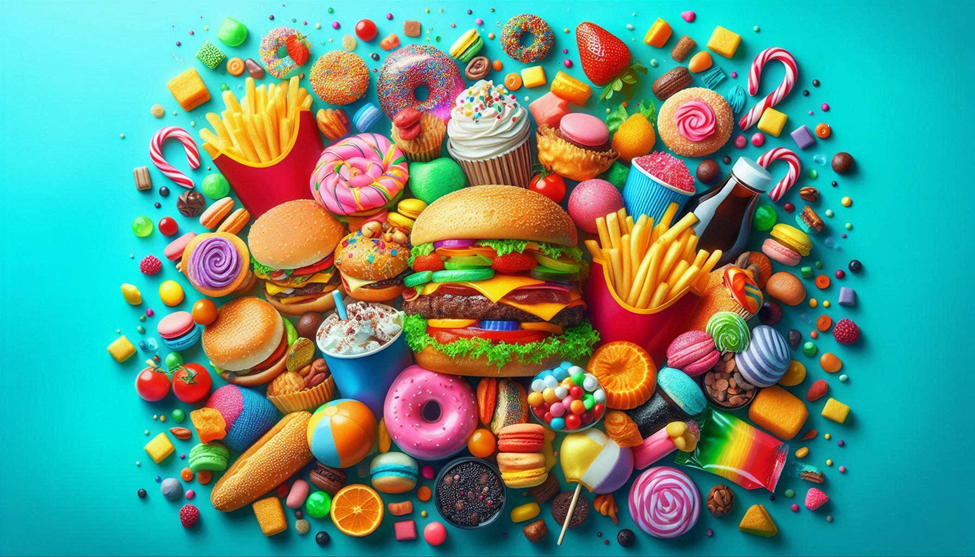
Junk food companies do not merely sell calories. They sell dopamine spikes, emotional triggers, nostalgia, comfort, identity, and habit loops. They exploit the same reward circuits that govern addiction, learning, and motivation.
Understanding this process is essential for:
- athletes fighting cravings
- individuals dealing with overeating
- practitioners designing behavior change
- anyone attempting long-term metabolic health
1. The Neurobiology of Eating: Reward Pathways Explained
Eating is not controlled by hunger alone.
Hunger = physiological energy deficit
Desire = neurological reward anticipation
These are separate systems.
The brain’s key reward structures include:
- Ventral Segmental Area (VTA): Produces dopamine when anticipating a reward.
- Nucleus Acumens (Mac): Maps “liking” and “wanting”, critical for craving behavior.
- Prefrontal Cortex: Evaluates consequences, applies restraint, and can override impulses.
- Amygdale: Associates food with emotion, memory, and stress relief.
- Insular: Processes internal sensory state and integrates taste with emotion.
When a food is:
- ultra processed
- engineered for hyper palatability
- High in fat + sugar + salt
…it activates these systems more strongly than whole foods.
This is not “psychological weakness”; it is petrochemical architecture.
2. Dopamine: The Real Driver behind Cravings
A common misconception:
“Dopamine is pleasure.”
Incorrect.
Dopamine = motivation + anticipation + learning, not pleasure.
When advertising shows:
- melting cheese
- sizzling meat
- crunchy textures
- happy families
- reward imagery
…the brain releases dopamine before eating occurs, priming behavior.
This is why:
- cravings occur even when not hungry
- certain foods feel “compulsive”
- habits form quickly
- willpower alone is insufficient
Dopamine trains:
- “see → want → seek → consume → repeat”
Hollywood cannot compete with this.
3. Hyper palatable Engineering: Why Junk Food Is Neurochemically Superior
Food scientists design foods to hit “bliss points”:
- Fat + Sugar → strongest reward synergy
- Salt + Fat → enhances texture & mouth feel
- Crunch + Sweet → triggers sensory novelty circuits
- Low fiber + high glycolic load → rapid reward absorption
These foods can create dopamine responses matching:
- gambling
- some drugs
- social reward
This is not hyperbole — imaging studies show overlapping activation.
This is why “just eat less” fails long-term.
4. Neuromarketing: Advertising’s Exploitation of Reward Pathways
Food advertising uses several scientifically optimized techniques.
4.1 Classical Conditioning
Pairing:
- food
- positive emotion
- social connection
- nostalgia
- identity
Example:
“You’re not eating fries.
You’re enjoying childhood.”
This creates automatic associations even without conscious thought.
4.2 Sensory Cues
Smell, sight, and texture cues can evoke:
- salivation
- gastric motility
- insulin response
- dopamine release
Even a picture of food can activate gustatory cortex.
4.3 Temporal Discounting
Advertisements emphasize:
- instant pleasure
- immediate reward
- convenience
- “treat yourself”
The brain discounts long-term health because short-term reward is wired to dominate.
4.4 Social Proof
Many ads frame junk food as:
- popular
- culturally normative
- fun
- reward for achievement
Humans evolved to eat what group members eat.
Advertising hijacks this.
5. Stress, Reward, and Junk Food
Stress amplifies junk food attraction due to:
- elevated cortical
- increased gherkin
- suppressed prefrontal control
- increased reward sensitivity
This is why:
- breakups
- exams
- deadlines
- Burnout
produce cravings independent of hunger.
6. Physiological Consequences of Advertising-Driven Eating
These extend far beyond weight gain.
- Insulin Deregulation: Frequent spikes reduce insulin sensitivity.
- Inflammation: Ultra processed foods trigger inflammatory responses.
- Micro biome Disruption: Low-fiber, high-emulsifier diets alter gut bacteria.
- Reward Pathway Desensitization: Similar to drug tolerance:
- more stimulation required
- cravings increase
- satiety decreases
- 6.5 Sleep & Energy Impact: Sugar + fat disrupt:
- sleep latency
- cortical rhythm
- metabolic efficiency
For athletes this means:
- reduced recovery
- impaired body composition
- decreased endurance
- poor hormonal health
7. Behavioral Effects: Habit Loops & Cravings
A typical loop:
- Cue → commercial, smell, boredom
- Craving → dopamine spike
- Response → purchase + eat
- Reward → momentary pleasure
- Repeat → stronger neuronal pathway
Every repetition militates the loop.
Eventually:
- craving becomes automatic
- avoidance requires conscious intervention
8. Why Willpower Alone Fails
Because:
- craving circuits are sub cortical (automatic)
- restraint circuits are cortical (effortful)
- advertising keeps triggering craving
- stress reduces restraint
- energy deficits enhance reward response
Willpower is fighting an entire petrochemical system.
It is not a moral failure.
It is physics applied to biology.
9. Strategies to Counter Neuromarketing Effects
I will expand all of these later, but key categories:
- Environmental Control
- avoid fast-food signage proximity
- remove trigger foods
- limit advertising exposure
- Physiological Control
- adequate protein
- stable blood sugar
- sleep
- micronutrient sufficiency
- Cognitive Control
- mindful eating
- recommitment
- implementation intentions
- Habit Rewiring
- substitute foods
- reward replacement
- delay techniques
10. beyond Dopamine: The Full Petrochemical Orchestra of Eating
Dopamine is only one instrument in the neural symphony that governs appetite and reward. Junk food advertising exerts its power because it stimulates not just a single neurotransmitter but a network of interacting chemical systems.
Understanding these systems reveals why modern food environments can produce cravings that feel almost compulsive even in individuals with strong self-control.
10.1 Endogenous Uploads (“Liking” circuits)
While dopamine governs “wanting,” upload peptides such as beta-endorphin govern “liking” – the hedonic pleasure of eating.
Ultra processed fat + sugar combinations produce upload responses approaching those seen in:
- social bonding
- sexual reward
- and some addictive drug responses
When advertising shows:
- slow-motion melting chocolate
- glossy oil running across meat
- warm cookies breaking open
…the upload system is primed even before swallowing occurs.
This makes eating feel:
- comforting
- soothing
- emotionally validating
Which is why junk food is so effective at relieving negative effect?
10.2 Endocannabinoids
These molecules regulate:
- appetite
- reward
- stress buffering
Food advertising inadvertently stimulates:
- Anandamide
- 2-AG
These are the same pathways targeted by cannabinoids.
The result:
- increased appetite
- craving amplification
- reduced inhibition
This dramatically increases the likelihood of overeating in stressful emotional states.
10.3 Serotonin & Mood Stabilization
Carbohydrate-rich junk foods:
- increase serotonin availability
- temporarily improve mood
This creates a feedback loop:
- stress → craving
- eating → partial mood relief
- relief → conditioned preference
This is why emotional eating is so difficult to treat without addressing neurobiology.
11. Sensory Cues: The Brain Responds before Conscious Thought
The human brain evolved to detect food through:
- sight
- smell
- sound
- texture
- expectation
Modern advertising exploits all of these.
11.1 Visual Cues
Even static images activate:
- gustatory cortex
- orbit frontal cortex
- reward circuits
A single well-lit photo can:
- increase hunger
- increase salivation
- increase dopamine
This is why menu photography dramatically increases consumption even when calories are unchanged.
11.2 Auditory Cues
Crunching sounds:
- increase perceived freshness
- increase reward signaling
Sizzling:
- signals fat cooking
- triggers appetite hormones
These cues bypass rational processing.
11.3 Olfactory Cues
Smell is the fastest sensory pathway to the limbic system.
Walking past a bakery:
- raises insulin
- raises gherkin
- increases craving
Olfaction is so powerful that it can create hunger in a completely fed individual.
12. The Role of Memory & Identity
Food advertising does not sell nutrition.
It sells meaning.
Humans eat:
- nostalgia
- comfort
- identity
- belonging
- celebration
- reward
Example mechanisms:
12.1 Childhood Memory Activation
Advertisements often mimic:
- birthday scenes
- family gatherings
- holiday imagery
The hippocampus binds the food with emotional warmth.
Later:
- seeing the food → feeling the memory → craving
12.2 Identity Signaling
Brands create:
- “fun” identities
- “rebellious” identities
- “healthy” identities
- “premium” identities
Consumers then eat not hunger but identity.
This is why people defend brands in arguments like they defend personal beliefs.
13. Stress & Reward: Why Junk Food Hits Harder When Life Is Hard
Chronic stress changes appetite physiology at multiple levels:
- Cortical: Raises:
- appetite
- preference for palatable foods
- fat storage
- Gherkin: Increases hunger even when energy stores are adequate.
- Prefrontal Suppression: Stress reduces:
- impulse control
- future planning
- inhibitory oversight
- This makes advertising:
- more effective
- more irresistible
- more damaging
Athletes under training stress are particularly vulnerable.
14. What This Means for Metabolic Health
Advertising-driven eating contributes to:
- Insulin Resistance: Frequent spikes impair glucose transport and mitochondrial function.
- Chronic Inflammation: Emulsifiers, refined sugars, and oxidized fats:
- disrupt gut barrier
- increase end toxemia
- elevate inflammatory cytokines
- Hormonal Deregulation: Disrupts:
- testosterone
- thyroid hormones
- lepton sensitivity
- cortical rhythms
- Performance Decline: Athletes may notice:
- poorer recovery
- increased fatigue
- lower training intensity
- impaired body composition
- sleep disruption
This shows that junk food is not “just calories.”
It is metabolic interference.
15. Case Study: The Athlete Who “Couldn’t Stop Craving”
A strength athlete reported:
- strict training
- disciplined diet
- good sleep
- but severe cravings after watching social media food videos
Physiological explanation:
- Visual cue → dopamine
- Emotional resonance → uploads
- Stress from training → cortical
- Sleep debt → impaired inhibition
Even with discipline, the petrochemical stack created near irresistible craving.
Intervention:
- reduce exposure to food content
- increase protein (blunts gherkin)
- add fiber (slows absorption)
- structured reseeds (stabilize dopamine)
- stress reduction
Outcome: cravings reduced dramatically.
This demonstrates how invisible forces shape behavior even in motivated individuals.
16. Countermeasures for Individuals & Practitioners
Below is a brief overview; later parts will expand each fully.
- Environmental Control
- avoid drive-by fast-food environments
- limit food advertising exposure
- remove trigger foods
- Physiological Stabilization
- eat adequate protein
- balance blood sugar
- maintain micronutrients
- sleep 7–9 hours
- These weaken the reward circuits.
- Cognitive Restructuring
- naming cravings
- reality testing
- recommitment
- implementation intentions
- Habit Rewiring
- replace reward with non-food reward
- delay technique (10 minutes)
- mindful eating protocols
18. Research Evidence: What Neuroscience and Public Health Data Actually Show
The claims made in this article are not speculative. Over the past three decades, neuroscientists, endocrinologists, psychologists, and public health researchers have produced a large body of data demonstrating exactly how advertising shapes appetite, reward, and consumption.
Below are key research patterns.
18.1 Neuroimaging Studies
Functional MRI consistently shows:
- Images of high-fat, high-sugar foods → strong activation of nucleus acumens
- Repeated exposure → sensitization (stronger response)
- Stress → amplification of cravings in reward regions
- Sleep loss → reduced prefrontal inhibition
These effects occur even when participants report they “don’t want to eat.”
This shows how craving can happen without conscious desire.
18.2 Behavioral Conditioning Studies
Classic learning theory predicts:
Pairing neutral cues with rewarding outcomes trains automatic craving.
Advertising uses:
- jingles
- mascots
- color palettes
- emotional scenes
- repetition
In children, this conditioning is extremely strong and long-lasting.
In adults, it still shapes behavior more than people realize.
18.3 Public Health Outcomes
Epidemiological data shows:
- Higher food advertising exposure → higher BMI
- Children in high-ad environments → greater sugary food consumption
- Stress + advertising → largest effect size
This is one of the reasons obesity prevalence cannot be explained by “personal responsibility” alone.
The environmental forces are measurable and powerful.
19. Athlete-Specific Implications
Athletes are often assumed to be immune to these mechanisms because of discipline and nutritional knowledge.
They are not.
In fact, athletes may be uniquely vulnerable because of:
- Elevated training stress
- Elevated cortical
- Increased energy expenditure
- Increased reward sensitivity
- Restricted dieting phases
- Social media exposure (food content is extremely popular)
Below are key performance implications.
19.1 Body Composition Control
Cravings for hyper palatable food:
- increase caloric intake
- reduce dietary compliance
- flood the body with insulin-stimulating nutrients
This makes fat loss slower and muscle retention harder.
19.2 Hormonal Health
Ultra processed diets contribute to:
- reduced testosterone
- disrupted thyroid signaling
- poor lepton sensitivity
- elevated cortical
All of which impair adaptation.
19.3 Recovery & Inflammation
High sugar + low micronutrient intake → increased systemic inflammatory markers.
This:
- impairs protein synthesis
- slows recovery
- increases DOMS
- raises injury risk
19.4 Mental Focus & Training Quality
Food-induced:
- blood sugar fluctuations
- sleep disruption
- inflammation
Reduce:
- concentration
- reaction time
- training intensity
This directly affects performance outcomes.
20. Breaking the Neuromarketing Loop: Advanced Intervention Strategies
Below are scientifically backed approaches used in?
- cognitive behavioral therapy
- habit reversal training
- addiction psychology
- performance coaching
These can significantly reduce craving frequency and intensity.
20.1 Exposure Control (Environmental Engineering)
Remove or reduce:
- fast-food signage
- food-focused social media
- television advertising
- trigger foods at home
The brain cannot crave what it does not see.
This is one of the most effective strategies and requires no willpower.
20.2 Physiological Buffering
These stabilize hunger and blunt reward spikes:
Protein
Increases satiety hormones:
- PYY
- GLP-1
- CCK
Fiber
Slows absorption → reduces reward intensity.
Healthy fat
Improves satiety and reduces craving.
Sleep
Lack of sleep:
- increases gherkin
- decreases lepton
- increases reward sensitivity
A single night of sleep debt cans double cravings.
20.3 Cognitive Techniques
These reduce automaticity:
Naming
“THIS IS AN ADVERTISING-INDUCED CRAVING”
reduces reward activation significantly.
Implementation Intentions
“If I feel craving, I will drink water and wait 5 minutes.”
This interrupts habit loops.
Mindfulness Training
Reduces:
- amygdale reactivity
- compulsive behavior
20.4 Reward Replacement
The brain seeks reward, not food specifically.
Replacing:
- emotional reward
- novelty reward
- comfort reward
With non-food alternatives reduces dependence on eating as coping.
Example alternatives:
- music
- social connection
- movement
- aromatherapy
- creative output
21. Policy Implications
Understanding the science also forces us to confront ethical questions.
Possible policy responses:
- advertising limits (especially to children)
- taxation of ultra processed foods
- clearer labeling
- restrictions on manipulative packaging
- public health campaigns
Conclusion
Food advertising and its influence on human physiology represent one of the most underestimated forces shaping modern health, behavior, and performance. When eating behavior is reduced to moral language—“self-control,” “discipline,” “weakness”—the real mechanisms driving consumption remain invisible and unaddressed. Neuroscience makes it abundantly clear that cravings are not simple choices but predictable responses generated by reward pathology, associative learning, stress physiology, and sensory cue amplification.
Advertising works because it speaks directly to systems evolution built long before the concept of packaged food or mass media existed. Dopamine trains expectation and motivation; uploads amplify pleasure; endocannabinoids raise appetite; serotonin modulates mood; and emotional memory binds food to identity and nostalgia. When these systems are activated simultaneously by engineered foods and targeted messaging, the result is a craving cascade that can overwhelm conscious intention even in highly motivated individuals.
For athletes, the implications are profound. Performance is not determined solely by training volume, macronutrient timing, or supplementation. It is also shaped by hormonal integrity, inflammation, sleep architecture, appetite regulation, and psychological resilience. Advertising-driven eating destabilizes each of these systems in measurable ways. The athlete who understands these mechanisms gains a hidden advantage: the ability to protect metabolic health and training quality in an environment designed to undermine both.
In the broader public health context, neuromarketing forces us to rethink how much “personal responsibility” can reasonably account for when the environment is optimized to extract reward responses as effectively as addictive substances. Policy, education, and environmental design can therefore become as critical to metabolic health as diet and exercise.
Ultimately, knowledge is the antidote. When individuals learn how reward systems function, how cravings are conditioned, and how stress interacts with appetite, they can reclaim control without fighting biology. Understanding is not just intellectual empowerment; it is metabolic medicine. In a world where food cues are constant and reward engineering is relentless, awareness becomes a form of performance enhancement, disease prevention, and psychological freedom.
SOURCES
Volker & Wise (2005) – Dopamine and addiction mechanisms
Berthoud (2011) – Neural control of appetite
Small et al. (2001) – firm responses to food cues
Slice et al. (2008) – Reward sensitization and overeating
Apps & Lockwood (2014) – Hyper palatable food design
Yeoman’s (2010) – Sensory influences on eating
Avenal et al. (2008) – Sugar and reward pathway activation
Kenny (2011) – Reward dysfunction in overeating
Gerhardt et al. (2011) – Food addiction framework
Lowe & Burin (2007) – Stress and eating
Dolman (2010) – Cortical and reward eating
Bridge (2009) – Wanting vs. liking neurobiology
Carter & Tiffany (1999) – Cue reactivity
Rosin & Fallon (1980) – Psychological aspects of food
World Health Organization (2016) – Advertising and obesity data
Harris et al. (2009) – Children and food advertising
Guthrie et al. (2018) – Ultra-processed foods health effects
Montero et al. (2019) – NOVA food classification work
Drewnowski (1997) – Taste, preference, and reward
Switchers (2015) – Reward plasticity and diet
Schneider et al. (2012) – Sleep and appetite hormones
Cummings & Schwartz (2003) – Gherkin physiology
Friedman (2014) – Lepton resistance
Ziauddeen & Fletcher (2013) – Expectation and consumption
Higgs (2016) – Cognitive control in eating
Ferrier et al. (2017) – Stress-induced appetite shift
Bulk & Labor (2020) – Emotion and food reward
HISTORY
Current Version
Dec 08, 2025
Written By
ASIFA
0 Comments