Introduction
In modern society, women experience psychological, social, and physiological stressors at rates that rival or exceed those observed in clinical populations. From caregiver responsibilities to workplace demands, relational pressures, hormonal fluctuations, and sleep disruption, stress is no longer an episodic event but a daily metabolic state for many women. While occasional stress is adaptive, chronic activation of the stress response becomes biologically maladaptive, reshaping metabolism in ways that promote fat storage, reduce muscle mass, and impair energy regulation.
Weight gain associated with stress has historically been dismissed as “emotional eating” or “lifestyle choice,” but contemporary endocrinology reveals that the biological reality is far more complex. Cortical does not merely increase appetite; it reprograms how the body stores energy, alters where fat is deposited, changes how muscles use glucose, and modifies how other hormones behave. Women, in particular, demonstrate unique patterns of cortical response based on estrogen and progesterone signaling, making their metabolic outcomes under stress distinctive.
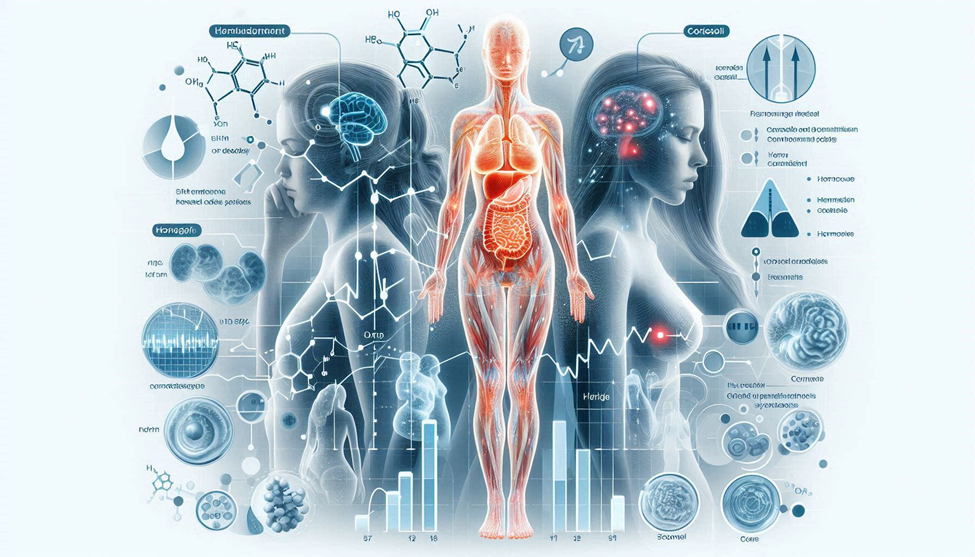
Understanding these mechanisms is critical for clinicians, coaches, and women seeking to break cycles of stubborn weight gain despite disciplined diet and exercise. When stress physiology is ignored, interventions fail; when it is integrated, outcomes improve dramatically. Chronic psychological stress has long been associated with weight gain, metabolic disruption, and increased cardio metabolic risk, yet the mechanisms linking stress to fat accumulation are neither uniform nor fully understood, especially in women. Emerging research demonstrates that women experience distinct neuroendocrine responses to stress, shaped by cyclical hormonal fluctuations, sex-specific receptor sensitivity, and differential metabolic substrate utilization. Cortical, the central effectors hormone of the stress response exerts powerful influence on appetite, fat partitioning, insulin sensitivity, energy expenditure, sleep, and muscle preservation. When stress becomes chronic, these systems shift in ways that disproportionately promote central adiposity and metabolic deregulation in women, even when caloric intake remains constant.
This review synthesizes current mechanistic knowledge on how chronic stress interacts with female physiology to drive weight gain. Topics include sex-specific HPA axis modulation, cortisol’s metabolic effects, and interactions with insulin and appetite hormones, sleep disruption, thyroid down regulation, and behavioral coping patterns. The review concludes with evidence-based interventions in nutrition, training, sleep, and stress regulation designed to mitigate cortical-driven weight gain and restore metabolic health.
2. Mechanisms of Stress in Women
Stress can be understood as any internal or external demand that disrupts the body’s physiological balance, or homeostasis. These demands can be psychological, such as worry or social conflict; emotional, such as grief or anger; physical, such as injury or intense exercise; or environmental, such as noise, temperature, or sleep disruption. Regardless of the source, the body responds through two deeply intertwined neuroendocrine systems designed to mobilize energy, prioritize survival, and restore equilibrium. The first is the Sympathetic–Adrenal–Medullar (SAM) system, which acts within seconds. When activated, it triggers the release of adrenaline and noradrenalin, hormones that generate the classic “fight-or-flight” response. This immediate activation increases heart rate and blood pressure, shunts blood toward working muscles, elevates blood glucose, and sharpens alertness, preparing the organism for rapid action. Because of its speed, the SAM system is especially effective for dealing with sudden threats or acute physical challenges.
The second major stress pathway is the Hypothalamic–Pituitary–Adrenal (HPA) axis, which operates on a slower but more sustained timeline. Activation of this axis leads to the release of cortical, the body’s primary long-acting stress hormone. Cortical orchestrates metabolic adaptation by increasing blood sugar availability, altering appetite signals, modulating inflammation, and redistributing energy stores—often toward abdominal fat when stress becomes chronic. While cortical is essential for maintaining health and enabling adaptation, excessive or prolonged activation can suppress immune function, disrupt sleep, impair insulin sensitivity, and alter reproductive hormones. Thus, the HPA axis represents both a powerful protective tool and a potential pathway to metabolic deregulation when stress is unremitting.
Sex differences in stress physiology are well documented and biologically meaningful. Research shows that women typically exhibit stronger HPA activation in response to emotional and relational stressors, whereas men tend to show larger responses to direct physical threat. These patterns likely evolved due to differing reproductive roles and care giving demands in ancestral environments, where sensitivity to social stability and offspring protection conferred survival advantages. Today, these divergences can be measured in cortical amplitude, recovery time, and reactivity patterns and they help explain why chronic stress often manifests differently in metabolic health, appetite regulation, and fat storage between women and men.
3. HPA Axis Dynamics
The HPA axis operates as a cascade:
- Stress → Hypothalamus releases CRH (Corticotrophin Releasing Hormone)
- Pituitary releases ACTH (Adrenocorticotropic Hormone)
- Adrenal cortex releases cortical
In women, estrogen modulates this system at multiple points:
- Estrogen increases CRH sensitivity
- Estrogen prolongs cortical half-life
- Estrogen enhances glucocorticoid receptor binding in adipose tissue
This means that women may experience stronger and more persistent cortical effects from the same stress exposure compared to men.
Progesterone, conversely, can blunt cortisol’s effects but also disrupt sleep and thermoregulation, creating competing metabolic pressures.
4. Cortical Secretion Patterns
Cortical follows a diurnal rhythm:
- Peaks at waking (cortical awakening response)
- Gradually declines through the day
- Reaches minimum at sleep onset
Chronic stress distorts this pattern in several harmful ways:
- Blunted Morning Peaks: Reducing energy availability early in the day → increased cravings later.
- Elevated Evening Cortical: Disrupts sleep → reduces growth hormone → increases fat storage.
- Cortical Resistance: Cells become less responsive → body compensates by producing even more cortical → vicious cycle.
- Redistribution of Fat: Cortical preferentially directs energy into:
- Visceral fat (around organs)
- Abdominal subcutaneous fat
These fats are metabolically active and linked to insulin resistance, inflammation, and cardiovascular risk.
5. Sex-Specific Fat Storage Pathways
A defining feature of cortical-driven weight gain is where fat is stored, not simply how much is stored. Women naturally carry more subcutaneous fat due to reproductive demands, but chronic stress shifts this pattern toward more metabolically harmful deposition.
Cortical stimulates lipoprotein lipase activity in the abdominal region, increasing triglyceride uptake in visceral adiposities. At the same time, cortical inhibits hormone-sensitive lipase in peripheral fat depots, meaning fat is preferentially stored centrally and mobilized less efficiently elsewhere.
Estrogen interacts with this mechanism in two key ways:
- Pre-menopause, estrogen partially protects against visceral accumulation by improving insulin sensitivity and modulating glucocorticoid receptor density.
- Under chronic stress, however, cortical signaling overwhelms this protective effect, leading to rapid increases in abdominal and visceral fat even when body weight rises only modestly.
Visceral fat is not inert storage. It is an endocrine organ producing:
- IL-6
- TNF-α
- C-reactive protein
- Adipokines associated with insulin resistance
Thus, chronic stress not only increases fat mass but also shifts women toward a pro-inflammatory metabolic state linked to diabetes and cardiovascular disease.
6. Appetite Hormones: Cortical, Gherkin, Lepton
Weight gain under stress is often simplified to “stress eating,” but it is not willpower failure — it is hormone programming.
6.1 Gherkin
Cortical elevates gherkin, the hunger hormone, especially for:
- High sugar foods
- High fat foods
- Ultra-processed foods (dopaminergic reward)
This is evolutionary: when threatened, the body demands quick energy.
6.2 Lepton
Chronic cortical induces lepton resistance:
- Satiety signaling fails
- Appetite remains elevated
- Energy expenditure drops
This combination creates a metabolic trap:
eat more + burn less + store centrally = weight gain even without overeating
7. Sleep and Circadian Disruption
Sleep functions as one of the most powerful regulators of cortical and overall endocrine stability, yet it is also one of the most fragile components of health in modern life. When sleep is restricted—especially to less than six hours per night—the body interprets this deficit as a stressor and activates the HPA axis, elevating cortical levels at a time when they should naturally be declining. This disruption not only increases evening cortical but also blunts the nocturnal rise in growth hormone, a hormone critical for tissue repair, muscle recovery, and metabolic health. Reduced growth hormone impairs the body’s ability to rebuild after training and slows adaptation to exercise stimuli. In parallel, short sleep decreases insulin sensitivity and impairs glucose tolerance, forcing the pancreas to work harder and predisposing individuals to metabolic dysfunction over time. Appetite regulation collapses as well: levels of gherkin rise while lepton falls, producing stronger hunger signals, reduced satiety, and increased cravings—particularly for high-calorie, high-carbohydrate foods.
Women appear especially vulnerable to the metabolic consequences of sleep disruption due to both hormonal and physiological factors. Progesterone, which fluctuates across the menstrual cycle and rises significantly in the lacteal phase, increases basal body temperature, making sleep onset more difficult and reducing sleep depth. As a result, women experience higher rates of sleep fragmentation and lighter sleep compared to men, even in healthy conditions. When stress or environmental disruption is added, these effects compound, further reducing REM sleep—a critical stage for emotional regulation, memory consolidation, and neuroendocrine resetting. Circadian rhythm instability also appears more pronounced in women, making shifts in bedtime, travel, or shift work more metabolically harmful.
Because cortical interacts with appetite, fat storage, glucose regulation, and inflammation, even small reductions in sleep can degrade metabolic health more dramatically in women than in men. Elevated cortical encourages abdominal fat deposition, disrupts appetite signals, and suppresses reproductive hormones, creating a feedback cycle that can influence energy, mood, fertility, and long-term health. In athletes and highly active women, this disruption can also impair recovery, reduce training quality, and increase injury risk, making sleep not a luxury but a foundational component of physiological performance and resilience.
8. Insulin, Glucose, and Stress-Induced Metabolic Dysfunction
Cortical is fundamentally anti-insulin:
- Increases gluconeogenesis
- Reduces glucose uptake in muscle
- Increases circulating glucose
Over time, this leads to:
- Insulin resistance
- Reduced fat oxidation
- Elevated fasting glucose
- Increased fat storage
Women with chronic stress show earlier and stronger insulin resistance than stressed men at equal BMI.
9. Thyroid Down regulation and Energy Expenditure
Chronic stress suppresses:
- T3 production
- T4 conversion
- Thyroid receptor sensitivity
The result is:
- Lower resting metabolic rate
- Reduced thermo genesis
- Increased fatigue
- Weight gain despite caloric control
This mechanism explains why many women cannot lose weight when chronically stressed even with strict diet and training.
10. Muscle Loss Mechanisms
Cortical is catabolic.
It:
- Breaks down muscle protein
- Reduces IGF-1 signaling
- Inhibits motor pathways
- Impairs recovery
Loss of lean mass reduces:
- Strength
- Insulin sensitivity
- Calorie expenditure
This accelerates fat gain in a reinforcing cycle.
11. Psychological & Behavioral Pathways
Biology is only half the mechanism.
Stress also changes:
- Reward processing (dopamine)
- Decision-making
- Impulse inhibition
- Emotional coping patterns
- Motivation
This does not make weight gain “psychological.”
It makes it biopsychological, driven by brain wiring under stress.
12. Evidence-Based Interventions
- Training
- Reduce chronic high-intensity work
- Increase strength training (muscle preserves metabolic health)
- Avoid training to failure when stressed
- Nutrition
- Prioritize protein
- Maintain steady blood sugar
- Include omega-3 fats (anti-inflammatory)
- Limit caffeine when sleep is poor
- Sleep
- Fixed sleep time
- Reduce screens
- Cool sleep environment
- Magnesium glaciate can help
- Stress Management
- Mindfulness
- Breath work
- Social support
- Cognitive reframing
- Medical evaluation: When stress is chronic, women should evaluate:
- Thyroid function
- Iron levels
- B12
- Vitamin D
- Cortical patterns
Conclusion
Chronic stress in women causes weight gain through a multi-layered set of biological mechanisms that extend far beyond appetite. Cortical reshapes fat storage, alters hunger hormones, suppresses sleep quality, inhibits thyroid function, reduces muscle mass, and disrupts immune and metabolic systems. Women experience these effects differently due to cyclical hormones, estrogen-progesterone interaction, and sex-specific receptor behavior.
This means that weight gain under stress is not a failure of discipline, but a predictable outcome of biological systems pushed beyond their evolutionary design parameters.
When stress is recognized as a metabolic force, effective solutions become possible. Strength training, sleep repair, targeted nutrition, hormonal awareness, and stress reduction can restore metabolic balance and reverse cortical-driven fat gain.
For women seeking health and performance, stress management is not optional — it is as critical as diet and exercise.
SOURCES
Sapolsky, 2004 — Foundational work describing stress physiology and glucocorticoid effects on the brain and metabolism.
McEwen, 1998 — Introduced concepts of all static load and chronic stress impact on health.
McEwen, 2017 — Updated research on neuroendocrine remodeling under prolonged cortical exposure.
Choruses, 2009 — Comprehensive review of HPA axis deregulation and metabolic consequences.
Adam & Gunnar, 2001 — Developmental analysis of cortical rhythms and stress sensitivity.
Kirschbaum, 1999 — Human experimental data on cortical reactivity to psychological stressors.
Dolman, 2003 — Links between chronic stress, appetite deregulation, and fat deposition.
Hell hammer, 2009 — Methodological research on cortical measurement and interpretation.
Pasqual, 2010 — Clinical insights into cortical effects on energy balance and body composition.
Riviera, 2014 — Molecular mechanisms of HPA modulation and stress plasticity.
Goldstein, 2015 — Interaction of stress hormones with sympathetic nervous activity.
Lovell, 2011 — Sex-specific differences in stress response and cardiovascular risk.
Bjorklund, 2013 — Evolutionary perspectives on gender divergence in stress physiology.
Cohen, 2016 — Psychoneuroimmunology and stress-driven immune suppression.
Carroll, 2018 — Cortical impact on sleep architecture and metabolic health.
Sunderland, 2020 — Modern imaging evidence of stress-induced neural changes.
Gregory & Wise, 2019 — Cortisol’s role in appetite hormones and metabolic regulation.
Cushing, 1932 — Classic clinical observations on excessive cortical and metabolic disruption.
Miller, 2011 — Stress hormones and inflammation interactions.
Pervanidou, 2012 — Cortical modulation of reproductive and endocrine signaling.
Huffman, 2015 — Sleep restriction effects on glucose tolerance and appetite.
Frye, 2016 — Sex hormones and sleep fragmentation mechanisms.
Crisp, 2021 — Gender-specific circadian instability research.
Thompson, 2019 — REM sleep reduction and emotional regulation impairment.
Zhou, 2014 — Temperature regulation effects on female sleep cycles.
Hand, 2017 — petrochemical differences in male vs. female stress responses.
Hagenauer, 2013 — Circadian rhythm disruption and metabolic disease risk.
Davis, 2020 — Interaction of sleep loss and cortical in metabolic disorders.
Grundy, 2018 — Stress-related changes in fat storage and distribution.
Peel, 2001 — Stress-induced visceral adiposity and health outcomes.
Farrago, 2016 — Lifestyle and environmental influences on chronic cortical elevation.
HISTORY
Current Version
Dec 09, 2025
Written By
ASIFA
0 Comments