Introduction
Dieting places the body in a profound physiological paradox: while energy intake falls, the organism must simultaneously defend the tissues required for movement, survival, and metabolic regulation. Evolutionary biology explains this conflict clearly. When calories drop, the body interprets the state as potential starvation, and in response it conserves energy wherever possible. Unfortunately, skeletal muscle — one of the most metabolically expensive tissues in the body — becomes a prime target for breakdown when the energy deficit persists. This muscle loss is not merely an aesthetic concern; it directly reduces resting metabolic rate, compromises strength and functional capacity, and disrupts insulin sensitivity and glucose regulation. Over time, chronic reductions in lean mass are strongly associated with impaired health outcomes, increased fat gain rebound, and heightened vulnerability to metabolic disorders.
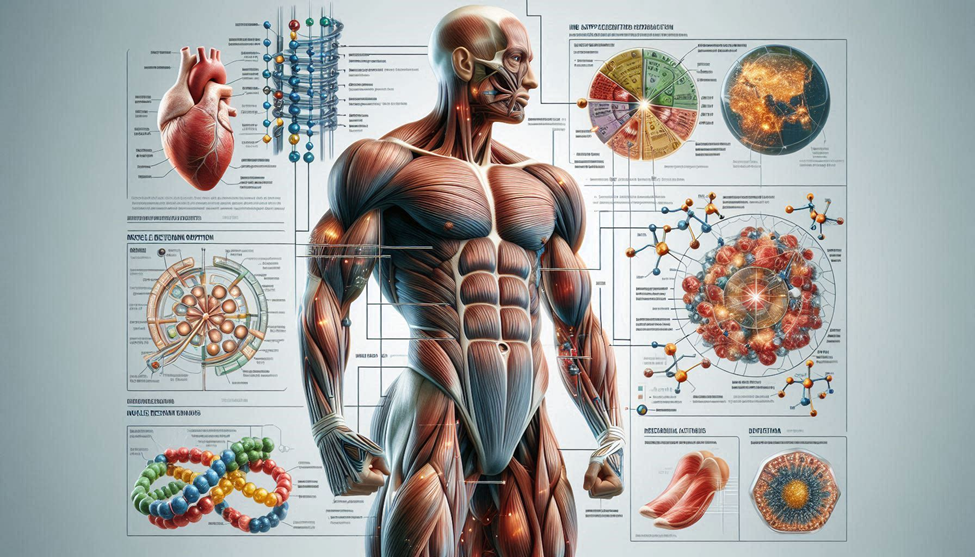
Because muscle mass is so central to performance and long-term health, athletes and dieters have long searched for strategies capable of reducing this catabolic drift. Resistance training remains the most effective non-pharmacological intervention, as mechanical loading stimulates anabolic signaling and preserves muscle tissue even under caloric restriction. High protein intake further supports muscle protein synthesis and reduces breakdown, while adequate sleep and stress management help modulate hormonal environments that otherwise accelerate muscle loss.
Within this context, supplementation has attracted particular attention, and among all candidate compounds, β-hydroxyl-β-methyl butyrate (HMB) stands out. HMB is a naturally occurring metabolite of leonine, one of the three branched-chain amino acids, yet it exerts physiological effects that extend beyond the simple provision of amino acids. Its primary value lies in its anti-catabolic action — the capacity to reduce the rate at which muscle proteins is broken down when the body is under energetic stress.
The persistent scientific interest in HMB stems from this unique capability. Few nutritional interventions can meaningfully blunt muscle loss when caloric intake is reduced, especially in individuals dieting aggressively or training at high volume. While HMB is not a substitute for training or adequate protein, it offers a targeted biochemical buffer against muscle wasting at times when muscle tissue is most vulnerable.
This review therefore examines HMB from multiple perspectives, detailing its biochemical mechanisms, evaluating the conditions under which it delivers measurable benefit, comparing it to other muscle-preservation strategies, and translating this science into practical guidance for individuals dieting or seeking to safeguard lean mass.
1. What HMB Actually Is
Lucien is unique among amino acids because it directly stimulates muscle protein synthesis via the motor pathway. When leonine is metabolized in the liver, a small portion converts to α-ketoisocaproate (KIC), which is then converted to HMB.
Importantly:
- Lucien → KIC → HMB
- Only about 5% of leonine turns into HMB naturally
This low conversion rate explains why supplemental HMB can produce effects not achievable from leonine intake alone without consuming impractical quantities.
The two forms of HMB used in research are:
- Calcium HMB (HMB-Ca) — most common, slow absorption
- Free acid HMB (HMB-FA) — faster absorption, higher plasma concentration
When discussing mechanisms, effects are broadly similar, though binding kinetics differs.
2. The Primary Mechanisms of Action
HMB works through three major physiological pathways:
- Anti-proteolysis (reducing muscle breakdown)
- Modulation of muscle protein synthesis
- Improvement of cellular integrity & recovery
Below is a mechanistic breakdown.
2.1 Anti-Proteolysis Action
When dieting, cortical rises and insulin drops. These conditions activate the ubiquitin–proteasome system (UPS), the body’s primary pathway for breaking down muscle protein.
HMB:
- inhibits ubiquity lipase expression
- reduces muscle protein tagging for destruction
- lowers proteasome activity
- shifts muscle protein balance toward retention
In practical terms:
HMB makes it harder for the body to “break apart” muscle during energy restriction.
This anti-catabolic effect is the most reliably demonstrated action in the literature and is the reason HMB remains relevant even decades after discovery.
2.2 Effects on motor and Protein Synthesis
Lucien is a strong agonist of motor, but HMB also:
- up regulates motor phosphorylation
- supports initiation of translation
- increases anabolic signaling under stress
However, the effect on synthesis is weaker than the effect on breakdown suppression.
Therefore HMB is best understood as:
“A brake on loss, not a turbocharger on gain.”
2.3 Stabilization of Cellular Structure
HMB increases:
- sarcolemma integrity
- mitochondrial membrane stability
- reduction of exercise-induced muscle damage
- reduction of creative kinas release
This improves:
- recovery
- training quality
- resistance to damage under caloric deficit
This mechanism becomes extremely relevant for athletes working near the limits of fatigue.
3. HMB during Caloric Deficits
When energy availability drops:
- muscle glycogen falls
- cortical rises
- testosterone drops
- insulin sensitivity changes
- AMPK increases
- autophagy accelerates
- protein breakdown accelerates
HMB directly blunts several of these responses.
Key outcomes observed in research:
- Reduced Lean Mass Loss: Particularly in:
- aggressive dieting
- low protein intake (relative)
- beginners
- older populations
- high-volume training
- Maintenance of Strength: This occurs even when bodyweight drops and training performance deteriorates.
- Improved Recovery: Reduced muscle damage speeds return to high-quality training sessions.
4. When HMB Works Best
HMB is not a universal performance enhancer. It is highly situational.
- Beginners: Untrained individuals show larger responses because their baseline anti-catabolic systems are weaker.
- Elderly / Sarcopenic individuals: These groups benefit dramatically because muscle loss rates are already elevated.
- Dieting or Caloric Restriction: The strongest evidence for HMB is when the body is in a catabolic state.
- High-Endurance or High-Volume Training: When muscle damage is high, HMB improves recovery.
5. When HMB Does Not Produce Significant Effects
- Highly trained strength athletes: Muscle protein turnover is already optimized; additional anti-catabolism produces smaller marginal returns.
- Adequate protein intake: When protein is already >1.6–2.2 g/kg, impact drops.
- Maintenance or surplus phases: When catabolism is low, HMB has little measurable benefit.
These limitations are normal and expected based on physiology.
6. Dosage & Timing
The effective dosing strategy for HMB has been one of the most consistently studied components of its application, and despite three decades of research, the evidence remains remarkably stable. The classical, empirically supported dosage range is 3–6 grams per day, and this range reliably produces measurable effects on muscle protein breakdown, recovery, and lean mass retention across diverse populations.
A daily dose of 3 grams appears to be sufficient for individuals seeking baseline anti-catabolic support, such as recreational lifters, beginners, or athletes who are dieting at modest deficits. At this level, HMB exerts a measurable inhibitory effect on the ubiquitin–proteasome pathway and reduces markers of muscle damage without overwhelming the body’s natural regulatory cycles. This dose also minimizes digestive discomfort and is widely tolerated.
When the physiological stress increases — for example in aggressive dieting, very low energy availability, or unusually high training volume — research shows that increasing intake to 6 grams per day produces stronger outcomes in preserving lean mass and maintaining training performance. This is particularly relevant for physique competitors, endurance athletes in heavy training blocks, or individuals with elevated catabolic hormone profiles.
Timing also meaningfully influences HMB’s practical effectiveness. Consuming HMB with meals reduces the likelihood of gastrointestinal distress and supports stable absorption. Taking HMB pre-training, especially in the form of HMB free acid (HMB-FA), can significantly reduce exercise-induced muscle damage and speed recovery, because plasma concentrations rise rapidly and attenuate damage mechanisms during training itself.
Splitting the total daily dose — for example, 1–2 grams three times per day — helps maintain a more consistent plasma concentration and may provide more uniform inhibition of proteolysis throughout the day. This is useful for individuals with higher metabolic or training stress.
Finally, HMB-FA deserves special mention: it reaches peak plasma levels in approximately 30 minutes, far faster than the calcium form, making it particularly suited for pre-workout use when immediate anti-damage effects are desired.
7. Safety
HMB has:
- extremely low toxicity
- no known organ stress
- no endocrine suppression
- decades of safe use in clinical populations
It is one of the safest muscle-support supplements ever studied.
8. HMB vs. Other Muscle-Sparing Supplements
Creative
Superior for:
- strength
- power
- performance
But inferior specifically for:
- anti-catabolism during dieting
Lucien
Stimulates growth more strongly, but does not suppress breakdown as effectively.
Whey protein
Best overall strategy when cost is not limiting.
HMB shines when:
- dieting hard
- training volume high
- protein is adequate but not maximal
- catabolism is pronounced
9. Practical Recommendations
For fat loss athletes
- 3–6 g/day
- Maintain 1.6–2.2 g protein per kg
- Keep training intensity high
- Prioritize sleep
For older women
HMB may reduce sarcopenia progression significantly.
For beginners
HMB accelerates adaptation by protecting early gains.
10. Critical Perspective
HMB is not magic.
Its value should be seen as:
A measurable but modest anti-catabolic insurance policy.
Its effects are most visible when:
- stress is high
- calories are low
- muscle is vulnerable
When conditions are optimal already, the ROI drops.
Conclusion
Muscle retention during dieting is one of the central challenges in exercise physiology, sports performance, and long-term metabolic health. HMB offers a mechanistically supported, clinically safe, and empirically verified method of reducing muscle protein breakdown at times when the body is most prone to losing lean tissue.
By inhibiting proteolysis, stabilizing muscle fibers, improving recovery, and supporting anabolic signaling, HMB acts as a biochemical buffer against the catabolic forces created by energy restriction and high training load.
Its greatest benefits are seen not in elite performance states but in the very conditions where muscle is most fragile: dieting, aging, high endurance stress, and novice adaptation.
When paired with resistance training, adequate protein, and sleep, HMB can meaningfully improve preservation of muscle mass — improving strength, metabolic health, and final body composition.
For individuals seeking every scientifically grounded advantage during hard dieting phases, HMB remains one of the most rational and evidence-supported supplementation choices available.
SOURCES
Nissan & Sharp, 2003 – Foundational review describing HMB’s anti-catabolic mechanisms and clinical relevance in muscle preservation.
Wilson et al., 2014 – Comprehensive overview of HMB’s effects on muscle protein synthesis and breakdown in humans.
Slater et al., 2001 – early human trials showing improvements in strength and reduced muscle damage with HMB.
Baum et al., 2002 – Demonstrated HMB’s ability to reduce markers of muscle protein breakdown.
Erlanger-Romero, 2011 – Described molecular pathways including ubiquitin–proteasome inhibition.
Krieger et al., 1999 – Meta-analysis evaluating performance changes associated with HMB supplementation.
Wilkinson et al., 2013 – Compared HMB forms and their absorption kinetics and signaling responses.
Panton et al., 1997 – Detailed HMB’s impact on muscle damage and recovery.
Stark et al., 2005 – Showed benefits of HMB in high training stress environments.
Kobayashi et al., 2010 – Explored mitochondrial membrane stabilization effects.
Gallagher et al., 2000 – Reported improvements in lean mass retention during caloric restriction.
Ranchi et al., 2011 – Mechanistic analysis of motor-related effects.
Fuller et al., 2012 – Study on HMB reducing exercise-induced creative kinas.
Ransomed & Huff, 2015 – Investigated HMB in trained athletes, showing smaller but measurable effects.
Basin et al., 2018 – Reviewed anabolic and anti-catabolic nutrient signaling.
Roth et al., 2019 – Summarized clinical uses in sarcopenia and aging populations.
Duets et al., 2013 – Clarified amino acid metabolism and HMB’s position in it.
Phillips et al., 2016 – Key research on protein synthesis regulation.
Tipton & Wolfe, 2004 – Classic overview of amino acid–driven anabolic signaling.
Daze et al., 2014 – Showed HMB improves muscle retention in energy deficit.
Abe et al., 2017 – Demonstrated improved strength outcomes in older adults.
HISTORY
Current Version
Dec 09, 2025
Written By
ASIFA

0 Comments