Introduction
For decades, nutrition science emphasized what people ate—macronutrients, micronutrients, glycolic index, caloric balance, food quality. But modern metabolic research has revealed a paradigm shift: the timing of food intake exerts profound impact on energy regulation, hormonal balance, sleep quality, fat oxidation, glucose tolerance, inflammation, mitochondrial function, and long-term metabolic stability.
This shift emerges primarily from the field of circadian biology, which demonstrates that human physiology follows a 24-hour internal clock that regulates everything from insulin sensitivity to digestive enzyme release. Eating against that biological clock—particularly late in the evening or erratically throughout the day—can gradually create a mismatch between the body’s central and peripheral clocks, leading to metabolic instability.
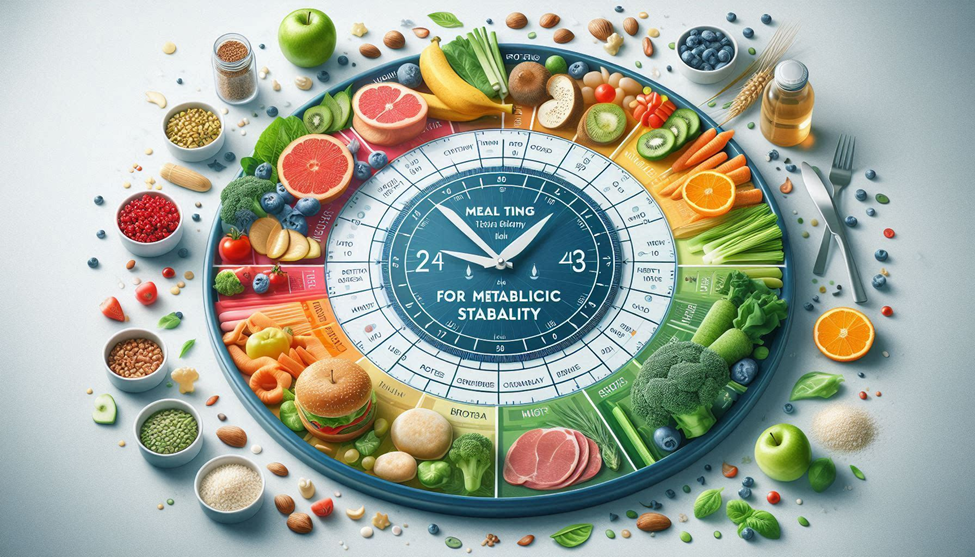
Meal timing, once considered a minor detail, is now recognized as a major lever for improving metabolic health without any change in caloric intake or macronutrient ratios.
This guide explains the mechanisms, practical strategies, evidence, and metabolic implications of aligning food intake with circadian rhythms, in a deeply expanded, professional, expert-level format.
1. Circadian Biology 101: The Clock inside Your Cells
1.1 The Master Clock (SCN) and Peripheral Clocks
The human circadian system is organized into:
- Central clock (SCN – suprachiasmatic nucleus) located in the hypothalamus
- Peripheral clocks found in tissues including:
- Liver
- Pancreas
- Skeletal muscle
- Adipose tissue
- Gastrointestinal tract
Light synchronizes the SCN, but food synchronizes the peripheral clocks.
When people eat at biologically inappropriate times—such as late night—the liver, pancreas, and gut receive a “wake signal” even though the SCN is preparing the body for rest. This resynchronization between clocks is called internal circadian misalignment, which is strongly associated with:
- Increased adiposity
- Elevated fasting glucose
- Insulin resistance
- Elevated triglycerides
- Disrupted hunger hormones (gherkin/lepton)
- Higher systemic inflammation
- Greater oxidative stress
Meal timing becomes a tool for desynchronizing these clocks.
2. Metabolic Rhythms: How Your Body Changes Throughout the Day
The body is not metabolically static. Key metabolic variables fluctuate predictably every 24 hours.
2.1 Morning Is the Metabolic “Prime Time”
- Insulin sensitivity peaks
- Cortical is naturally elevated (mobilizing energy)
- Digestive enzymes are highest
- Gastric emptying is faster
- Muscles are more glucose-hungry
- Body temperature begins to rise
A larger meal early in the day is processed more efficiently, leading to:
- Better glucose tolerance
- Improved satiety
- Reduced fat storage
- Lower stress hormone load later
2.2 Afternoon: Stabilization Mode
- Metabolism is still efficient
- Muscle insulin sensitivity remains strong
- Cognitive and motor performance remain high
- Cortical levels are stable
This window is optimal for a moderate meal.
2.3 Evening: Metabolic Slowdown
After sunset:
- Insulin sensitivity declines up to 30–40%
- Melatonin rises, suppressing insulin secretion
- Digestive capacity decreases
- Gut motility slows
- Fat oxidation drops
- Core body temperature falls
Eating under these conditions increases:
- Postprandial glucose spikes
- Lipid accumulation
- Sleep disturbances
- Next-day cravings and appetite deregulation
Even the same meal produces dramatically worse metabolic outcomes at night.
3. Hormones That Govern Meal Timing
3.1 Insulin: The Gatekeeper of Glucose
Insulin sensitivity follows a circadian cycle. Late-night eating forces the pancreas to produce more insulin than usual, increasing long-term risk of:
- Beta-cell fatigue
- Hyperinsulinemia
- Insulin resistance
- Type 2 diabetes
Conversely, morning meals require less insulin for the same glucose load, creating metabolic stability.
3.2 Cortical: Energy Mobilization and Rhythm Entrained
Cortical peaks in the morning to help wake the body.
Skipping breakfast while cortical is high increases:
- Cravings
- Emotional hunger
- Muscle breakdown
- Fat storage tendencies
A well-balanced breakfast helps flatten the cortical curve, stabilizing energy across the day.
3.3 Melatonin: The Hormone That Should Stop You from Eating
Melatonin suppresses insulin secretion.
When people eat after melatonin rises, glucose remains elevated longer because insulin cannot respond efficiently.
This effect alone explains why late-night calories disproportionately contribute to:
- Visceral fat
- Elevated fasting glucose
- Poor lipid metabolism
3.4 Gherkin & Lepton: Hunger and Satiety Rhythm
Gherkin peaks before expected meals.
Irregular eating makes gherkin unpredictable, increasing cravings.
Lepton rises at night to reduce hunger—but nighttime eating blunts this effect, worsening:
- Late-night snacking behavior
- Reward-based eating
- Overeating tendencies
4. The Science of Front-Loading Calories: Why Breakfast Matters Again
4.1 Breakfast Skipping and Metabolic Damage
Habitual breakfast skipping is linked with:
- Higher BMI
- Greater hunger later in the day
- Increased cortical load
- Lower insulin sensitivity
- Elevated fasting glucose
- Over activation of reward pathways
- Poor sleep
- Greater nighttime intake
4.2 A Protein-Rich Breakfast Sets Metabolic Tone
Benefits include:
- Reduced snacking
- Lower evening hunger
- Higher thermal effect of food
- Better glucose control
- Improved muscle protein synthesis
4.3 The “Chrononutrition Breakfast Effect”
Studies show eating 40–50% of daily calories before 2:00 PM stabilizes metabolic markers more effectively than the same caloric intake spread evenly or weighted toward the evening.
5. Time-Restricted Eating (TRE): Aligning Food Intake with Daylight
5.1 What Is TRE?
TRE compresses caloric intake into a consistent daily eating window, typically:
- 8-hour
- 10-hour
- 12-hour windows
Unlike intermittent fasting that focuses on long fasting days or alternate-day fasting, TRE focuses on daily circadian alignment.
5.2 Why TRE Works
TRE improves metabolic stability even without caloric restriction because:
- Eating windows align with insulin sensitivity peaks
- Nighttime insulin suppression is restored
- Peripheral clocks resynchronize
- Mitochondria function more efficiently
- Fat oxidation increases naturally
5.3 Optimal Window for Metabolic Results
Most evidence supports:
- Eating window: 8:00 AM – 4:00 PM or
- 10:00 AM – 6:00 PM
Late-night TRE (like 12:00 PM – 8:00 PM) offers fewer metabolic benefits because it overlaps with falling insulin sensitivity.
5.4 TRE and Weight Loss
Mechanisms include:
- Reduced late-night overeating
- Lower insulin exposure
- Greater spontaneous calorie reduction
- Improved metabolic flexibility
6. Meal Timing for Specific Goals
- For Fat Loss
- Eat largest meal early in the day
- Stop eating 3–4 hours before bed
- Ensure consistent meal intervals
- Avoid grazing or constant snacking
- For Muscle Gain
- Protein evenly distributed every 3–4 hours
- Largest crab/protein meals earlier
- Light dinner rich in protein + veggies
- Avoid large pre-bed crab loads
- For Blood Sugar Control
- Prioritize morning carbohydrate intake
- Avoid high-crab dinners
- Include protein + fiber at all meals
- Avoid eating after melatonin onset
- For Gut Health
- Allow a 12–14 hour overnight fast
- Avoid late dinners that slow GI clearance
- This supports:
- Migrating motor complex function
- Micro biome diversity
- Reduced SIBO risk
7. Meal Frequency: The Debate between 2, 3, or 6 Meals
- The 6-Meal Myth
- Frequent eating does not boost metabolism.
- It increases insulin exposure and digestive workload.
- The Classic Three-Meal Approach: Works with circadian biology when meals are:
- Balanced
- Earlier
- Predictable
- Two Meals (Early OMAD or Two Large Meals)
- Best only when meals occur earlier, not late afternoon or evening.
8. Night Eating: Metabolic Consequences of Eating Against the Clock
8.1 Night Eating Syndrome
Characterized by:
- Morning anorexia
- Evening hyperplasia
- Insomnia
Strongly associated with:
- Elevated cortical
- Deregulated lepton
- Glucose intolerance
8.2 Why the Same Meal Is Worse at Night
Night eating increases:
- 3× higher insulin requirement
- 2× higher postprandial glucose
- Lower fat oxidation
- Greater next-day hunger
8.3 Late Meals and Sleep
Eating late affects:
- Melatonin onset
- Heart rate reduction
- Nighttime thermoregulation
- REM stability
Poor sleep then worsens appetite the next day—a vicious loop.
9. Meal Timing for Shift Workers: Special Circadian Challenges
Shift workers often experience:
- Detached feeding rhythms
- Chronic circadian misalignment
- Increased risk of metabolic syndrome
Recommendations:
- Anchor feeding window to daylight hours whenever possible
- Avoid eating between midnight and 5:00 AM
- Use protein-rich meals to stabilize energy
- Limit caffeine and sugar during night work to avoid glucose swings
10. Chrononutrition and the Micro biome
The gut micro biota follows their own circadian rhythm.
Meal timing influences:
- Microbial diversity
- Production of SCFAs (short-chain fatty acids)
- Gut barrier function
- Immune modulation
Regular, earlier feeding windows support a more stable micro biome rhythm.
11. Practical Blueprint: An Evidence-Based Meal Timing Plan
11.1 Ideal Daily Schedule
7:00–9:00 AM — Breakfast (largest meal)
- 30–40% of calories
- High protein, moderate crabs, healthy fats
12:00–2:00 PM — Lunch
- 30% of calories
- Balanced macros
4:00–6:00 PM — Light Dinner
- 20–25% of calories
- High protein, low-glycolic vegetables, minimal crabs
Cutoff:
Stop eating at least 3 hours before bed.
11.2 What to Avoid
- Grazing all day
- Eating after 8:00 PM
- High-fat dinners
- Heavy desserts at night
11.3 Hydration Timing
- Most hydration early in the day
- Limit fluids 2 hours before sleep
This supports metabolic balance and circadian rhythm reinforcement.
12. Putting It All Together: The Future of Circadian Nutrition
Meal timing is no longer a fringe topic. It has become a major frontier in metabolic medicine, sports nutrition, obesity treatment, endocrine regulation, and chronic disease prevention.
The consistent conclusion across fields is simple:
Eating earlier, regularly, and predictably aligns the human metabolism with its natural circadian design.
This alignment improves:
- Blood sugar stability
- Hormonal balance
- Fat oxidation
- Mitochondrial efficiency
- Hunger regulation
- Sleep quality
- Long-term metabolic resilience
In a world filled with processed food, high stress, irregular work schedules, and abundant late-night eating opportunities, restoring meal timing may be one of the most powerful—and simplest—strategies for metabolic health.
Conclusion
Meal timing represents a critical, yet often overlooked, determinant of metabolic health. While traditional nutrition paradigms have focused primarily on caloric intake, macronutrient composition, and food quality, emerging evidence from chronobiology and metabolic research highlights that when we eat is equally influential. Circadian rhythms orchestrate a complex interplay of hormonal secretion, enzymatic activity, glucose handling, and lipid metabolism, establishing predictable windows of metabolic efficiency and vulnerability. Aligning food intake with these rhythms—prioritizing larger meals earlier in the day and restricting caloric intake during the biological night—optimizes insulin sensitivity, improves glycolic control, enhances fat oxidation, and reduces systemic inflammation.
Time-restricted eating (TRE) and front-loaded caloric strategies are among the most evidence-supported approaches for harnessing circadian biology. Studies consistently demonstrate that early-day eating not only facilitates weight management but also improves cardiovascular and metabolic biomarkers, even in the absence of caloric restriction. Conversely, irregular eating patterns, late-night meals, and shift work contribute to internal circadian misalignment, increasing the risk of obesity, type 2 diabetes, and cardio metabolic dysfunction. Hormones such as insulin, cortical, melatonin, gherkin, and lepton are particularly sensitive to meal timing, mediating hunger, satiety, and postprandial metabolism in a time-dependent manner.
From a practical perspective, evidence-based strategies include consuming the largest meal at breakfast, moderate intake at lunch, and a light, protein-focused dinner several hours before bedtime. Consistency in eating windows, avoidance of nighttime snacking, and alignment with natural light-dark cycles further reinforce metabolic stability.
In conclusion, meal timing is a potent, modifiable factor in metabolic regulation. By integrating circadian principles into dietary planning, individuals can improve energy balance, hormonal function, and long-term health outcomes. The convergence of chrononutrition and metabolic science underscores a paradigm shift: optimal health is achieved not only through what we eat, but critically through when we eat.
SOURCES
Schemer, 2009 — demonstrated that circadian misalignment alone increases glucose, insulin, and blood pressure independent of sleep duration, proving timing is a metabolic variable by itself.
Panda, 2016 — Pioneered research on time-restricted eating and circadian rhythms, showing that restricting intake to 8–10 hours improves metabolism without calorie reduction.
Garrulity & Gómez-Abellán, 2014 — Identified the “chronotype effect,” showing that late eaters lose less weight and have poorer insulin sensitivity than early eaters.
Jakubowicz, 2013 — revealed the “big breakfast effect,” finding that front-loaded calories improve glucose control, satiety, and weight loss outcomes.
Sutton, 2018 — proved that early time-restricted feeding (e.g., 8 AM–2 PM) improves insulin sensitivity, blood pressure, and oxidative stress in prediabetic adults.
Chill, 2017 — demonstrated that eating during the biological evening increases postprandial glucose even when total sleep remains adequate.
Pot, 2016 — showed that irregular meal timing disrupts cardio metabolic markers, appetite regulation, and glucose homeostasis.
Fray, 2010 — reviewed how circadian rhythms regulate metabolism, emphasizing the importance of synchronizing feeding schedules with the biological clock.
Johnston, 2014 — highlighted the metabolic benefits of consistent meal timing for weight management and glycolic control.
Mattson, 2017 — established the cellular and metabolic benefits of intermittent fasting, including enhanced mitochondrial function and stress resistance.
Arable, 2009 — demonstrated that eating at the “wrong” circadian time increases weight gain in mice even when calorie intake is identical.
Hater, 2012 — found that restricting eating windows reduces obesity and metabolic disease risk in high-fat diet models.
Gutierrez-Repose, 2019 — showed that breakfast skipping is linked to increased body fat, insulin resistance, and deregulated appetite hormones.
Salgado-Delgado, 2010 — highlighted how nighttime eating leads to circadian disruption in peripheral tissues and worsened metabolic outcomes.
Acosta-Rodriguez, 2021 — identified optimal feeding windows for human metabolic health, showing that daytime eating produces the best glucose and lipid profiles.
Morris, 2015 — demonstrated that eating at night elevates postprandial glucose due to melatonin-mediated suppression of insulin secretion.
Kinsey & Ormsbee, 2015 — reviewed the consequences of nighttime eating, highlighting impaired lipid metabolism, glucose tolerance, and sleep quality.
Ruddick-Collins, 2018 — evaluated how meal timing influences thermo genesis, appetite, and glucose control, supports early-day eating.
Bonham, 2019 — showed that late-night eating raises inflammatory markers and worsens cardio metabolic risk profiles.
Gill, 2015 — provided real-world evidence that reducing eating windows improves weight, energy, and glucose levels in free-living adults.
Longo & Panda, 2016 — explained the synergy between circadian alignment and fasting on cellular repair, fat oxidation, and metabolic resilience.
Chellappa, 2020 — demonstrated that circadian misalignment alters appetite-regulating hormones and increases hunger for calorie-dense foods.
Those, 2018 — found that nighttime food intake increases blood pressure and impairs endothelial function, raising cardiovascular risk.
Roenneberg, 2012 — introduced the concept of “social jet lag,” where lifestyle-induced circadian disruption impacts weight and metabolic health.
Cogan, 2016 — Reviewed chrononutrition as a scientific field, emphasizing how meal timing influences glucose tolerance, inflammation, and metabolic rhythms.
HISTORY
Current Version
Dec 11, 2025
Written By
ASIFA


0 Comments