Introduction
Strength athletes—whether they are power lifters chasing maximal force production, bodybuilders refining hypertrophy and aesthetics, Olympic weightlifters optimizing rate of force development, strongman competitors preparing for sustained, unconventional work, or modern hybrid athletes blending strength and conditioning—have long viewed cardiovascular training with suspicion. For decades, the “interference effect” shaped training culture and created a persistent belief that any meaningful amount of conditioning would inevitably undermine strength gains, blunt hypertrophy signaling, and disrupt the neuromuscular adaptations required for peak performance. Early research did show that when endurance work is performed excessively, poorly timed, or mismatched to an athlete’s goals, it can indeed suppress motor-driven muscle growth or limit neural peak output. As a result, many strength athletes either eliminated cardio entirely or treated it as something to be tolerated rather than strategically applied.
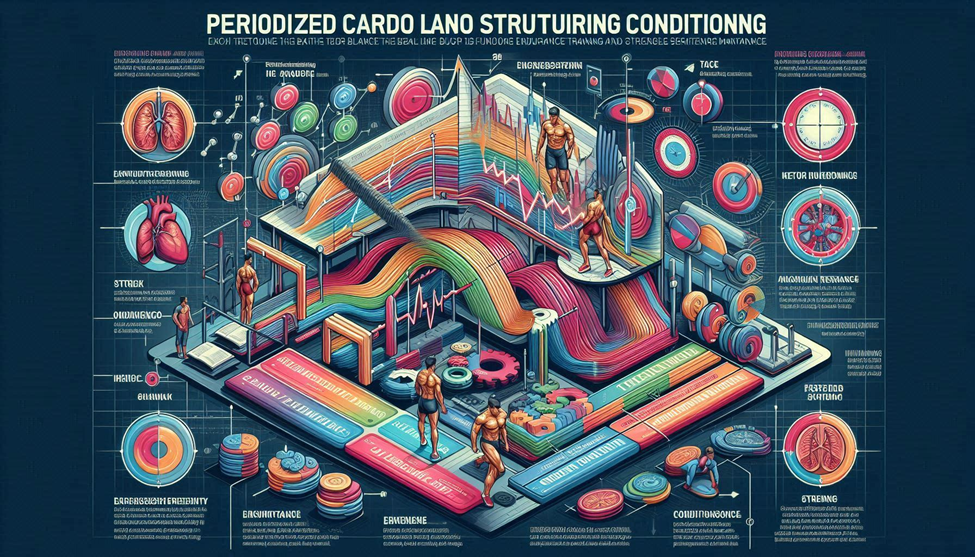
However, contemporary sports science has fundamentally reframed this narrative. Modern research now shows that the interference effect is not a consequence of cardio itself, but a consequence of unstructured, overly intense, or poorly per iodized conditioning layered on top of demanding strength workloads. When cardiovascular training is organized deliberately—matched to training phases, aligned with recovery capacity, controlled in intensity, and introduced in progressive volumes—it no longer competes with strength adaptations. Instead, it becomes a powerful enhancer of them.
Per iodized cardio improves cardiac stroke volume, mitochondrial density, capillary perfusion, metabolic flexibility, and recovery kinetics. These adaptations directly support strength performance by accelerating lactate clearance, enhancing inter-set recovery, stabilizing cortical and sympathetic stress responses, and improving work capacity across high-volume hypertrophy blocks. At the neural level, athletes often experience improved movement economy, sharper coordination under fatigue, and greater capacity to sustain maximal or near-maximal force production through long sessions.
In practice, this means athletes no longer must choose between being strong and being conditioned. With intelligent programming, conditioning becomes a performance multiplier rather than a threat. The following article explores how to implement conditioning that protects strength while unlocking new layers of durability, productivity, and long-term progress.
Why Strength Athletes Need Conditioning More Than Ever
The outdated belief that cardio “kills gains” has weakened athletic development for decades. Strength athletes who strictly avoid conditioning experience:
- Poor work capacity
- Slower recovery between sets and sessions
- Inefficient lactate clearance
- Poor sleep, circulation, and autonomic balance
- Reduced mitochondrial density
- Compromised cardiovascular health
- Faster fatigue during high-volume training blocks
- Limited ability to handle maximal loads under fatigue
Meanwhile, athletes who intelligently per iodize conditioning demonstrate:
- Higher training tolerance
- Lower heart rate during sets
- Faster phosphocreatine resynthesis
- Increased capillary density for improved nutrient delivery
- Improved parasympathetic dominance
- Greater repeat-effort strength
- Better force output late in sessions
- More sustainable long-term performance
The difference between “cardio that kills strength” and “cardio that enhances strength” lies not in the cardio itself, but in how it is per iodized
THE SCIENCE OF THE INTERFERENCE EFFECT: WHAT ACTUALLY CAUSES IT?
The True Mechanisms behind Interference
The interference effect is not caused by “doing cardio” but by too much of the wrong cardio at the wrong time, disrupting molecular signaling pathways that drive strength and hypertrophy.
Primary Causes of Interference:
- AMPK vs. motor Pathway Competition
- motor → muscle growth, strength, protein synthesis
- AMPK → endurance signaling, mitochondrial biogenesis
- Large volumes of cardio, especially moderate-to-high intensity, chronically elevate AMPK, which can down regulate motor signaling—suppressing strength gains.
- Excessive Eccentric Stress: Running, especially on hard surfaces, includes eccentric loading. This causes muscle damage, inflammation, and structural stress that compete with strength recovery.
- Poor Timing Relative to Strength Training: Doing cardio before strength work reduces neuromuscular performance, force output, and bar speed.
- Excessive Volume without Aerobic Base: When athletes jump into daily conditioning without a foundation, fatigue accumulates too rapidly.
- Neglecting Recovery Nutrition: If glycogen stores are not properly replenished, the quality of strength training declines.
THE SOLUTION: PERIODIZED CARDIO
Per iodization solves every problem listed above.
Rather than performing random conditioning sessions, athletes follow structured phases that align with:
- Strength blocks
- Goals
- Adaptive cycles
- Seasonal preparation
- Competition timelines
- Training fatigue management
- Metabolic requirements
Cardio becomes complementary, not competitive.
BENEFITS OF PERIODIZED CARDIO FOR STRENGTH ATHLETES
When programmed correctly, conditioning enhances nearly every performance variable relevant to strength.
- Faster Recovery between Sets: A stronger aerobic system accelerates oxygen delivery, ATP regeneration, and lactate clearance.
- Reduced Session Fatigue: Cardio improves capillary density, cardiac output, and mitochondrial efficiency.
- Better Work Capacity for Hypertrophy Blocks: Higher-volume hypertrophy training becomes more manageable and productive.
- Enhanced Ability to Handle Maximal Loads: Cardiovascular efficiency improves intra-set and inter-set stability.
- Improved Sleep, Digestion, and Stress Regulation: Low-intensity conditioning boosts parasympathetic activation.
- Better Body Composition: Cardio helps manage caloric balance without excessive dietary restriction.
- Longevity in Training: Cardiovascular health reduces long-term health risks for strength athletes.
THE FOUR PILLARS OF PERIODIZED CARDIO FOR STRENGTH
1. INTENSITY CONTROL
Intensity determines adaptation. Cardio must be structured across zones:
Zone 1 (50–60% Hyrax): Very Low Intensity
- Walking, incline walking
- Great for recovery
- Zero interference
Zone 2 (60–70% Hyrax): Aerobic Base
- Ideal for improving mitochondrial function
- Highest benefit-to-fatigue ratio
Zone 3 (70–80% Hyrax): Tempo Work
- Useful but can interfere with recovery when overused
Zone 4 (80–90% Hyrax): Threshold / Hard Intervals
- Good during early strength blocks
- Should not be too frequent
Zone 5 (90–100% Hyrax): High-Intensity Intervals
- Excellent for explosive adaptations
- Best performed in low volumes
Strength athletes should live mostly in Zones 1 and 2, with controlled exposures to Zone 4–5.
2. PROPER TIMING WITH STRENGTH TRAINING
Best Timing Strategies:
- Low-intensity cardio on rest days
- After strength training (not before)
- Morning cardio + evening strength (if needed)
Worst Timing:
- High-intensity cardio before squats or deadlights
- Long runs during peaking phases
- Cardio immediately after heavy eccentric work
3. MANAGING VOLUME AND FREQUENCY
Low-Intensity Volume Guidelines
- 2–4 sessions per week
- 20–40 minutes each
- Mostly Zone 2
High-Intensity Intervals
- 1 session weekly (max)
- 6–12 minutes of actual work
This allows cardio to enhance recovery without draining systemic energy.
4. SELECTING JOINT-FRIENDLY MODES
The best cardio modes for strength athletes minimize eccentric loading:
Top Choices:
- Cycling
- Rowing
- Assault bike
- Elliptical
- Prowler pushes
- Swimming
- Rocking (light)
- Light sled drags
Modes to Avoid During Strength Peaks:
- Long-distance running
- Hill sprints
- Hard-surface jogging
THE FOUR PHASES OF PERIODIZED CARDIO
Effective cardio per iodization is structured across training cycles:
PHASE 1: BASE BUILDING (WEEKS 1–6)
Goal: Mitochondrial development, cardiac efficiency, capillary growth, aerobic enzymes.
This phase sets the foundation for later, more intense work.
Training Structure:
- 3–4× weekly Zone 2
- 20–45 minutes each
- Optional 1× weekly short interval session
- Strength training: moderate volume
Why Base Training Matters:
Base work increases:
- Stroke volume
- Fat oxidation
- Mitochondrial density
- Parasympathetic tone
- Aerobic efficiency during strength work
This is the safest phase for building cardio with zero interference.
PHASE 2: WORK CAPACITY DEVELOPMENT (WEEKS 7–12)
Goal: Improve lactate threshold, anaerobic capacity, and fatigue resistance.
Training Structure:
- 2–3× weekly Zone 2
- 1× weekly longer tempo
- Optional 1× weekly HIIT
- Strength training: hypertrophy block
Why This Matters:
As strength volume increases, cardio helps athletes:
- Recover faster between sets
- Maintain rep quality
- Handle higher workloads
This phase is essential for bodybuilders, Cross Fit athletes, and strongman competitors.
PHASE 3: PERFORMANCE & STRENGTH SUPPORT (WEEKS 13–18)
Goal: Raise anaerobic power, sharpen speed, and improve resilience under heavy loading.
Training Structure:
- 1–2× weekly Zone 2
- 1× weekly high-intensity intervals
- Strength training: strength-specific block
Cardio Should Now Support Strength
Short, sharp sessions help maintain conditioning without draining strength.
Examples:
- 6×30 sec assault bike
- 10×100m row sprints
- 6×200m runs (only for experienced athletes)
- Prowler pushes: 10–20 meters
PHASE 4: PEAKING / MAXIMAL STRENGTH (WEEKS 19–22)
Goal: Maintain aerobic capacity, minimize fatigue, and maximize strength adaptations.
Training Structure:
- 1–2× weekly low-intensity cardio (20–25 min)
- Zero high-intensity intervals
- No running
- No tempo work
Purpose:
Athletes should not introduce metabolic fatigue now. The goal is to keep the heart healthy and promote recovery.
IMPLEMENTING PERIODIZED CARDIO BASED ON ATHLETE TYPE
1. POWERLIFTERS
Best Mode:
Cycling, rowing, sled drags.
Weekly Template:
- 2× Zone 2
- 1× optional interval session
- No running
Key Goal:
Promote recovery between sets of squats, bench, and deadlights.
2. OLYMPIC WEIGHTLIFTERS
Best Mode:
Rowing, upper-body erg, tempo circuits.
Why They Need Cardio:
- Faster restoration of phosphocreatine
- Improved bar speed
- Enhanced movement quality under fatigue
3. BODYBUILDERS
Best Mode:
Incline walking, cycling, stepper.
Cardio Goals:
- Increase caloric output
- Improve nutrient partitioning
- Enhance recovery
Per iodized cardio allows bodybuilders to stay lean without compromising muscle?
4. STRONGMAN ATHLETES
Best Mode:
Prowler work, carries, sled drags, cycling.
Why Strongmen Need High-Conditioning Levels:
Events involve sustained output under fatigue—far more than power lifting or Olympic lifting.
Strongman athletes require both:
- Lactate threshold work
- Anaerobic bursts
5. HYBRID ATHLETES (LIFT + RUN)
These athletes need cardio for performance, not just recovery.
Key Principles:
- Run intensity must be per iodized
- Strength work remains anchor
- High-intensity cardio limited
- Long runs only during base phase
HOW TO STRUCTURE A 22-WEEK PERIODIZED CARDIO PLAN
Here is a comprehensive blueprint:
Weeks 1–6: Aerobic Base
- 3–4× weekly Zone 2
- 1× optional HIIT
- Strength: Volume/Hypertrophy
Weeks 7–12: Work Capacity
- 2–3× Zone 2
- 1× Tempo
- 1× HIIT
- Strength: Hypertrophy/Strength Transition
Weeks 13–18: Power & Strength
- 1–2× Zone 2
- 1× HIIT
- Strength: Strength Block
Weeks 19–22: Peak
- 1–2× Zone 2
- Zero HIIT
- Strength: Peaking
NUTRITION STRATEGIES TO SUPPORT PERIODIZED CARDIO
Conditioning adds metabolic load. Nutrition must support it.
- Carbohydrates for Intervals: High-intensity intervals require glycogen.
- Electrolytes for Sweat Loss: Loss of sodium affects power output.
- Protein for Repair: 1.6–2.4 g/kg daily.
- Hydration: 2–3 L water daily + electrolytes.
HOW TO PREVENT CARDIO FROM KILLING STRENGTH: THE RULES
Rule 1: Keep 80–90% of cardio low intensity
Zone 2 provides the most conditioning benefit with the least interference.
Rule 2: Avoid long-distance running
Unless you’re a hybrid athlete.
Rule 3: Separate high-intensity cardio from heavy strength days
Rule 4: Use joint-friendly machines
Sleds, rowers, bikes.
Rule 5: Use off-season for volume
Cut cardio significantly during strength peaking.
Rule 6: Monitor heart rate recovery (HRR)
Good HRR = strong aerobic adaptation.
Rule 7: Eat enough
Cardio + strength require more energy.
PRACTICAL TEMPLATES FOR STRENGTH ATHLETES
Template A: Power lifter (3-Day Cardio)
- Day 1: 30 min Zone 2 cycling
- Day 3: 20 min incline walk
- Day 5: 8×30 sec intervals on bike
Template B: Bodybuilder (4-Day Cardio)
- Day 1: 30 min incline walk
- Day 2: 30 min cycling
- Day 4: 40 min Zone 2
- Day 6: Optional 15–20 min after leg day
Template C: Strongman (3-Day Cardio)
- Day 2: Sled drags 10–15 min
- Day 4: Cycling 25 min
- Day 6: Row sprints 10×150m
Template D: Hybrid Athlete (4–5 Days Cardio)
- Long run only in base phase
- Intervals only 1× weekly
- Strength remains priority
ADVANCED METHODS FOR COACHES AND ELITE ATHLETES
- Concurrent Training Sequencing: Coaches must place high-skill strength work before cardio.
- Block per iodization: Cardio intensity increases gradually across blocks.
- Undulating Conditioning: Alternating type and intensity across the week prevents fatigue.
- Recovery Modality Integration: Cardio improves:
- HRV
- Parasympathetic rebound
- Sleep regulation
Conclusion
Strength athletes no longer need to choose between conditioning and strength. The idea that cardio inherently “kills gains” is outdated and scientifically unsupported when training is per iodized properly. Modern research shows that the interference effect is not caused by cardio itself, but by excessive volume, poor timing, and unstructured intensity. When conditioning is strategically integrated, it becomes a pillar of strength development rather than a threat to it.
Per iodized cardio enhances nearly every physiological component related to strength performance: mitochondrial density, stroke volume, lactate clearance, phosphocreatine recovery, capillary density, parasympathetic activation, and work capacity. These adaptations make strength training more productive by enabling athletes to train harder, recover faster, move more efficiently, and sustain high-quality repetitions across heavy or high-volume sessions.
Conditioning becomes even more essential during hypertrophy blocks, where metabolic stress and volume demand a robust aerobic foundation. As athletes transition into strength and peaking phases, conditioning evolves to support neurological performance and minimize fatigue rather than add to it. Low-intensity cardio helps maintain cardiovascular health while facilitating recovery and reducing stiffness.
Per iodized cardio is not merely a “support tool” but a competitive advantage. Strongman athletes gain event endurance, power lifters gain inter-set recovery and bar speed, bodybuilders gain nutrient partitioning and leanness, and hybrid athletes achieve balanced development without compromise.
When intelligently programmed—using joint-friendly modalities, structured zones, appropriate timing, and block-based progression—conditioning becomes one of the most powerful enhancers of strength, longevity, and peak performance. The strongest athletes are no longer just strong—they are conditioned.
SOURCES
Wilson et al., 2012. Meta-analysis of concurrent training interference.
Fyfe et al., 2014. Molecular mechanisms of concurrent training.
Murat & Bagley, 2016. Muscle fiber adaptation under concurrent training.
Bishop et al., 2019. High-intensity interval training and strength.
McInnis & Gimbals, 2017. Physiology of interval training.
Larsen & Jenkins, 2002. Anaerobic threshold training.
Joyner & Coyle, 2008. Endurance exercise physiology.
Burgomaster et al., 2005. Sprint interval training mechanisms.
Haltered et al., 2007. Aerobic training for improved maximal strength.
Paavolainen et al., 1999. Neuromuscular adaptation to mixed training.
Sale et al., 1990. Strength training performance.
Fry, 2004. Overtraining and fatigue responses.
Schoenfeld, 2010. Hypertrophy mechanisms.
Kraemer & Retimes, 2004. Strength training principles.
Seiler, 2010. Polarized training concepts.
Jones et al., 2020. Cardio intensity distribution in performance.
Medley et al., 2007. Lactate threshold dynamics.
Nooks, 1992. Running physiology and fatigue.
Roberts et al., 2004. Lactate production myths.
Ingham et al., 2008. Rowing physiology performance.
Hawley, 2008. Concurrent training metabolic interactions.
Van Preen et al., 2011. Fasted cardio adaptations.
Rønnestad et al., 2015. Block per iodization and endurance.
Bishop, 2003. Recovery between repeated sprints.
HISTORY
Current Version
Dec 06, 2025
Written By
ASIFA

0 Comments